Cannabis Inhaler Market Research Report with Forecast 2026 to 2035
What is Cannabis Inhaler Market Size?
Global Cannabis Inhaler Market is expected to grow at a 10.0% CAGR during the forecast period for 2026 to 2035.
Cannabis Inhaler Market Size, Share & Trends Analysis Report By Type (Cannabigerol (CBG), Tetrahydrocannabivarinic (THCV), Cannabidiol (CBD), Tetrahydrocannabinol (THC)), By Application (Sleep Disorders, Stress & Anxiety, Chronic Pain Management, Asthma, Others), By End-User, By Region, And By Segment Forecasts, 2026 to 2035
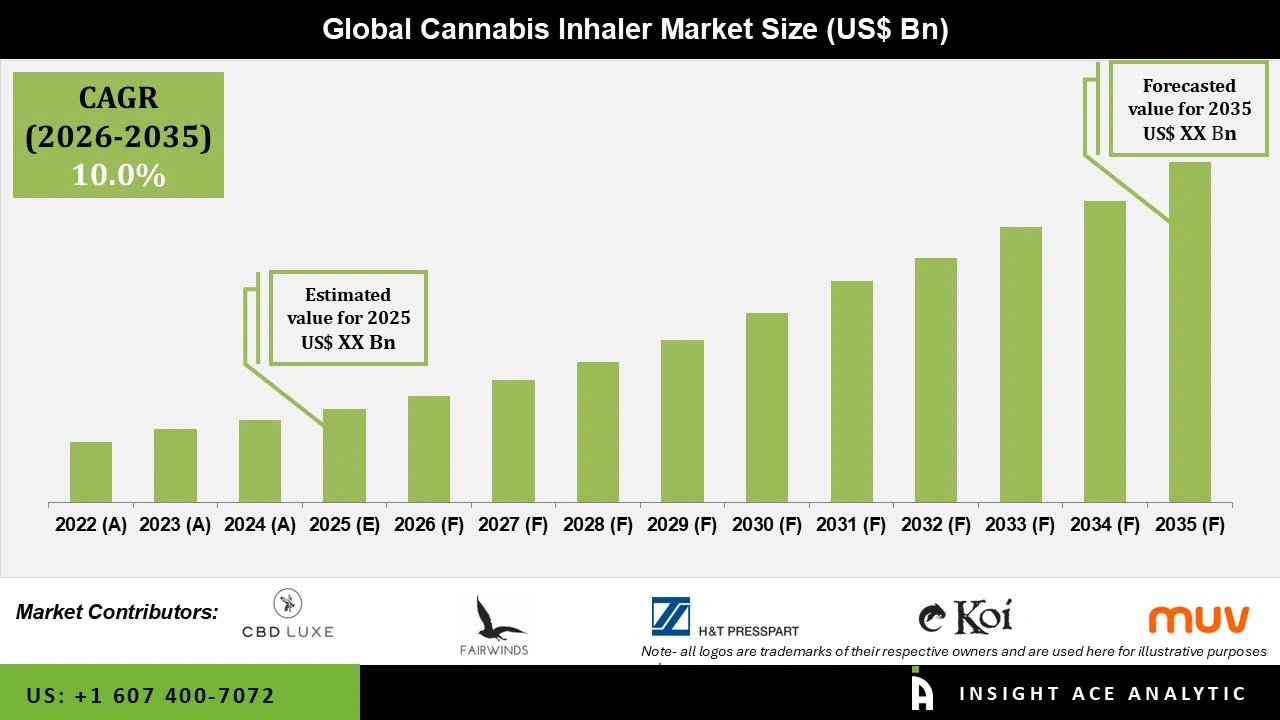
Cannabis Inhaler Market Key Takeaways:
|
Key Industry Insights & Findings from the report:
- The advent of the cannabis inhaler market is the cause of regulatory changes, technological advancements, changing consumer preferences, and increasing acceptance.
- The increasing demand for smoke-free alternatives is expected to drive industry growth.
- North America dominated the market and accounted for a global revenue share in 2025.
- One of the significant concerns constraining industry growth is the need for healthcare provider knowledge & lack of public faith.
Cannabinoids are natural compounds present in Cannabis sativa plants. Aside from the health hazards associated with cannabis consumption, limited and well-monitored amounts of these cannabinoids may help with respiratory disorders such as Asthma and COPD. This is due to this psychoactive substance's bronchodilation characteristics. Asthma-like inhalers emit a mist containing cannabis and terpenes. These inhaled chemicals immediately enter the lungs' alveoli and spread throughout the body via the bloodstream. Owing to this and the medicinal benefits of cannabis, medical uses of these inhalers are being researched and developed, driving market growth. Demand for these inhalers is projected to rise in the long run as medical use of psychoactive substances becomes more acceptable worldwide. Various recreational applications are benefiting from this.
The changing regulatory picture will drive this sector forward in the future. Compared to cigarettes, cannabis vaporizers are considered a safer, healthier, and less dangerous option. Compared to smoking, using a vaporizer offers a more pleasant experience, and many medical professionals advise it as one of the safest ways to consume cannabis. This would probably encourage the growth of the cannabis vaporizer sector globally. Additionally, users prefer to ingest cannabis through a vaporizer rather than smoking since it avoids cigarette chemicals, carcinogens, and respiratory irritants. This aspect raises the market's desire for cannabis vaporizers even more.
Since more patients are now looking for alternatives to smoking, the popularity of vaporization is also anticipated to impact market dynamics in the upcoming years. As they grow more dependable, affordable, and portable, medicinal cannabis vaping devices are becoming more and more popular. However, the lack of information regarding the long-term safety of cannabis used medicinally may limit the cannabis inhaler market's profit margins. Since there was a supply of fake drugs during the COVID-19 outbreak, public confidence in the medical community was damaged, which had a negative impact on sales of cannabis inhalers.
Market Segmentation:
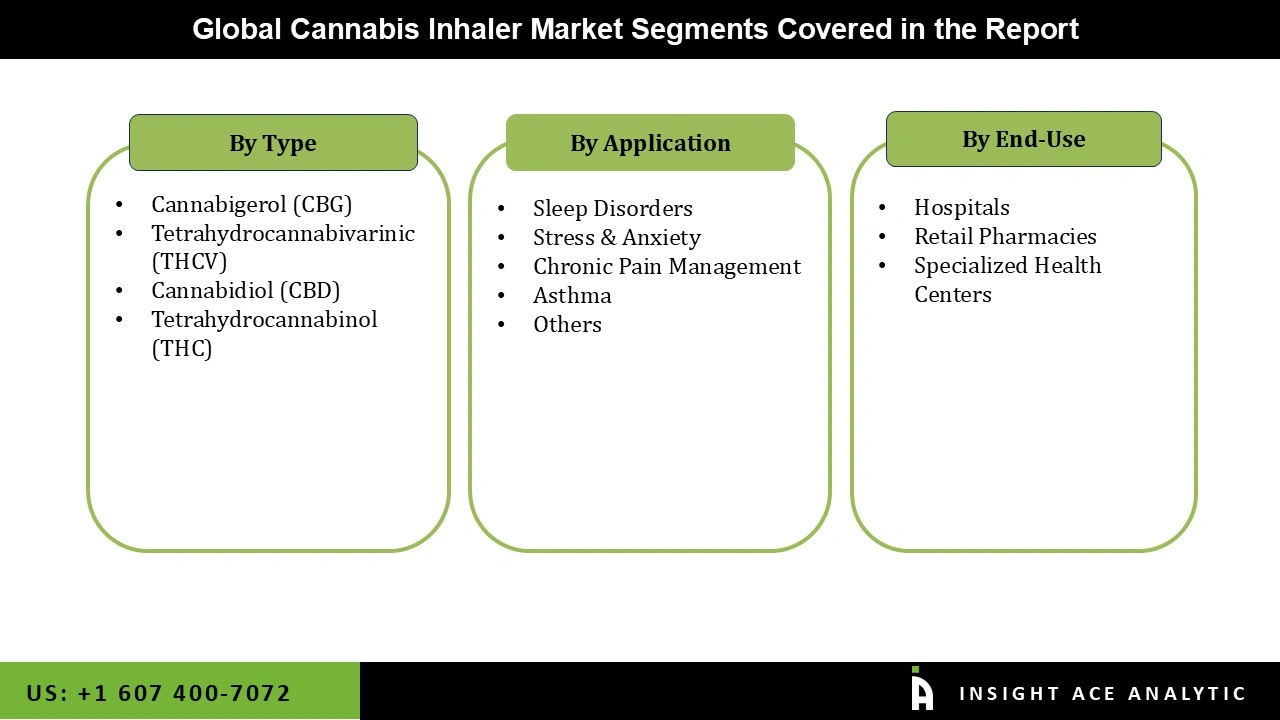
Cannabis Inhaler Market includes three main segments, type, application and end-users. By Type, the market is categorized into Cannabigerol (CBG), Tetrahydrocannabivarinic (THCV), Cannabidiol (CBD), and Tetrahydrocannabinol (THC). The Application segment comprises Sleep Disorders, Stress & Anxiety, Chronic Pain Management, Asthma, and Others. According to the End-User segment, the market includes Hospitals, Retail Pharmacies, and Specialized Health Centers.
Based On The Application, The Asthma Segment Category Is Accounted As A Significant Contributor To The Cannabis Inhaler Market.
The asthma segment category dominated the market in 2021. It can enlarge and inflame airways, making asthma a potentially severe lung condition. It may cause wheezing, chest tightness, and shortness of breath. Bronchodilators can loosen the muscles constricting the airways, easing some asthmatic symptoms. A minor case of asthma could not even interfere with daily activities. It might occasionally result in a life-threatening assault.
The North American Cannabis Inhaler Market Holds A Signification Revenue Share.
The North American cannabis inhaler market is expected to register the highest market share. Cannabis is prohibited because, if not used responsibly, it could lead to long-term consequences, including addiction. Federal legislation still forbids the purchase and use of cannabis in the US. However, on a state level, 36 US states have enacted legislation allowing the controlled use of cannabis for medical and recreational purposes. This is a crucial step in legalizing cannabis and will boost demand for cannabis inhalers in the US.
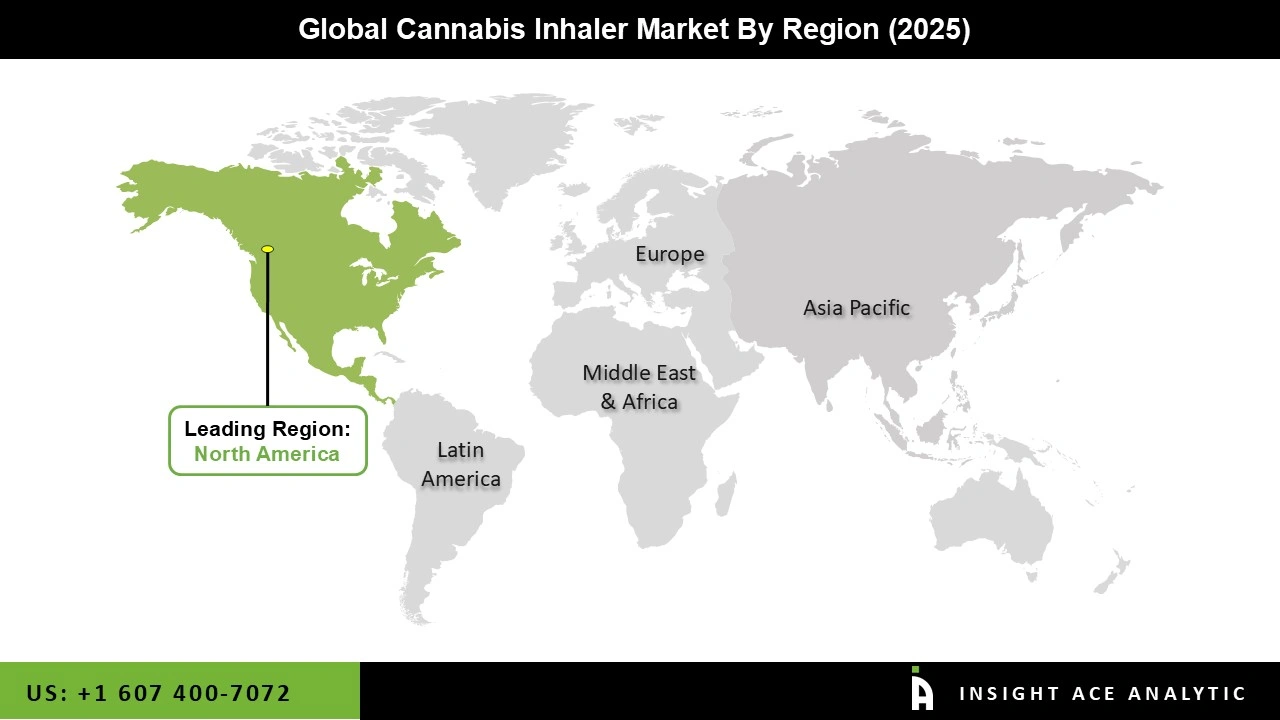
In addition, Europe is projected to proliferate in the global cannabis inhaler market. Only licensed medical professionals may permit the patient to receive cannabis in the UK, Germany, and Cyprus because these countries have recognized marijuana as a prescription drug. This ensures patient safety and makes it simpler to identify the people who should be subject to legal action for cannabis sales. While countries like Sweden, Latvia, Belgium, and others have outright banned this chemical, making it illegal to import, purchase, or sell cannabis legally. This variant demonstrates how marijuana is only partially accepted in Europe. Europe is the second-largest market for cannabis inhalers; however, other European nations have highly stringent regulations and conditions.
Competitive Landscape
Some major key players in the Cannabis Inhaler Market:
- CBD Luxe,
- Fairwinds cannabis,
- H and T presspart manufacturing LTD.,
- Koi CBD,
- MUV
- Vectura Group plc.
Cannabis Inhaler Market Report Scope :
| Report Attribute | Specifications |
| Growth Rate CAGR | CAGR of 10.0% from 2026 to 2035 |
| Quantitative Units | Representation of revenue in US$ Million and CAGR from 2026 to 2035 |
| Historic Year | 2022 to 2025 |
| Forecast Year | 2026-2035 |
| Report Coverage | The forecast of revenue, the position of the company, the competitive market structure, growth prospects, and trends |
| Segments Covered | Type, Application and End-User |
| Regional Scope | North America; Europe; Asia Pacific; Latin America; Middle East & Africa |
| Country Scope | U.S.; Canada; U.K.; Germany; China; India; Japan; Brazil; Mexico ;The UK; France; Italy; Spain; South Korea; South East Asia |
| Competitive Landscape | CBD Luxe, Fairwinds cannabis, H and T presspart manufacturing LTD., Koi CBD, MUV and Vectura Group plc. |
| Customization Scope | Free customization report with the procurement of the report, Modifications to the regional and segment scope. Particular Geographic competitive landscape. |
| Pricing And Available Payment Methods | Explore pricing alternatives that are customized to your particular study requirements. |
Segmentation of Cannabis Inhaler Market :
Cannabis Inhaler Market, By Type-
- Cannabigerol (CBG)
- Tetrahydrocannabivarinic (THCV)
- Cannabidiol (CBD)
- Tetrahydrocannabinol (THC)
Cannabis Inhaler Market By Application-
- Sleep Disorders
- Stress & Anxiety
- Chronic Pain Management
- Asthma
- Others
Cannabis Inhaler Market By End-User-
- Hospitals
- Retail Pharmacies
- Specialized Health Centers
Cannabis Inhaler Market By Region-
- North America-
- The US
- Canada
- Europe-
- Germany
- The UK
- France
- Italy
- Spain
- Rest of Europe
- Asia-Pacific-
- China
- Japan
- India
- South Korea
- South East Asia
- Rest of Asia Pacific
- Latin America-
- Brazil
- Argentina
- Mexico
- Rest of Latin America
- Middle East & Africa-
- GCC Countries
- South Africa
- Rest of Middle East and Africa
Research Design and Approach
This study employed a multi-step, mixed-method research approach that integrates:
- Secondary research
- Primary research
- Data triangulation
- Hybrid top-down and bottom-up modelling
- Forecasting and scenario analysis
This approach ensures a balanced and validated understanding of both macro- and micro-level market factors influencing the market.
Secondary Research
Secondary research for this study involved the collection, review, and analysis of publicly available and paid data sources to build the initial fact base, understand historical market behaviour, identify data gaps, and refine the hypotheses for primary research.
Sources Consulted
Secondary data for the market study was gathered from multiple credible sources, including:
- Government databases, regulatory bodies, and public institutions
- International organizations (WHO, OECD, IMF, World Bank, etc.)
- Commercial and paid databases
- Industry associations, trade publications, and technical journals
- Company annual reports, investor presentations, press releases, and SEC filings
- Academic research papers, patents, and scientific literature
- Previous market research publications and syndicated reports
These sources were used to compile historical data, market volumes/prices, industry trends, technological developments, and competitive insights.

Primary Research
Primary research was conducted to validate secondary data, understand real-time market dynamics, capture price points and adoption trends, and verify the assumptions used in the market modelling.
Stakeholders Interviewed
Primary interviews for this study involved:
- Manufacturers and suppliers in the market value chain
- Distributors, channel partners, and integrators
- End-users / customers (e.g., hospitals, labs, enterprises, consumers, etc., depending on the market)
- Industry experts, technology specialists, consultants, and regulatory professionals
- Senior executives (CEOs, CTOs, VPs, Directors) and product managers
Interview Process
Interviews were conducted via:
- Structured and semi-structured questionnaires
- Telephonic and video interactions
- Email correspondences
- Expert consultation sessions
Primary insights were incorporated into demand modelling, pricing analysis, technology evaluation, and market share estimation.
Data Processing, Normalization, and Validation
All collected data were processed and normalized to ensure consistency and comparability across regions and time frames.
The data validation process included:
- Standardization of units (currency conversions, volume units, inflation adjustments)
- Cross-verification of data points across multiple secondary sources
- Normalization of inconsistent datasets
- Identification and resolution of data gaps
- Outlier detection and removal through algorithmic and manual checks
- Plausibility and coherence checks across segments and geographies
This ensured that the dataset used for modelling was clean, robust, and reliable.
Market Size Estimation and Data Triangulation
Bottom-Up Approach
The bottom-up approach involved aggregating segment-level data, such as:
- Company revenues
- Product-level sales
- Installed base/usage volumes
- Adoption and penetration rates
- Pricing analysis
This method was primarily used when detailed micro-level market data were available.

Top-Down Approach
The top-down approach used macro-level indicators:
- Parent market benchmarks
- Global/regional industry trends
- Economic indicators (GDP, demographics, spending patterns)
- Penetration and usage ratios
This approach was used for segments where granular data were limited or inconsistent.
Hybrid Triangulation Approach
To ensure accuracy, a triangulated hybrid model was used. This included:
- Reconciling top-down and bottom-up estimates
- Cross-checking revenues, volumes, and pricing assumptions
- Incorporating expert insights to validate segment splits and adoption rates
This multi-angle validation yielded the final market size.
Forecasting Framework and Scenario Modelling
Market forecasts were developed using a combination of time-series modelling, adoption curve analysis, and driver-based forecasting tools.
Forecasting Methods
- Time-series modelling
- S-curve and diffusion models (for emerging technologies)
- Driver-based forecasting (GDP, disposable income, adoption rates, regulatory changes)
- Price elasticity models
- Market maturity and lifecycle-based projections
Scenario Analysis
Given inherent uncertainties, three scenarios were constructed:
- Base-Case Scenario: Expected trajectory under current conditions
- Optimistic Scenario: High adoption, favourable regulation, strong economic tailwinds
- Conservative Scenario: Slow adoption, regulatory delays, economic constraints
Sensitivity testing was conducted on key variables, including pricing, demand elasticity, and regional adoption.
Request Customization
Add countries, segments, company profiles, or extend forecast — free 10% customization with purchase.
Customize This Report →Enquire Before Buying
Speak with our analyst team about scope, methodology, pricing, or deliverable formats.
Enquire Now →Frequently Asked Questions
Cannabis Inhaler Market is expected to grow at a 10.0% CAGR during the forecast period for 2026 to 2035.
CBD Luxe, Fairwinds cannabis, H and T presspart manufacturing LTD., Koi CBD, MUV, Vectura Group plc. and Other.
Cannabis Inhaler Market is segmented into Type, Application and End-User and Other.
North America region is leading the Cannabis Inhaler Market.