Botulinum Toxin in Urology Market Size, Share & Trends Analysis Report By Application (Overactive Bladder, Neurogenic Detrusor Overactivity), By End-use (Hospitals, Urology Clinics), By Region, And By Segment Forecasts, 2024-2031
Botulinum Toxin in Urology Market Size is valued at USD 948.56 Mn in 2023 and is predicted to reach USD 1,504.89 Mn by the year 2031 at a 6.05% CAGR during the forecast period for 2024-2031.
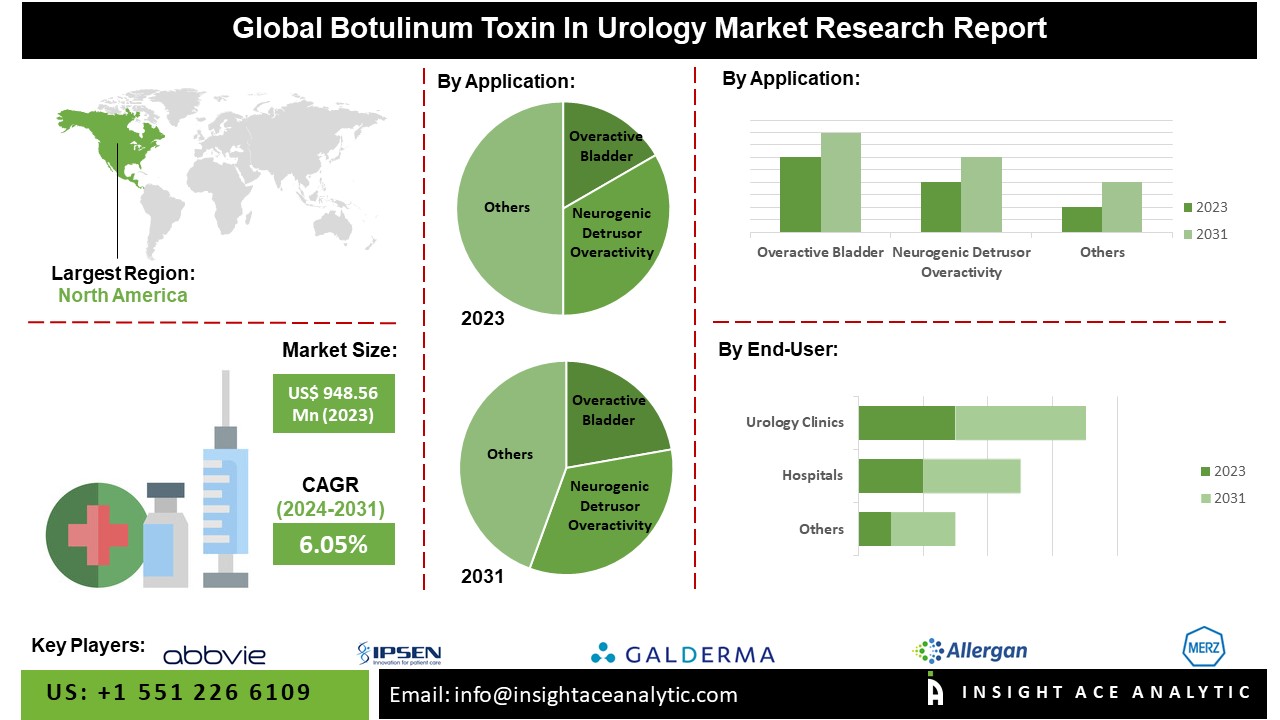
Botulinum toxin, commonly known as Botox, has found applications in the field of urology for the treatment of various medical conditions, particularly those related to the lower urinary tract. A range of significant factors drives the growth of the botulinum toxin in the urology market. One of the primary catalysts is the increasing prevalence of urological disorders on a global scale. As conventional treatments exhibit limitations, there has been a surge in demand for alternative solutions, with botulinum toxin emerging as a preferred option due to its muscle-relaxing properties. Moreover, the minimally invasive nature of Botox injections has made a considerable contribution to market expansion. Patients are increasingly choosing these procedures due to their low risk, minimal discomfort, and quicker recovery times compared to traditional surgical interventions.
Furthermore, the effectiveness of botulinum toxin in alleviating symptoms associated with bladder dysfunction has gained widespread recognition. Positive patient outcomes and increased satisfaction levels have stimulated market growth, encouraging patients and healthcare providers to adopt this innovative approach. With ongoing advancements in research and development leading to improved formulations and delivery methods, it is anticipated that the botulinum toxin in the urology market will experience sustained growth, ultimately enhancing the quality of life for individuals coping with urological disorders.
Competitive Landscape
Some Major Key Players In The Botulinum Toxin in Urology Market:
- AbbVie Inc.
- Merz Pharma
- Ipsen Pharma
- GALDERMA
- Allergan PLC
- Sun Pharmaceutical Industries Lt
- Biosensor Healthcare Pvt Ltd
- Others
Market Segmentation:
The botulinum toxin in the urology market includes End-Use and application. The application segment is segmented as overactive bladder and neurogenic detrusor overactivity. According to the End-Use segment, the market is divided into hospitals and urology clinics.
Based On The Application, The Overactive Bladder Segment Is A Major Contributor To The Botulinum Toxin In The Urology Market.
The overactive bladder category is expected to hold a major share of the global botulinum toxin in the urology market in 2022. Overactive bladder, characterized by a sudden and involuntary contraction of the bladder muscles, leads to frequent and urgent urination, often accompanied by urinary incontinence. Neurogenic Detrusor Overactivity, a condition commonly associated with spinal cord injuries or neurological disorders, results in uncontrolled bladder contractions and urinary urgency. Botulinum toxin, specifically Botox, has emerged as a revolutionary therapeutic option for patients suffering from these conditions. By targeting the underlying cause of these disorders - abnormal muscle contractions - botulinum toxin injections effectively relax the bladder muscles.
The Hospital Segment Witnessed A Rapid Growth.
The segment, hospital, is estimated to grow rapidly in the global botulinum toxin market. Hospitals play a pivotal role as essential healthcare institutions, acting as central hubs for the diagnosis and management of intricate medical conditions, which include urological disorders. Incorporating botulinum toxin therapies within the hospital environment exemplifies the contemporary healthcare approach, which is comprehensive and interdisciplinary. Individuals dealing with conditions like overactive Bladder (OAB) and neurogenic detrusor overactivity (NDO) frequently seek specialized care within hospital facilities. In these settings, proficient urologists and healthcare experts administer botulinum toxin injections with precision and expertise. The structured and closely monitored hospital environment ensures that patients receive treatments that are not only secure but also highly effective.
In The Region, The North American Botulinum Toxin In The Urology Market Holds A Significant Revenue Share.
The North American botulinum toxin in the urology market is expected to record the maximum market share. In North America, specifically in the United States and Canada, the market stands out for its vigorous research and development initiatives, sophisticated healthcare infrastructure, and a significant incidence of urological disorders. Substantial clinical trials and partnerships between pharmaceutical companies and research institutions stimulate innovation, positioning North America as a prominent centre for the utilization of botulinum toxin in urological applications. Furthermore, established reimbursement policies and a heightened level of awareness among both patients as well as healthcare professionals play pivotal roles in promoting the extensive uptake of these treatments.
In addition, Asia Pacific is likely to grow at a rapid rate in the global botulinum toxin in the urology market. The Asia-Pacific region is emerging as a prospective market for the use of botulinum toxin in urology. This growth is credited to the increasing occurrence of urological disorders, rising healthcare investments, and a growing awareness of advanced treatment alternatives. Nations like China, Japan, and India are experiencing a notable uptick in demand for progressive therapies, including botulinum toxin treatments, in response to the healthcare requirements of their ageing populations.
Recent Developments:
- In February 2021, Allergan, a subsidiary of AbbVie, has received approval from the U.S. FDA for the use of BOTOX® in the treatment of detrusor overactivity (bladder muscle overactivity) linked to a neurologic condition in pediatric patients aged five years and above who have not responded well to or cannot tolerate anticholinergic medication.
Botulinum Toxin in Urology Market Report Scope
| Report Attribute | Specifications |
| Market Size Value In 2023 | USD 948.56 Mn |
| Revenue Forecast In 2031 | USD 1,504.89 Mn |
| Growth Rate CAGR | CAGR of 6.05 % from 2024 to 2031 |
| Quantitative Units | Representation of revenue in US$ Million and CAGR from 2024 to 2031 |
| Historic Year | 2019 to 2023 |
| Forecast Year | 2024-2031 |
| Report Coverage | The forecast of revenue, the position of the company, the competitive market structure, growth prospects, and trends |
| Segments Covered | By Application and End-Use |
| Regional Scope | North America; Europe; Asia Pacific; Latin America; Middle East & Africa |
| Country Scope | U.S.; Canada; U.K.; Germany; China; India; Japan; Brazil; Mexico; The UK; France; Italy; Spain; China; Japan; India; South Korea; Southeast Asia; South Korea; Southeast Asia |
| Competitive Landscape | AbbVie Inc., Merz Pharma; Ipsen Pharma; GALDERMA; Allergan PLC; Sun Pharmaceutical Industries Ltd.; Biovencer Healthcare Pvt Ltd. |
| Customization Scope | Free customization report with the procurement of the report and modifications to the regional and segment scope. Particular Geographic competitive landscape. |
| Pricing And Available Payment Methods | Explore pricing alternatives that are customized to your particular study requirements. |
Segmentation Of Botulinum Toxin In Urology Market-
Botulinum Toxin In Urology Market By Application
- Overactive Bladder
- Neurogenic Detrusor Overactivity
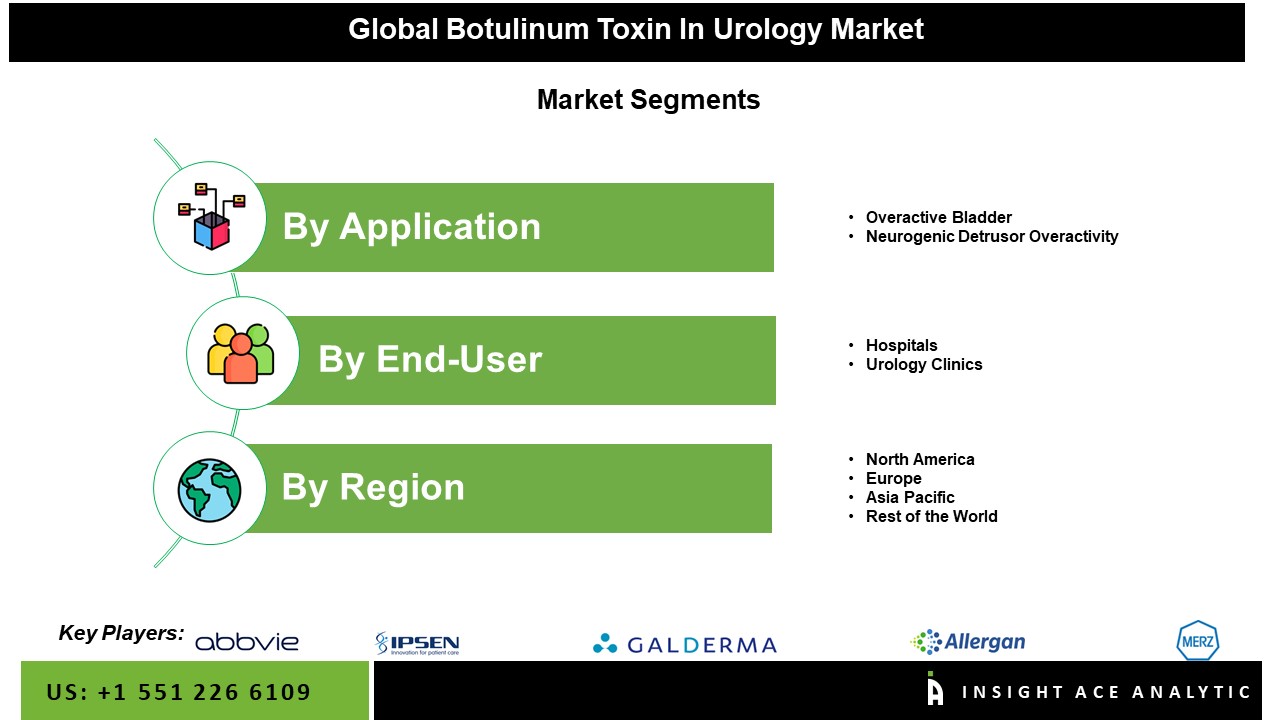
Botulinum Toxin In Urology Market By End-Use
- Hospitals
- Urology Clinics
Botulinum Toxin In Urology Market By Region-
North America-
- The US
- Canada
- Mexico
Europe-
- Germany
- The UK
- France
- Italy
- Spain
- Rest of Europe
Asia-Pacific-
- China
- Japan
- India
- South Korea
- South East Asia
- Rest of Asia Pacific
Latin America-
- Brazil
- Argentina
- Rest of Latin America
Middle East & Africa-
- GCC Countries
- South Africa
- Rest of Middle East and Africa
Research Design and Approach
This study employed a multi-step, mixed-method research approach that integrates:
- Secondary research
- Primary research
- Data triangulation
- Hybrid top-down and bottom-up modelling
- Forecasting and scenario analysis
This approach ensures a balanced and validated understanding of both macro- and micro-level market factors influencing the market.
Secondary Research
Secondary research for this study involved the collection, review, and analysis of publicly available and paid data sources to build the initial fact base, understand historical market behaviour, identify data gaps, and refine the hypotheses for primary research.
Sources Consulted
Secondary data for the market study was gathered from multiple credible sources, including:
- Government databases, regulatory bodies, and public institutions
- International organizations (WHO, OECD, IMF, World Bank, etc.)
- Commercial and paid databases
- Industry associations, trade publications, and technical journals
- Company annual reports, investor presentations, press releases, and SEC filings
- Academic research papers, patents, and scientific literature
- Previous market research publications and syndicated reports
These sources were used to compile historical data, market volumes/prices, industry trends, technological developments, and competitive insights.

Primary Research
Primary research was conducted to validate secondary data, understand real-time market dynamics, capture price points and adoption trends, and verify the assumptions used in the market modelling.
Stakeholders Interviewed
Primary interviews for this study involved:
- Manufacturers and suppliers in the market value chain
- Distributors, channel partners, and integrators
- End-users / customers (e.g., hospitals, labs, enterprises, consumers, etc., depending on the market)
- Industry experts, technology specialists, consultants, and regulatory professionals
- Senior executives (CEOs, CTOs, VPs, Directors) and product managers
Interview Process
Interviews were conducted via:
- Structured and semi-structured questionnaires
- Telephonic and video interactions
- Email correspondences
- Expert consultation sessions
Primary insights were incorporated into demand modelling, pricing analysis, technology evaluation, and market share estimation.
Data Processing, Normalization, and Validation
All collected data were processed and normalized to ensure consistency and comparability across regions and time frames.
The data validation process included:
- Standardization of units (currency conversions, volume units, inflation adjustments)
- Cross-verification of data points across multiple secondary sources
- Normalization of inconsistent datasets
- Identification and resolution of data gaps
- Outlier detection and removal through algorithmic and manual checks
- Plausibility and coherence checks across segments and geographies
This ensured that the dataset used for modelling was clean, robust, and reliable.
Market Size Estimation and Data Triangulation
Bottom-Up Approach
The bottom-up approach involved aggregating segment-level data, such as:
- Company revenues
- Product-level sales
- Installed base/usage volumes
- Adoption and penetration rates
- Pricing analysis
This method was primarily used when detailed micro-level market data were available.

Top-Down Approach
The top-down approach used macro-level indicators:
- Parent market benchmarks
- Global/regional industry trends
- Economic indicators (GDP, demographics, spending patterns)
- Penetration and usage ratios
This approach was used for segments where granular data were limited or inconsistent.
Hybrid Triangulation Approach
To ensure accuracy, a triangulated hybrid model was used. This included:
- Reconciling top-down and bottom-up estimates
- Cross-checking revenues, volumes, and pricing assumptions
- Incorporating expert insights to validate segment splits and adoption rates
This multi-angle validation yielded the final market size.
Forecasting Framework and Scenario Modelling
Market forecasts were developed using a combination of time-series modelling, adoption curve analysis, and driver-based forecasting tools.
Forecasting Methods
- Time-series modelling
- S-curve and diffusion models (for emerging technologies)
- Driver-based forecasting (GDP, disposable income, adoption rates, regulatory changes)
- Price elasticity models
- Market maturity and lifecycle-based projections
Scenario Analysis
Given inherent uncertainties, three scenarios were constructed:
- Base-Case Scenario: Expected trajectory under current conditions
- Optimistic Scenario: High adoption, favourable regulation, strong economic tailwinds
- Conservative Scenario: Slow adoption, regulatory delays, economic constraints
Sensitivity testing was conducted on key variables, including pricing, demand elasticity, and regional adoption.
Request Customization
Add countries, segments, company profiles, or extend forecast — free 10% customization with purchase.
Customize This Report →Enquire Before Buying
Speak with our analyst team about scope, methodology, pricing, or deliverable formats.
Enquire Now →Frequently Asked Questions
Botulinum Toxin in Urology Market Size is valued at USD 483.56 Mn in 2023 and is predicted to reach USD 1,504.89 Mn by the year 2031
Botulinum Toxin in Urology Market expected to grow at a 6.05% CAGR during the forecast period for 2024-2031.
Merz Pharma; Ipsen Pharma; GALDERMA; Allergan PLC; Sun Pharmaceutical Industries Ltd.; Biovencer Healthcare Pvt Ltd.