Biomarker Discovery Outsourcing Services Market Size, Revenue, Trend Report 2026 to 2035
What is Biomarker Discovery Outsourcing Services Market Size?
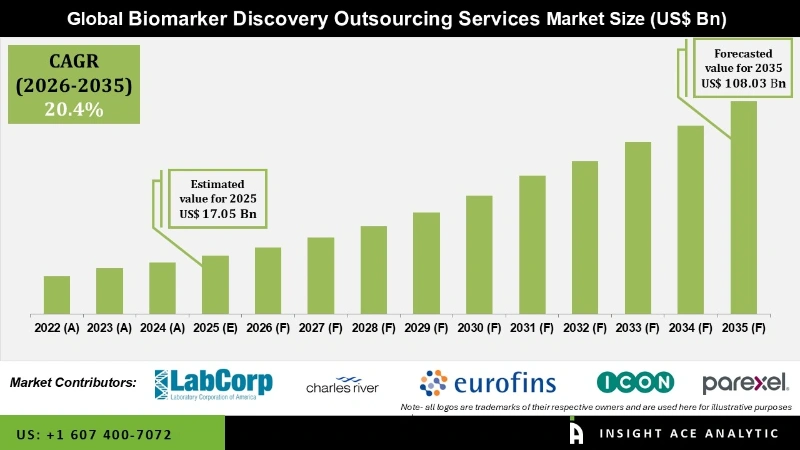
Biomarker Discovery Outsourcing Services Market Size is valued at USD 17.05 billion in 2025 and is predicted to reach USD 108.03 billion by the year 2035 at a 20.4% CAGR during the forecast period for 2026 to 2035.
Biomarker Discovery Outsourcing Services Market Size, Share & Trends Analysis Report By Type (Predictive Biomarkers, Prognostic Biomarkers, Safety Biomarkers And Surrogate Endpoints), Therapeutic Area (Oncology, Neurology, Cardiology, Autoimmune Diseases), Discovery Phase (Biomarker Identification, Biomarker Validation, Biomarker Profiling, Biomarker Panel Development And Biomarker Selection) And End Users (Pharmaceutical Companies, Biotechnology Companies), Region And Segment Forecasts, 2026 to 2035.
Biomarker Discovery Outsourcing Services Market Key Takeaways:
|
Key Industry Insights & Findings from the Report:
- The market for biomarker discovery outsourcing services is anticipated to be driven by a rise in the use of targeted medicines.
- Another major driver of the market for biomarker discovery outsourcing services is the rising incidence of chronic illnesses, including cancer, diabetes, and cardiovascular problems.
- North America dominated the market and accounted for a global revenue share in 2023.
- In the global biomarker discovery outsourcing services market, the predictive biomarkers segment is expected to expand at a quick pace because of speedier drug development and regulatory approval, which lead to cost savings and revenue generation.
The demand for personalized therapies and companion diagnostics, which rely on biomarkers, stands as a fundamental driver in the biomarker discovery services market. Collaborative initiatives involving academic institutions, research organizations, and pharmaceutical companies in biomarker discovery projects stimulate growth by combining resources and expertise. The COVID-19 pandemic underscored the crucial significance of biomarkers in the realm of infectious disease diagnostics and public health. This heightened awareness, along with increased research funding, has ignited growth within the biomarker discovery services market. The existence of supportive regulatory frameworks and guidelines for biomarker development and validation plays a pivotal role in encouraging the utilization of biomarkers in clinical applications, further propelling market growth. Additionally, the urgency of the pandemic has specifically fueled augmented funding and research interest in biomarkers for infectious diseases, delivering a substantial boost to the market. The strict regulatory demands and compliance considerations may pose obstacles to the delegation of biomarker discovery services.
Moreover, organizations must verify that their selected service providers adhere to essential quality and safety criteria, a task that can be intricate and time-intensive. Biomarker discovery involves a multifaceted and intricate process. Uncovering biomarkers that are both meaningful and practical frequently necessitates a profound comprehension of biology, bioinformatics, and data analysis, a challenge that may take more work to achieve through outsourcing
Recent Developments:
- In Sept 2020, Thermo Fisher Scientific has announced new partnerships between the Thermo Fisher Precision Medicine Science Center (PMSC) and AstraZeneca, as well as the University of Nebraska Medical Center. These collaborations aim to address unmet requirements in clinical biomarker discovery by developing creative solutions. The recent agreements enhance the PMSC's objective of establishing uniform procedures with pharmaceutical and academic collaborators to simplify the progression from biomarker research to clinical application, hence generating novel prospects for precision medicine.
Competitive Landscape
Some of the biomarker discovery outsourcing services market key players are:
- Laboratory Corporation of America Holdings
- Charles River Laboratories
- Eurofins Scientific
- Celeron;
- ICON plc.
- Parexel International (MA) Corporation
- Proteome Sciences
- GHO Capital
- Thermos Fisher Scientific Inc.
- Bio-Rad Laboratories, Inc.
- Svar Life Science
- Sino Biological, Inc
- Almac Group Limited
- REPROCELL Inc.
- Frontage Labs
- Biomcare ApS
- Crown Bioscience
- RayBiotech, Inc.
- Other Market Players
Market Segmentation:
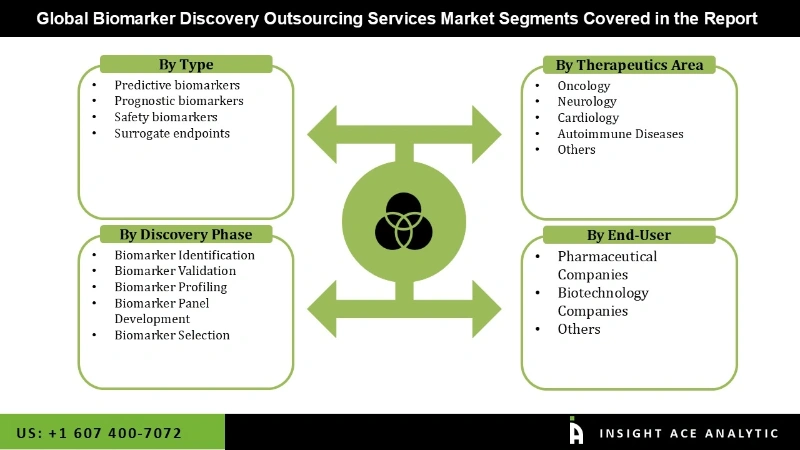
The biomarker discovery outsourcing services market is segmented on the basis of type, therapeutic area, discovery phase and end users. Based on type, the market is segmented as predictive biomarkers, prognostic biomarkers, safety biomarkers and surrogate endpoints. By therapeutic area, the market is segmented as oncology, neurology, cardiology, autoimmune diseases and others. By the discovery phase, the market is segmented into biomarker identification, biomarker validation, biomarker profiling, biomarker panel development and biomarker selection. By end users, the market is segmented into pharmaceutical companies, biotechnology companies and others.
Based On The Product, The Biomarker Validation Segment Is Accounted As A Major Contributor In The Biomarker Discovery Outsourcing Services Market.
The biomarker validation category is expected to hold a major share of the global biomarker discovery outsourcing services market in 2024. The process of "biomarker validation" serves to confirm the accuracy, reliability, and clinical suitability of potential biomarkers. It encompasses both the discovery of biomarkers in research settings and their subsequent integration into clinical applications. The demand for biomarker validation services is substantial, primarily driven by the emphasis on translating research findings into clinical practice. Additionally, regulatory entities like the FDA and the European Medicines Agency (EMA) mandate rigorous validation of biomarkers to ensure their suitability for diagnostic, prognostic, or treatment selection purposes. These factors are anticipated to act as catalysts for market expansion.
The Predictive Biomarkers Segment Witnessed Growth At A Rapid Rate.
The predictive biomarkers segment is projected to grow at a rapid rate in the global biomarker discovery outsourcing services market. Pharmaceutical and biotechnology firms are increasingly utilizing predictive biomarkers to identify patient groups with a higher likelihood of responding positively to experimental drugs. Predictive biomarkers are appealing from a commercial standpoint due to their capacity to expedite drug development and streamline regulatory approval processes, thereby leading to cost savings and revenue generation. Predictive biomarkers are instrumental in driving innovation and growth within the biomarker discovery outsourcing services market. They offer the promise of more effective treatments, reduced healthcare costs, and improved patient outcomes, making them a focal point in the field of biomarker research and development.
In The Region, The North American Biomarker Discovery Outsourcing Services Market Holds A Significant Revenue Share.
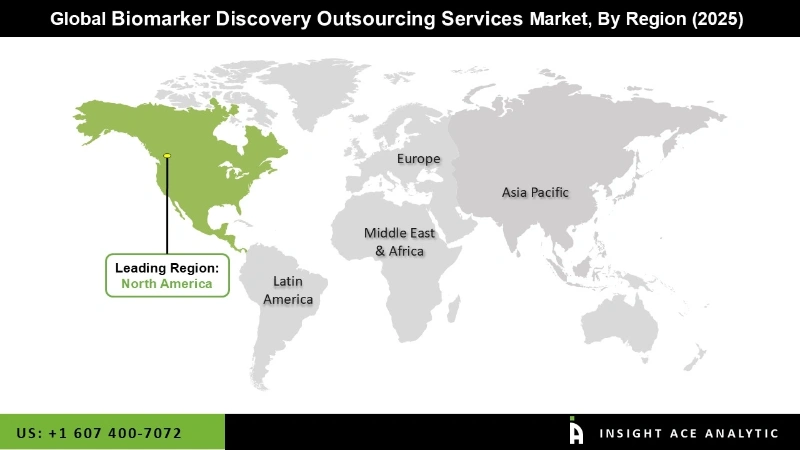
The North American biomarker discovery outsourcing services market is expected to register the highest market share. A strong focus on research and development, advanced healthcare infrastructure, regulatory support, collaborative partnerships, and significant funding characterizes the biomarker discovery outsourcing services market in North America. It plays a pivotal role in advancing personalized medicine and the development of innovative therapies. In addition, Asia Pacific is projected to grow at a rapid rate in the global biomarker discovery outsourcing services market. The Asia Pacific region has a diverse healthcare landscape with varying disease patterns and genetic profiles. This diversity creates opportunities for biomarker discovery, as specific biomarkers may be needed for different populations. Some countries in the region have initiated government-funded programs to support biomarker research and development. These programs aim to foster innovation and enhance the competitiveness of the biomarker discovery market in the Asia Pacific.
Biomarker Discovery Outsourcing Services Market Report Scope
| Report Attribute | Specifications |
| Market Size Value In 2025 | USD 17.05 Bn |
| Revenue Forecast In 2035 | USD 108.03 Bn |
| Growth Rate CAGR | CAGR of 20.4 % from 2026 to 2035 |
| Quantitative Units | Representation of revenue in US$ Bn, and CAGR from 2026 to 2035 |
| Historic Year | 2022 to 2024 |
| Forecast Year | 2026-2035 |
| Report Coverage | The forecast of revenue, the position of the company, the competitive market structure, growth prospects, and trends |
| Segments Covered | By Component, Material, Capacity, Voltage, And Application |
| Regional Scope | North America; Europe; Asia Pacific; Latin America; Middle East & Africa |
| Country Scope | U.S.; Canada; U.K.; Germany; China; India; Japan; Brazil; Mexico; France; Italy; Spain; South Korea; Southeast Asia |
| Competitive Landscape | Laboratory Corporation of America Holdings; Charles River Laboratories; Eurofins Scientific; Celerion; ICON plc.; Parexel International (MA) Corporation; Proteome Sciences; GHO Capital; Thermo Fisher Scientific Inc., Evotec., Bio-Rad Laboratories, Inc., Svar Life Science, Sino Biological, Inc, Almac Group Limited, REPROCELL Inc., Frontage Labs, Biomcare ApS, Crown Bioscience, RayBiotech, Inc., Other Market Players |
| Customization Scope | Free customization report with the procurement of the report and modifications to the regional and segment scope. Particular Geographic competitive landscape. |
| Pricing And Available Payment Methods | Explore pricing alternatives that are customized to your particular study requirements. |
Segmentation of Biomarker Discovery Outsourcing Services Market-
Biomarker Discovery Outsourcing Services Market By Type
- Predictive biomarkers
- Prognostic biomarkers
- Safety biomarkers
- Surrogate endpoints
Biomarker Discovery Outsourcing Services Market By Therapeutic Area
- Oncology
- Neurology
- Cardiology
- Autoimmune Diseases
- Others
Biomarker Discovery Outsourcing Services Market By Discovery Phase
- Biomarker Identification
- Biomarker Validation
- Biomarker Profiling
- Biomarker Panel Development
- Biomarker Selection
Biomarker Discovery Outsourcing Services Market By End-use
- Pharmaceutical Companies
- Biotechnology Companies
- Others
Biomarker Discovery Outsourcing Services Market By Region-
North America-
- The US
- Canada
- Mexico
Europe-
- Germany
- The UK
- France
- Italy
- Spain
- Rest of Europe
Asia-Pacific-
- China
- Japan
- India
- South Korea
- South East Asia
- Rest of Asia Pacific
Latin America-
- Brazil
- Argentina
- Rest of Latin America
Middle East & Africa-
- GCC Countries
- South Africa
- Rest of Middle East and Africa
Research Design and Approach
This study employed a multi-step, mixed-method research approach that integrates:
- Secondary research
- Primary research
- Data triangulation
- Hybrid top-down and bottom-up modelling
- Forecasting and scenario analysis
This approach ensures a balanced and validated understanding of both macro- and micro-level market factors influencing the market.
Secondary Research
Secondary research for this study involved the collection, review, and analysis of publicly available and paid data sources to build the initial fact base, understand historical market behaviour, identify data gaps, and refine the hypotheses for primary research.
Sources Consulted
Secondary data for the market study was gathered from multiple credible sources, including:
- Government databases, regulatory bodies, and public institutions
- International organizations (WHO, OECD, IMF, World Bank, etc.)
- Commercial and paid databases
- Industry associations, trade publications, and technical journals
- Company annual reports, investor presentations, press releases, and SEC filings
- Academic research papers, patents, and scientific literature
- Previous market research publications and syndicated reports
These sources were used to compile historical data, market volumes/prices, industry trends, technological developments, and competitive insights.

Primary Research
Primary research was conducted to validate secondary data, understand real-time market dynamics, capture price points and adoption trends, and verify the assumptions used in the market modelling.
Stakeholders Interviewed
Primary interviews for this study involved:
- Manufacturers and suppliers in the market value chain
- Distributors, channel partners, and integrators
- End-users / customers (e.g., hospitals, labs, enterprises, consumers, etc., depending on the market)
- Industry experts, technology specialists, consultants, and regulatory professionals
- Senior executives (CEOs, CTOs, VPs, Directors) and product managers
Interview Process
Interviews were conducted via:
- Structured and semi-structured questionnaires
- Telephonic and video interactions
- Email correspondences
- Expert consultation sessions
Primary insights were incorporated into demand modelling, pricing analysis, technology evaluation, and market share estimation.
Data Processing, Normalization, and Validation
All collected data were processed and normalized to ensure consistency and comparability across regions and time frames.
The data validation process included:
- Standardization of units (currency conversions, volume units, inflation adjustments)
- Cross-verification of data points across multiple secondary sources
- Normalization of inconsistent datasets
- Identification and resolution of data gaps
- Outlier detection and removal through algorithmic and manual checks
- Plausibility and coherence checks across segments and geographies
This ensured that the dataset used for modelling was clean, robust, and reliable.
Market Size Estimation and Data Triangulation
Bottom-Up Approach
The bottom-up approach involved aggregating segment-level data, such as:
- Company revenues
- Product-level sales
- Installed base/usage volumes
- Adoption and penetration rates
- Pricing analysis
This method was primarily used when detailed micro-level market data were available.

Top-Down Approach
The top-down approach used macro-level indicators:
- Parent market benchmarks
- Global/regional industry trends
- Economic indicators (GDP, demographics, spending patterns)
- Penetration and usage ratios
This approach was used for segments where granular data were limited or inconsistent.
Hybrid Triangulation Approach
To ensure accuracy, a triangulated hybrid model was used. This included:
- Reconciling top-down and bottom-up estimates
- Cross-checking revenues, volumes, and pricing assumptions
- Incorporating expert insights to validate segment splits and adoption rates
This multi-angle validation yielded the final market size.
Forecasting Framework and Scenario Modelling
Market forecasts were developed using a combination of time-series modelling, adoption curve analysis, and driver-based forecasting tools.
Forecasting Methods
- Time-series modelling
- S-curve and diffusion models (for emerging technologies)
- Driver-based forecasting (GDP, disposable income, adoption rates, regulatory changes)
- Price elasticity models
- Market maturity and lifecycle-based projections
Scenario Analysis
Given inherent uncertainties, three scenarios were constructed:
- Base-Case Scenario: Expected trajectory under current conditions
- Optimistic Scenario: High adoption, favourable regulation, strong economic tailwinds
- Conservative Scenario: Slow adoption, regulatory delays, economic constraints
Sensitivity testing was conducted on key variables, including pricing, demand elasticity, and regional adoption.
Request Customization
Add countries, segments, company profiles, or extend forecast — free 10% customization with purchase.
Customize This Report →Enquire Before Buying
Speak with our analyst team about scope, methodology, pricing, or deliverable formats.
Enquire Now →Frequently Asked Questions
Biomarker Discovery Outsourcing Services Market Size is valued at USD 17.05 billion in 2025 and is predicted to reach USD 108.03 billion by the year 2035.
Biomarker Discovery Outsourcing Services Market expected to grow at a 20.4% CAGR during the forecast period for 2026-2035.
ICON plc.; Parexel International (MA) Corporation; Proteome Sciences; GHO Capital; Thermo Fisher Scientific Inc., Evotec.
Biomarker discovery outsourcing services market is segmented on the basis of type, therapeutic area, discovery phase and end users.
North American region is leading the Biomarker discovery outsourcing services market.