Antibody Coupled T-Receptor Therapy Market Size, Share & Trends Analysis Report By Indication (Lymphoma, Breast Cancer, Neuroblastoma, Other Indications), By Region, And By Segment Forecasts, 2023-2031

Report Id: 2243 Pages: 180 Last Updated: 29 October 2024 Format: PDF / PPT / Excel / Power BI
Share With : linkedin twitter facebook

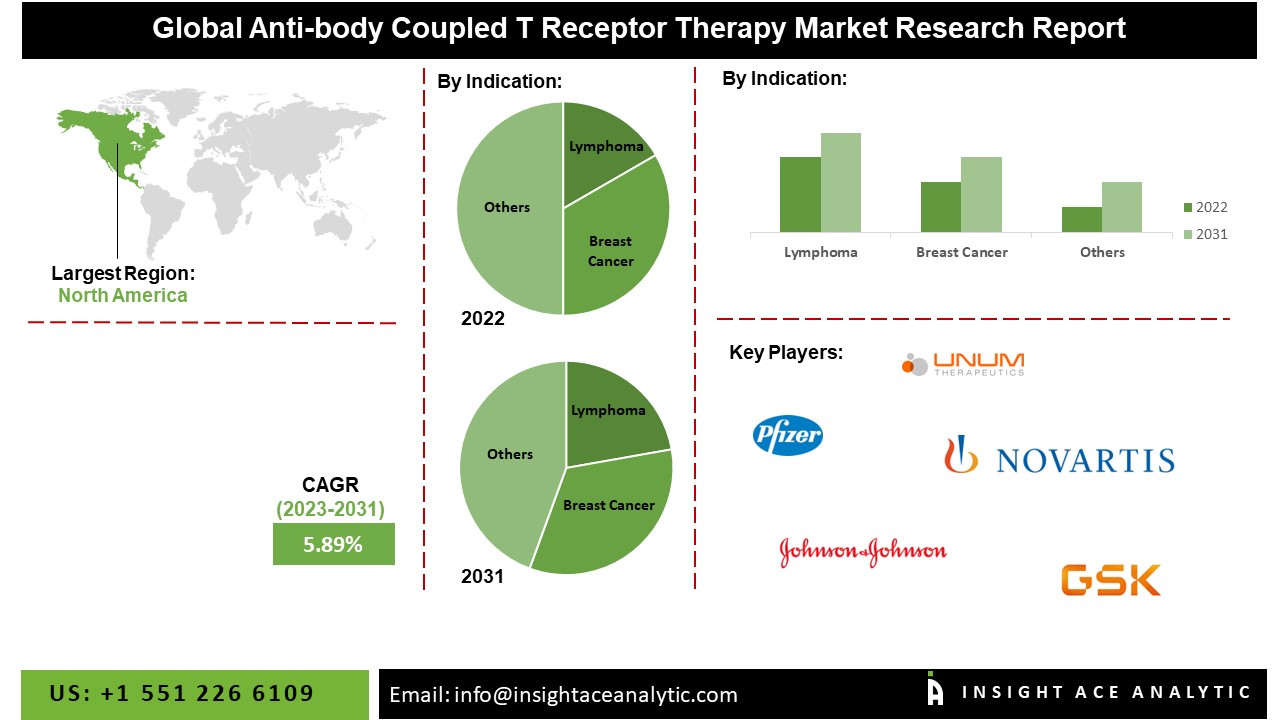
Antibody Coupled T-Receptor Therapy Market Size is predicted to witness a 5.89% CAGR during the forecast period for 2023-2031.

Antibody Coupled T-Receptor Therapy Market

ACR therapy is an immunotherapy modality to have the patient's T cells fight cancer. Immune function is supported by T cells. The capacity of the immune system to detect and eradicate damaged or sick cells relies on these highly specialized white blood cells. Antigens are unique identifiers on cell surfaces that T cells can detect. When the immune system identifies a cell that expresses an antigen that suggests danger, like a cancer cell, it goes into overdrive.

The ACTR approach combines the best features of antibody and T-cell treatments. One approach is the expression of a receptor that can identify a specific antigen in cancer cells by genetically altering T cells. These T cells undergo additional modifications, one of which is the development of an antibody-binding receptor. Furthermore, ACTR treatment has shown promising results. An important component of the immune system, the lymphatic system, is the site of lymphoma formation. This treatment efficiently eliminates lymphoma cells by utilizing the patient's T cells modified with ACTR receptors.

However, the market growth is hampered by the strict regulatory criteria for the safety and health of antibody-coupled T-receptor therapy and the product's inability to prevent fog in environments with dramatic temperature fluctuations or high humidity antibody-coupled T-receptor therapy; a larger patient population may not be able to afford the development and administration of ACTR therapy due to the high costs involved. Particularly in areas with limited healthcare resources, the high costs may discourage its use due to the complicated production processes, extensive clinical testing, and specialist equipment required.

In addition, well-established immunotherapies such as CAR-T cell therapy are a threat to ACTR therapy because of their popularity in clinical practice. As consumers and healthcare professionals consider the pros and cons of various treatment options, the extensive availability and success of these alternatives could slow down the rise of the ACTR therapy market. This reflects the great efforts of all those involved in reacting to the global public health crisis precipitated by COVID-19 and the decades of prior advancement in allowing technology to generate antibody treatments. Another antibody that has just received approval for COVID-19 and has already received approval in other situations is tocilizumab, an anti-IL-6R antibody.

Competitive Landscape

Some Major Key Players In The Antibody Coupled T-Receptor Therapy Market:

  • Unum Therapeutics
  • Pfizer Inc.
  • Novartis AG
  • Johnson and Johnson Services, Inc.
  • GSK plc
  • The Bristol-Myers Squibb Company
  • Others

Market Segmentation:

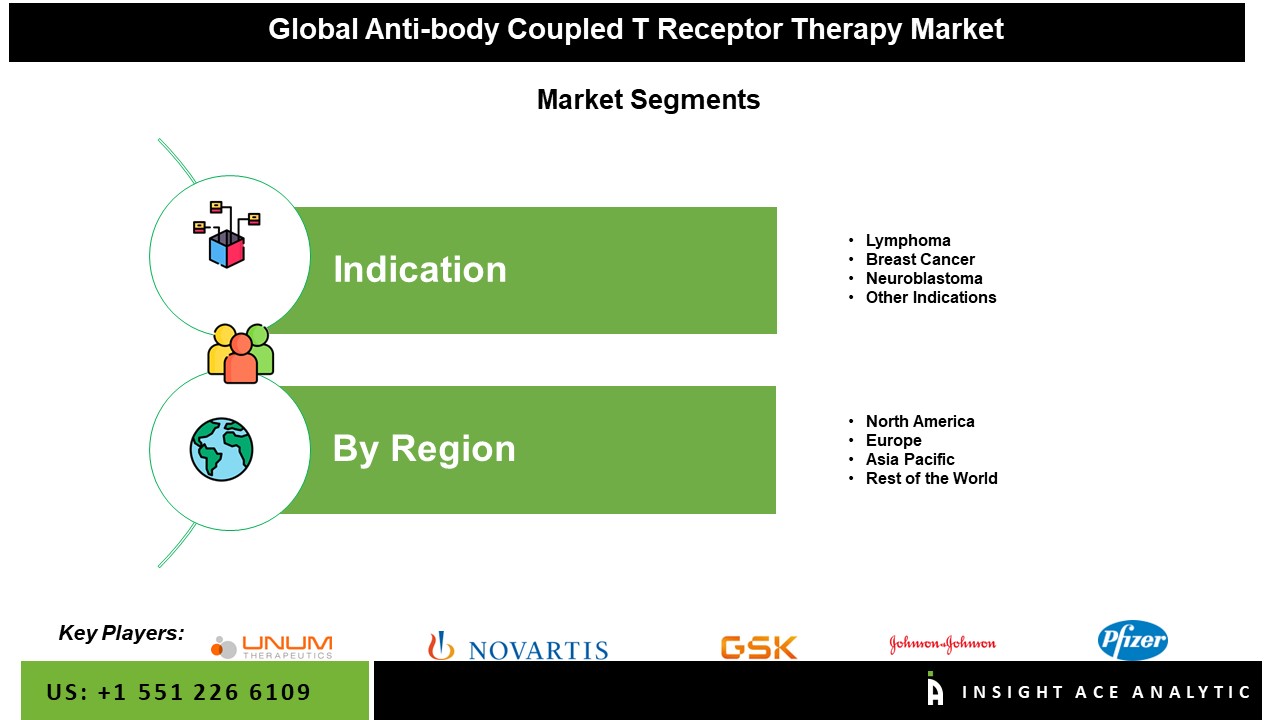
The antibody-coupled t-receptor therapy market is segmented based on the indication. By indication, the market is segmented into lymphoma, breast cancer, neuroblastoma, and other indications.

Based On The Indication, The Lymphoma Segment Is A Major Contributor To The Antibody Coupled T-Receptor Therapy Market. 

The lymphoma antibody coupled t-receptor therapy market is expected to lead with a major global market share in 2022. Lymphoma is the cancer that develops in the immune system's lymphocytes, which fight infections. These cells have several potential locations, including lymph nodes, the spleen, the thymus, and bone marrow. The hallmark of lymphoma is the aberrant and uncontrolled growth of lymphocytes.

Neuroblastoma Segment To Witness Growth At A Rapid Rate.

The neuroblastoma industry comprises the bulk of antibody-coupled t-receptor therapy because immature nerve cells can give rise to neuroblastoma, a malignant tumour in several body parts. Situated on the kidneys' upper surfaces and similar in origin to nerve cells, kidneys are the most frequent sites for developing neuroblastoma, especially in countries like the US, Germany, the UK, China, and India.

In The Region, The North American Antibody Coupled T-Receptor Therapy Market Holds A Significant Revenue Share.

The North American antibody-coupled t-receptor therapy market is expected to record the maximum market share in revenue in the near future. It can be attributed to the highly developed healthcare infrastructure, favourable reimbursement policies, partnerships, new product launches, and prominent pharmaceutical and biotechnology companies engaged in immunotherapy; the region is anticipated to experience accelerated growth in the antibody-coupled t-receptor therapy market during the forecast period. In addition, Asia Pacific is estimated to grow rapidly in the global Antibody Coupled T-receptor Therapy Market due to the huge amount of registered clinical trials linked to the treatments. The significant focus on government funding and reforms is another factor expected to contribute to expanding the region's chimeric antigen receptor (CAR)-T cell therapy market in the coming years.

Antibody Coupled T-Receptor Therapy Market Report Scope

Report Attribute Specifications
Growth Rate CAGR CAGR of 5.89% from 2023 to 2031
Quantitative Units Representation of revenue in US$ Million and CAGR from 2023 to 2031
Historic Year 2019 to 2022
Forecast Year 2023-2031
Report Coverage The forecast of revenue, the position of the company, the competitive market structure, growth prospects, and trends
Segments Covered By Indication
Regional Scope North America; Europe; Asia Pacific; Latin America; Middle East & Africa
Country Scope U.S.; Canada; U.K.; Germany; China; India; Japan; Brazil; Mexico; France; Italy; Spain; South East Asia; South Korea
Competitive Landscape Unum Therapeutics, Pfizer Inc., Novartis AG, Johnson and Johnson Services, Inc., GSK plc, and The Bristol-Myers Squibb Company.
Customization Scope Free customization report with the procurement of the report and modifications to the regional and segment scope. Particular Geographic competitive landscape.
Pricing And Available Payment Methods Explore pricing alternatives that are customized to your particular study requirements.

Segmentation of Antibody-Coupled T-Receptor Therapy Market-

Antibody-Coupled T-Receptor Therapy Market By Indication-

  • Lymphoma
  • Breast Cancer
  • Neuroblastoma
  • Other Indications

Antibody Coupled T-Receptor Therapy Market Seg

Antibody-Coupled T-Receptor Therapy Market By Region-

North America-

  • The US
  • Canada
  • Mexico

Europe-

  • Germany
  • The UK
  • France
  • Italy
  • Spain
  • Rest of Europe

Asia-Pacific-

  • China
  • Japan
  • India
  • South Korea
  • South East Asia
  • Rest of Asia Pacific

Latin America-

  • Brazil
  • Argentina
  • Rest of Latin America

 Middle East & Africa-

  • GCC Countries
  • South Africa
  • Rest of the Middle East and Africa

Need specific information/chapter from the report of the custom data table, graph or complete report? Tell us more.

Research Design and Approach

This study employed a multi-step, mixed-method research approach that integrates:

  • Secondary research
  • Primary research
  • Data triangulation
  • Hybrid top-down and bottom-up modelling
  • Forecasting and scenario analysis

This approach ensures a balanced and validated understanding of both macro- and micro-level market factors influencing the market.

Secondary Research

Secondary research for this study involved the collection, review, and analysis of publicly available and paid data sources to build the initial fact base, understand historical market behaviour, identify data gaps, and refine the hypotheses for primary research.

Sources Consulted

Secondary data for the market study was gathered from multiple credible sources, including:

  • Government databases, regulatory bodies, and public institutions
  • International organizations (WHO, OECD, IMF, World Bank, etc.)
  • Commercial and paid databases
  • Industry associations, trade publications, and technical journals
  • Company annual reports, investor presentations, press releases, and SEC filings
  • Academic research papers, patents, and scientific literature
  • Previous market research publications and syndicated reports

These sources were used to compile historical data, market volumes/prices, industry trends, technological developments, and competitive insights.

Secondary Research

Primary Research

Primary research was conducted to validate secondary data, understand real-time market dynamics, capture price points and adoption trends, and verify the assumptions used in the market modelling.

Stakeholders Interviewed

Primary interviews for this study involved:

  • Manufacturers and suppliers in the market value chain
  • Distributors, channel partners, and integrators
  • End-users / customers (e.g., hospitals, labs, enterprises, consumers, etc., depending on the market)
  • Industry experts, technology specialists, consultants, and regulatory professionals
  • Senior executives (CEOs, CTOs, VPs, Directors) and product managers

Interview Process

Interviews were conducted via:

  • Structured and semi-structured questionnaires
  • Telephonic and video interactions
  • Email correspondences
  • Expert consultation sessions

Primary insights were incorporated into demand modelling, pricing analysis, technology evaluation, and market share estimation.

Data Processing, Normalization, and Validation

All collected data were processed and normalized to ensure consistency and comparability across regions and time frames.

The data validation process included:

  • Standardization of units (currency conversions, volume units, inflation adjustments)
  • Cross-verification of data points across multiple secondary sources
  • Normalization of inconsistent datasets
  • Identification and resolution of data gaps
  • Outlier detection and removal through algorithmic and manual checks
  • Plausibility and coherence checks across segments and geographies

This ensured that the dataset used for modelling was clean, robust, and reliable.

Market Size Estimation and Data Triangulation

Bottom-Up Approach

The bottom-up approach involved aggregating segment-level data, such as:

  • Company revenues
  • Product-level sales
  • Installed base/usage volumes
  • Adoption and penetration rates
  • Pricing analysis

This method was primarily used when detailed micro-level market data were available.

Bottom Up Approach

Top-Down Approach

The top-down approach used macro-level indicators:

  • Parent market benchmarks
  • Global/regional industry trends
  • Economic indicators (GDP, demographics, spending patterns)
  • Penetration and usage ratios

This approach was used for segments where granular data were limited or inconsistent.

Hybrid Triangulation Approach

To ensure accuracy, a triangulated hybrid model was used. This included:

  • Reconciling top-down and bottom-up estimates
  • Cross-checking revenues, volumes, and pricing assumptions
  • Incorporating expert insights to validate segment splits and adoption rates

This multi-angle validation yielded the final market size.

Forecasting Framework and Scenario Modelling

Market forecasts were developed using a combination of time-series modelling, adoption curve analysis, and driver-based forecasting tools.

Forecasting Methods

  • Time-series modelling
  • S-curve and diffusion models (for emerging technologies)
  • Driver-based forecasting (GDP, disposable income, adoption rates, regulatory changes)
  • Price elasticity models
  • Market maturity and lifecycle-based projections

Scenario Analysis

Given inherent uncertainties, three scenarios were constructed:

  • Base-Case Scenario: Expected trajectory under current conditions
  • Optimistic Scenario: High adoption, favourable regulation, strong economic tailwinds
  • Conservative Scenario: Slow adoption, regulatory delays, economic constraints

Sensitivity testing was conducted on key variables, including pricing, demand elasticity, and regional adoption.


Enter Details and Get your PDF Brochure

Name field cannot be blank!
Email field cannot be blank!(Use email format)
Designation field cannot be blank!
Company field cannot be blank!
Contact No field cannot be blank!
Message field cannot be blank!
7615
Security Code field cannot be blank!

Frequently Asked Questions

Antibody Coupled T-Receptor Therapy Market Size is predicted to witness a 5.89% CAGR during the forecast period for 2023-2031.

Unum Therapeutics, Pfizer Inc., Novartis AG, Johnson and Johnson Services, Inc., GSK plc, and The Bristol-Myers Squibb Company.

Indication segment is the only segment covered in the Antibody Coupled T-Receptor Therapy Market.

North American region is leading the Antibody Coupled T-Receptor Therapy Market.
Send Me the Sample Report Enquiry Before Buying