Anti-Cathepsin B Market Size, Share and Trends Report 2025 to 2034
Global Anti-Cathepsin B Market Size is valued at USD 196.0 Mn in 2025 and is predicted to reach USD 268.9 Mn by the year 2034 at a 3.6% CAGR during the forecast period for 2025 to 2034.
Anti-Cathepsin B Market Size, Share & Trends Analysis Distribution By Type (Primary Antibodies, Lysates, Proteins and Peptides), By Technique (Immunohistochemistry, Flow Cytometry, Western Blotting, Immunofluorescence, ELISA, and Others), By Application (Cancer, Traumatic Brain Injury, Fertility Treatment, Ebola Infection, and Others), By End-user (Pharmaceutical Companies, Academic and Research Institutes), and Segment Forecasts, 2025 to 2034
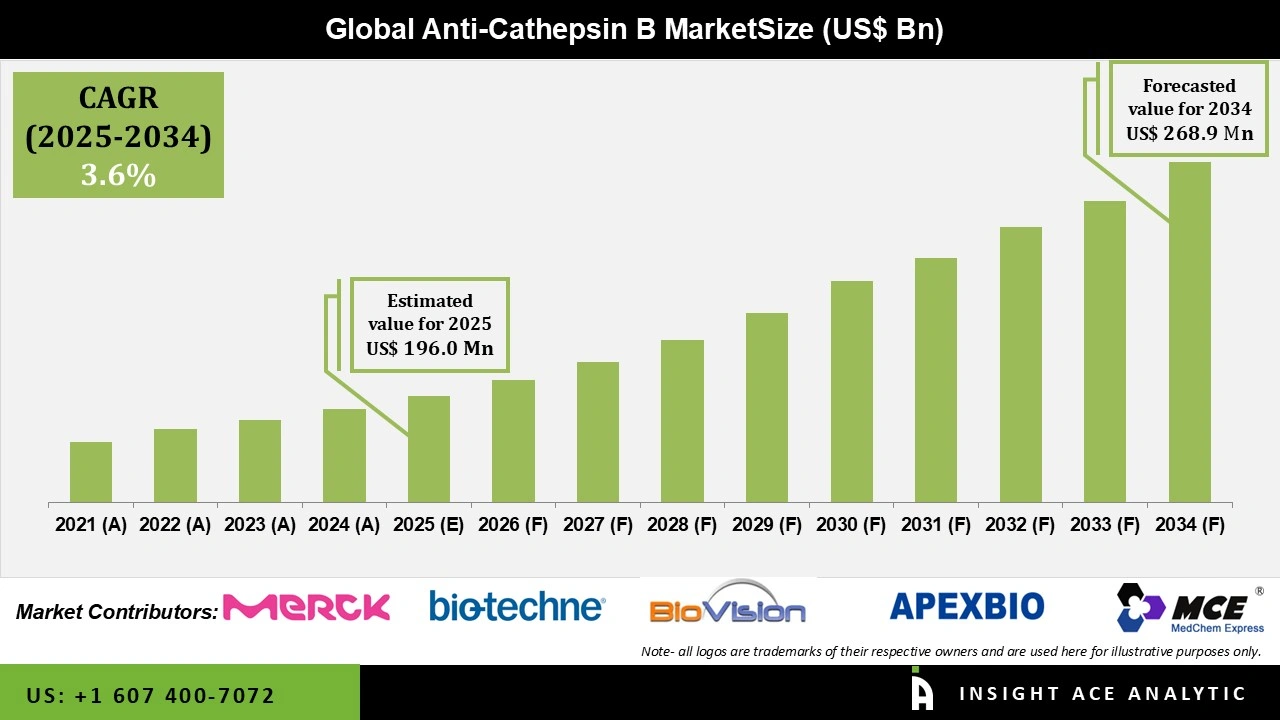
Anti-cathepsin B are substances, inhibitors, or antibodies intended to prevent the action of cathepsin B, a lysosomal cysteine protease implicated in intracellular protein breakdown and other pathogenic processes. Normally necessary for maintaining cellular homeostasis, cathepsin B overexpression or aberrant activation has been connected to several illnesses, including cancer, neurological disorders, inflammatory diseases, and several viral infections. Anti-cathepsin B substances reduce tissue invasion, tumor growth, inflammation, and cell damage brought on by excessive cathepsin B activity by blocking the enzyme's proteolytic activity. Due to the rising incidence of conditions like cancer, cardiovascular disease, and neurological disorders that are associated with cathepsin B dysregulation, the global anti-cathepsin B market is expanding rapidly.
The anti-cathepsin B market is expanding due to the emergence of personalized medicine approaches, which are creating new opportunities for focused therapy approaches. The growing partnerships between university research institutes and pharmaceutical corporations are quickening the rate of innovation in the anti-cathepsin B market. Additionally, the need for efficient treatment approaches is growing as patients and healthcare professionals become more aware of the part cathepsin B plays in illnesses. Hence, propelling the market's expansion. Furthermore, the research and development breakthroughs that result in the creation of innovative anti-cathepsin B treatments and diagnostic instruments are driving the market's growth.
Over the course of the forecast period, the market for anti-cathepsin B is anticipated to rise due to the growing number of viable research candidates. The rise is being fueled by increased funding for medication research and discovery, especially from both public and private sources. Additionally, the expanding partnerships between biotechnology and pharmaceutical firms promote innovation and give access to cutting-edge technologies. This is expected to accelerate the anti-cathepsin B market growth. Further driving market expansion will be the increasing regulatory approvals of novel anti-cathepsin B-based treatments. However, obstacles, including the high cost of R&D for creating new medications and the intricacy of the regulatory environment, could limit the anti-cathepsin B market expansion.
Competitive Landscape
Which are the Leading Players in Anti-Cathepsin B Market?
- Virobay Inc.
- Merck KGaA
- Santa Cruz Biotechnology, Inc
- MedChemExpress
- Bio-Techne
- BioVision Inc.
- Selleck Chemicals
- BOC Sciences
- BioCat GmbH
- ApexBio Technology
- Cayman Chemical
- AG Scientific
- Abcam Plc.
Market Dynamics
Driver
Growing Prevalence of Target Diseases and Increased Focus on Precision Medicine
A major factor contributing to the increased demand for anti-Cathepsin B is the rising incidence of cancer, neurological diseases, and inflammatory diseases, as well as the expanding focus on precision medicine. For instance, Abcam introduced a new line of high-affinity Cathepsin B primary antibodies in March 2025 to help preclinical research in neurodegeneration and oncology, demonstrating the increasing funding for focused therapeutic research. Anti-Cathepsin B drugs offer vital solutions for comprehending illness mechanisms and refining therapy approaches as scientists and physicians search for highly precise inhibitors and diagnostic techniques. Furthermore, Cathepsin B inhibitors and antibodies are becoming a crucial part of therapeutic discovery and biomarker research due to the growing use of sophisticated laboratory techniques and standardized research protocols. The continued emphasis on biomarker-driven research and customized treatment, as well as growing financing for therapeutic R&D, all support the market's steady expansion.
Restrain/Challenge
High Anti-Cathepsin B’s Cost and Technological Complexity
The high cost and technological complexity of anti-cathepsin B proteins, peptides, and antibodies are major obstacles to wider market penetration. Widespread use of these goods may be limited, especially in environments with limited resources, because handling and application of these compounds need skilled workers and sophisticated laboratory facilities. Additionally, reproducibility and data reliability may be impacted by variations in reagent quality among vendors, which makes some researchers reluctant to use particular products. Even while efforts are being made to improve accessibility and standardization, widespread adoption is still hampered by the perceived complexity and cost barrier, particularly among new research institutes or pharmaceutical R&D projects that are budget-conscious.
Primary Antibodies Segment is Expected to Drive the Anti-Cathepsin B Market
The primary antibodies segment held the largest share in the anti-cathepsin B market in 2025, driven by their important role in research and therapeutic development, high specificity, and reproducibility. Primary antibodies are highly adaptable and are used by researchers for detecting Cathepsin B using a variety of methods, including Western blotting, ELISA, and immunohistochemistry. Due to the availability of high-affinity, verified antibodies from reputable suppliers, which guarantee reliable experimental outcomes, the market also experiences significant demand. These antibodies are used by pharmaceutical companies for preclinical and clinical research, which strengthens their market dominance.
Pharmaceutical Companies Segment is Growing at the Highest Rate in the Anti-Cathepsin B Market
In 2025, the pharmaceutical companies segment dominated the anti-cathepsin B market, driven by a rise in research and development efforts aimed at developing tailored treatments for inflammatory illnesses, cancer, and neurological diseases. The discovery that cathepsin B is a crucial biomarker and therapeutic target in tumor invasion, metastasis, and tissue remodeling has prompted pharmaceutical companies to invest in cutting-edge small-molecule inhibitors, biologics, and combination therapies. Pipeline growth in this sector is being aided by the increasing focus on precision medicine as well as developments in drug discovery technologies, including structure-based drug design and high-throughput screening.
Why North America Led the Anti-Cathepsin B Market?
The anti-cathepsin B market was dominated by the North America region in 2025, fueled by a strong regulatory framework, significant R&D investments, and sophisticated healthcare infrastructure. With a large number of clinical studies and approvals for novel treatments that target Cathepsin B, the United States, in particular, is at the forefront.
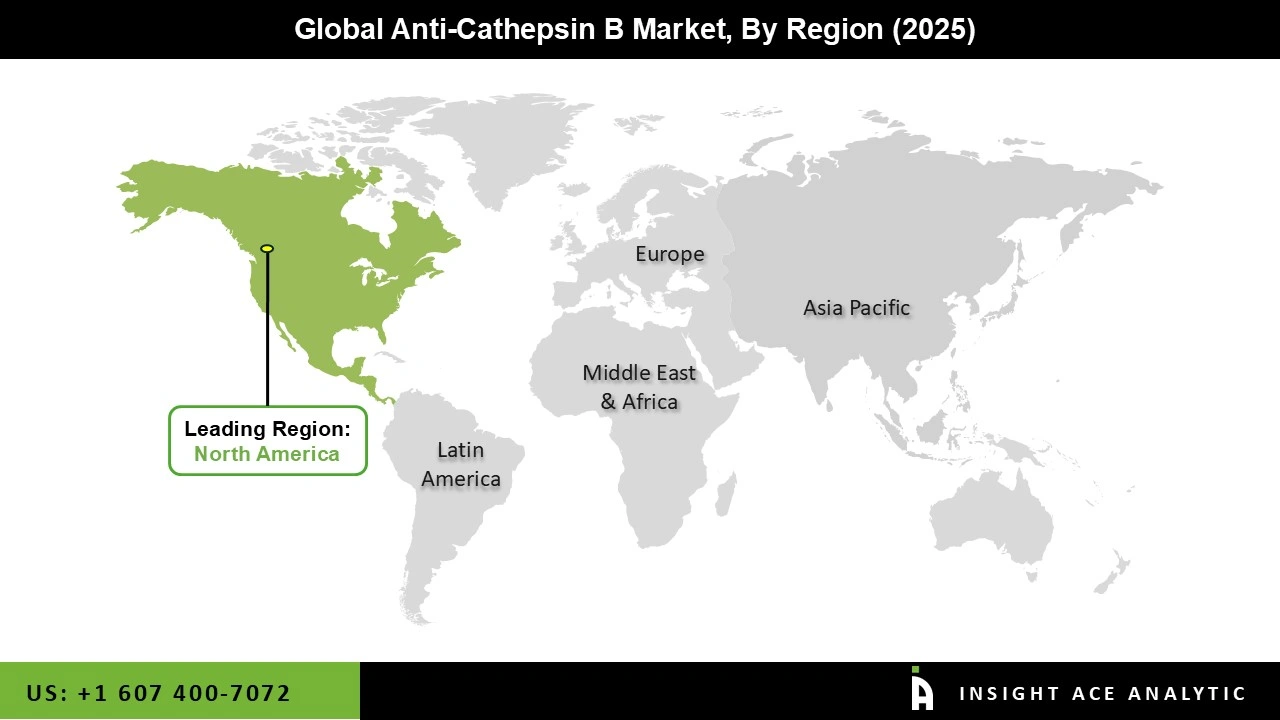
Additionally, partnerships between pharmaceutical corporations and academic institutions that promote innovation and expedite medication development contribute to the region's dominance. Furthermore, the anti-cathepsin B market in North America is being supported by growing awareness and the rising incidence of cardiovascular and cancer disorders.
Key Development
- April 2025: Researchers at Konkuk University created a new peptide-based nano-sized Cathepsin B inhibitor (an RR–BA combination), which self-assembles into nanoparticles and exhibits potent Cathepsin B inhibition and anticancer activity (colorectal cancer) in vitro and in animals with minimal toxicity.
- December 2023: Cathepsin B levels in extracellular vesicles (from CSF and plasma) alter during Alzheimer's disease (ATN staging), according to a proteomics study published in Brain. This suggests that Cathepsin B may be a biomarker and possible therapeutic target in Alzheimer's pathology.
Anti-Cathepsin B Market Report Scope :
| Report Attribute | Specifications |
| Market size value in 2025 | USD 196.0 Mn |
| Revenue forecast in 2034 | USD 268.9 Mn |
| Growth Rate CAGR | CAGR of 3.6% from 2025 to 2034 |
| Quantitative Units | Representation of revenue in US$ Bn and CAGR from 2025 to 2034 |
| Historic Year | 2021 to 2024 |
| Forecast Year | 2025-2034 |
| Report Coverage | The forecast of revenue, the position of the company, the competitive market structure, growth prospects, and trends |
| Segments Covered | By Type, By Technique, By Application, By End-user, and By Region |
| Regional Scope | North America; Europe; Asia Pacific; Latin America; Middle East & Africa |
| Country Scope | U.S.; Canada; U.K.; Germany; China; India; Japan; Brazil; Mexico; The UK; France; Italy; Spain; China; Japan; India; South Korea; Southeast Asia; South Korea; Southeast Asia |
| Competitive Landscape | Virobay Inc., Merck KGaA, Santa Cruz Biotechnology, Inc, MedChemExpress, Bio-Techne, BioVision Inc., Selleck Chemicals, BOC Sciences, BioCat GmbH, ApexBio Technology, Cayman Chemical, AG Scientific, and Abcam Plc. |
| Customization Scope | Free customization report with the procurement of the report, Modifications to the regional and segment scope. Geographic competitive landscape. |
| Pricing and Available Payment Methods | Explore pricing alternatives that are customized to your particular study requirements. |
Segmentation Anti-Cathepsin B Market :
Anti-Cathepsin B Market by Type
- Primary Antibodies
- Lysates
- Proteins and Peptides
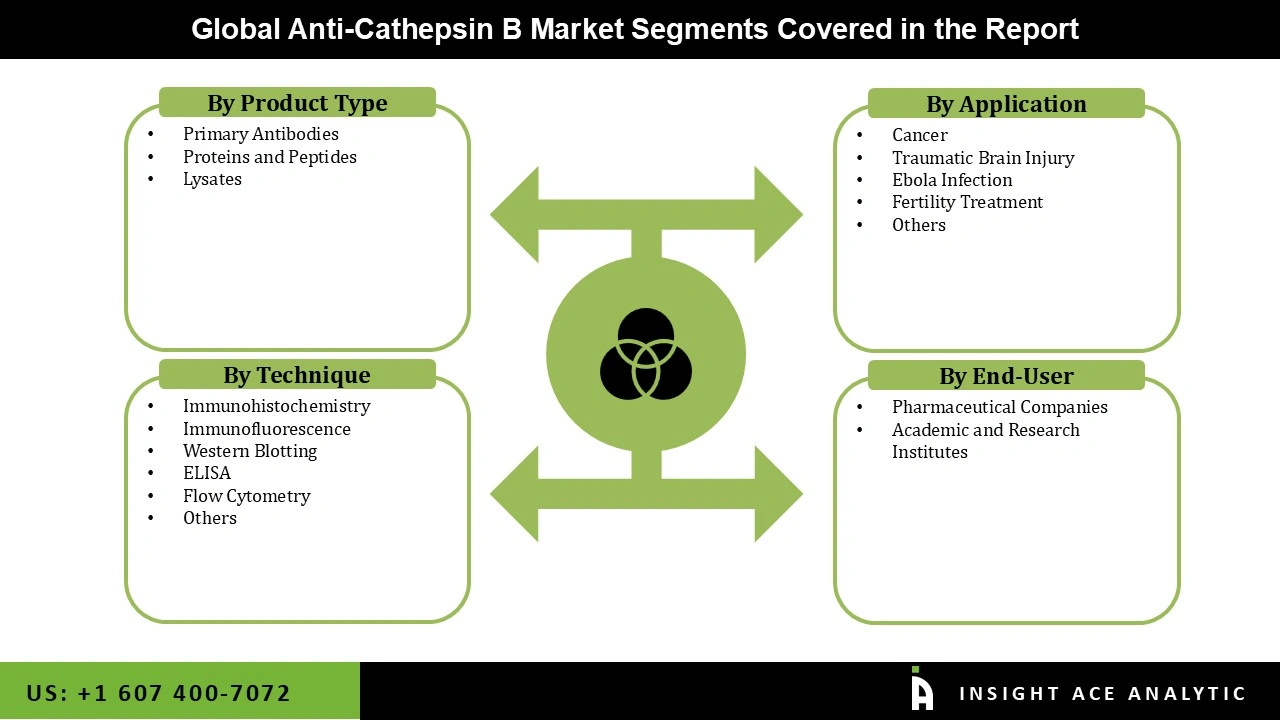
Anti-Cathepsin B Market by Technique
- Immunohistochemistry
- Flow Cytometry
- Western Blotting
- Immunofluorescence
- ELISA
- Others
Anti-Cathepsin B Market by Application
- Cancer
- Traumatic Brain Injury
- Fertility Treatment
- Ebola Infection
- Others
Anti-Cathepsin B Market by End-user
- Pharmaceutical Companies
- Academic and Research Institutes
Anti-Cathepsin B Market-By Region
- North America-
- The US
- Canada
- Europe-
- Germany
- The UK
- France
- Italy
- Spain
- Rest of Europe
- Asia-Pacific-
- China
- Japan
- India
- South Korea
- South East Asia
- Rest of Asia Pacific
- Latin America-
- Brazil
- Argentina
- Mexico
- Rest of Latin America
- Middle East & Africa-
- GCC Countries
- South Africa
- Rest of Middle East and Africa
Research Design and Approach
This study employed a multi-step, mixed-method research approach that integrates:
- Secondary research
- Primary research
- Data triangulation
- Hybrid top-down and bottom-up modelling
- Forecasting and scenario analysis
This approach ensures a balanced and validated understanding of both macro- and micro-level market factors influencing the market.
Secondary Research
Secondary research for this study involved the collection, review, and analysis of publicly available and paid data sources to build the initial fact base, understand historical market behaviour, identify data gaps, and refine the hypotheses for primary research.
Sources Consulted
Secondary data for the market study was gathered from multiple credible sources, including:
- Government databases, regulatory bodies, and public institutions
- International organizations (WHO, OECD, IMF, World Bank, etc.)
- Commercial and paid databases
- Industry associations, trade publications, and technical journals
- Company annual reports, investor presentations, press releases, and SEC filings
- Academic research papers, patents, and scientific literature
- Previous market research publications and syndicated reports
These sources were used to compile historical data, market volumes/prices, industry trends, technological developments, and competitive insights.

Primary Research
Primary research was conducted to validate secondary data, understand real-time market dynamics, capture price points and adoption trends, and verify the assumptions used in the market modelling.
Stakeholders Interviewed
Primary interviews for this study involved:
- Manufacturers and suppliers in the market value chain
- Distributors, channel partners, and integrators
- End-users / customers (e.g., hospitals, labs, enterprises, consumers, etc., depending on the market)
- Industry experts, technology specialists, consultants, and regulatory professionals
- Senior executives (CEOs, CTOs, VPs, Directors) and product managers
Interview Process
Interviews were conducted via:
- Structured and semi-structured questionnaires
- Telephonic and video interactions
- Email correspondences
- Expert consultation sessions
Primary insights were incorporated into demand modelling, pricing analysis, technology evaluation, and market share estimation.
Data Processing, Normalization, and Validation
All collected data were processed and normalized to ensure consistency and comparability across regions and time frames.
The data validation process included:
- Standardization of units (currency conversions, volume units, inflation adjustments)
- Cross-verification of data points across multiple secondary sources
- Normalization of inconsistent datasets
- Identification and resolution of data gaps
- Outlier detection and removal through algorithmic and manual checks
- Plausibility and coherence checks across segments and geographies
This ensured that the dataset used for modelling was clean, robust, and reliable.
Market Size Estimation and Data Triangulation
Bottom-Up Approach
The bottom-up approach involved aggregating segment-level data, such as:
- Company revenues
- Product-level sales
- Installed base/usage volumes
- Adoption and penetration rates
- Pricing analysis
This method was primarily used when detailed micro-level market data were available.

Top-Down Approach
The top-down approach used macro-level indicators:
- Parent market benchmarks
- Global/regional industry trends
- Economic indicators (GDP, demographics, spending patterns)
- Penetration and usage ratios
This approach was used for segments where granular data were limited or inconsistent.
Hybrid Triangulation Approach
To ensure accuracy, a triangulated hybrid model was used. This included:
- Reconciling top-down and bottom-up estimates
- Cross-checking revenues, volumes, and pricing assumptions
- Incorporating expert insights to validate segment splits and adoption rates
This multi-angle validation yielded the final market size.
Forecasting Framework and Scenario Modelling
Market forecasts were developed using a combination of time-series modelling, adoption curve analysis, and driver-based forecasting tools.
Forecasting Methods
- Time-series modelling
- S-curve and diffusion models (for emerging technologies)
- Driver-based forecasting (GDP, disposable income, adoption rates, regulatory changes)
- Price elasticity models
- Market maturity and lifecycle-based projections
Scenario Analysis
Given inherent uncertainties, three scenarios were constructed:
- Base-Case Scenario: Expected trajectory under current conditions
- Optimistic Scenario: High adoption, favourable regulation, strong economic tailwinds
- Conservative Scenario: Slow adoption, regulatory delays, economic constraints
Sensitivity testing was conducted on key variables, including pricing, demand elasticity, and regional adoption.
Request Customization
Add countries, segments, company profiles, or extend forecast — free 10% customization with purchase.
Customize This Report →Enquire Before Buying
Speak with our analyst team about scope, methodology, pricing, or deliverable formats.
Enquire Now →Frequently Asked Questions
Anti-Cathepsin B Market Size is valued at USD 196.0 Mn in 2024 and is predicted to reach USD 268.9 Mn by the year 2034
Anti-Cathepsin B Market is expected to grow at a 3.6% CAGR during the forecast period for 2025 to 2034.
Virobay Inc., Merck KGaA, Santa Cruz Biotechnology, Inc, MedChemExpress, Bio-Techne, BioVision Inc., Selleck Chemicals, BOC Sciences, BioCat GmbH, ApexBio Technology, Cayman Chemical, AG Scientific, and Abcam Plc.
Type, Technique, Application, End-user, and Region are the key segments of the Anti-Cathepsin B Market.
North America region is leading the Iprodione Market.