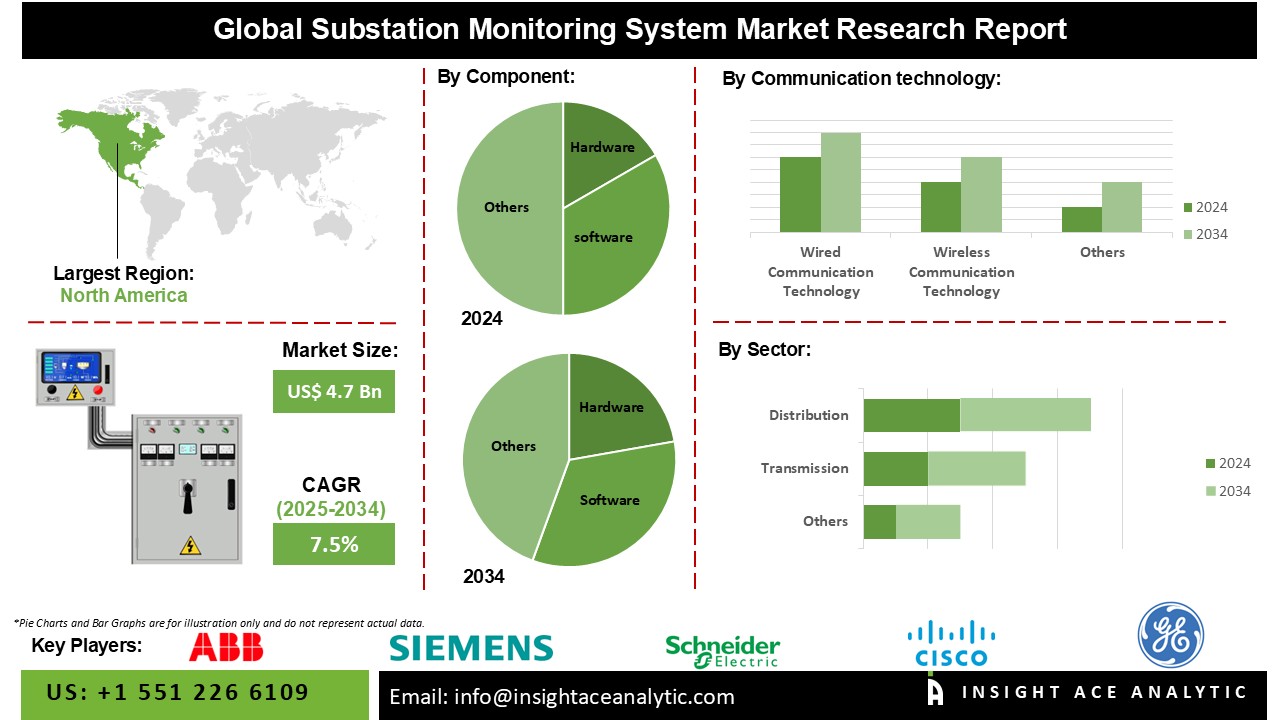
Substation Monitoring System Market Size is valued at USD 4.7 Bn in 2024 and is predicted to reach USD 9.6 Bn by the year 2034 at a 7.5% CAGR during the forecast period for 2025-2034.
A substation monitoring system is a specialized system used to monitor and manage electrical substations. Electrical substations are critical components of an electrical power grid, where electricity is transformed, controlled, and distributed to end-users. Monitoring these substations is crucial to ensure the reliability and efficiency of the electrical grid. The expansion of the substation monitoring system market is being driven by the power generating sector's efforts to address the ageing and depreciating infrastructure and enhance the IoT-based communication network.
Substation monitoring system market growth will be aided by the advantages of creating the IEC 61850 standard, which will enable interoperability between IEDs and improvements in the power ecosystem through a variety of growth strategies, including mergers and acquisitions, contracts and agreements, partnerships, expansions, and product developments. The market expansion for substation monitoring systems is predicted to be hampered by the spike in CAPEX connected with the construction of sensor networks. Other difficulties that could reduce industry demand include the dangers of malicious assaults and rising IED installation prices in substations.
The growing need for a steady and dependable supply of power distribution is the primary market driver for the world market for monitoring small stations. A small station monitoring system will become more necessary as the existing power infrastructure is updated. The expansion of the availability of energy and the quick urbanization of developing nations will fuel the demand for a small station monitoring system.
Competitive Landscape
Some major key players in the Substation Monitoring System Market:
- ABB Ltd.
- Sentient Energy
- Schweitzer Engineering Laboratories
- Viper Imaging, LLC
- Allis Electric Co., Ltd.
- FLIR Systems
- MoviTHERM
- CAS
- Pyrumas Software Pvt. Ltd.
- CAHORS
- Advanced Energy
- Nortech Management Ltd.
- Crompton Greaves
- Eaton
- Emerson Electric
- Honeywell
- Cisco
- Schneider Electric SE
- General Eectric
- Siemens
Market Segmentation:
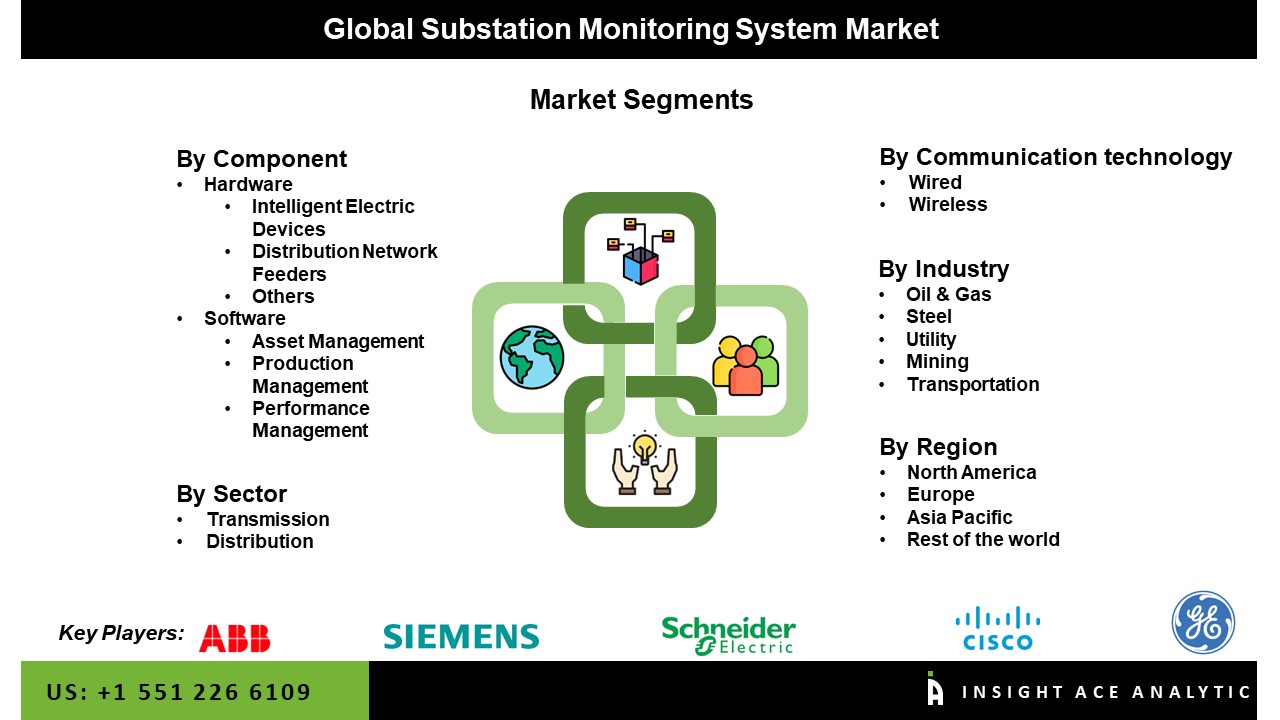
The Substation Monitoring System market is segmented on the basis of components, communication technology, and application. According to components, the market is segmented as software and hardware. The Hardware component comprises (Intelligent Electric Devices (Transformer (Voltage Instrument Transformer, Current Instrument Transformer), Relay Devices, Recloser Controllers, Circuit Breakers, Switches), Distribution Network Feeders, and Others (Smart Sensors, Microcontrollers, Cameras)).
At the same time, the Software component consists of Asset Management, Production Management, and Performance Management. The communication technology market includes wired and wireless. The wired segment is again divided into Fiber Optic (Ethernet, PROFIBUS, Others), Fieldbus, HART, and Modbus. The wireless segment comprises Wireless LAN (Wi-Fi), ZigBee, and Cellular Technology. At last, By application, the market is segmented into transportation, mining, utilities, steel, and oil and gas.
Based On Communication Technology, The Wireless Segment Is Accounted As A Major Contributor In The Substation Monitoring System Market
The wireless category is expected to hold a major share in the global Substation Monitoring System market. The market share that belongs to wireless is the largest. Cell phones, wireless LAN, Zigbee, and other wireless technologies are included in the wireless section. Since it is more difficult to maintain than wireless technology, wired technology is more prone to corruption. Because of this rising demand for wireless technology, the market's growth is anticipated to be at its highest level throughout the forecast period.
The Transportation Segment Witnessed Growth At A Rapid Rate
The Segment transportation is projected to grow at a rapid rate in the global substation monitoring system market as the increased demand for power supply in numerous linked industries. The transportation industry is anticipated to grow more quickly during the projection period. The implementation of smart grids and grid enhancement has increased the demand for solutions in this area to be monitored. An increase in project launches, such as the sponsorship of solar farm projects in the nations of the Asia Pacific and the Middle East, is fueling the development of substation monitoring systems.
In The Region, The North American Substation Monitoring System Market Holds A Significant Revenue Share
In terms of revenue, the North American Substation Monitoring System market is anticipated to account for a significant market share. The substation monitoring system market in this region is growing financially as a result of, among other things, increased product launches and product expansion by significant industry players. For instance, the ARIS II Rover, an upgraded robotic substation monitoring device, was recently released by NV5 Geospatial. Due to the region's fast-accelerating industrialization, as well as the boom in the oil and gas and mining industries in its developing nations, Asia-Pacific is predicted to have tremendous growth throughout the forecast period. The rising desire for lower distribution and transmission losses in developing nations like India also drives the substation monitoring system market.
Substation Monitoring System Market Report Scope
|
Report Attribute
|
Specifications
|
|
Market size value in 2024
|
USD 4.7 Bn
|
|
Revenue forecast in 2034
|
USD 9.6 Bn
|
|
Growth rate CAGR
|
CAGR of 7.5% from 2025 to 2034
|
|
Quantitative units
|
Representation of revenue in US$ Million and CAGR from 2025 to 2034
|
|
Historic Year
|
2021 to 2024
|
|
Forecast Year
|
2025-2034
|
|
Report coverage
|
The forecast of revenue, the position of the company, the competitive market structure, growth prospects, and trends
|
|
Segments covered
|
By Component, Communication Technology, Sector, Industry
|
|
Regional scope
|
North America; Europe; Asia Pacific; Latin America; Middle East & Africa
|
|
Country scope
|
U.S.; Canada; U.K.; Germany; China; India; Japan; Brazil; Mexico ;The UK; France; Italy; Spain; South Korea; South East Asia
|
|
Competitive Landscape
|
ABB, Sentient Energy, Schweitzer Engineering Laboratories, Viper Imaging, LLC, Allis Electric Co., Ltd., Allis Electric Co., Ltd., FLIR Systems, MoviTHERM, CAS, Pyrumas Software Pvt. Ltd., CAHORS, Advanced Energy, and Nortech Management Ltd., Crompton Greaves, Eaton, Emerson Electric, Honeywell, Cisco, Schneider Electric SE, General Eectric, Siemens
|
|
Customization scope
|
Free customization report with the procurement of the report, Modifications to the regional and segment scope. Particular Geographic competitive landscape.
|
|
Pricing and available payment methods
|
Explore pricing alternatives that are customized to your particular study requirements.
|
Segmentation of Substation Monitoring System Market-
Substation Monitoring System Market By Component-
- Hardware
- Intelligent Electric Devices
- Transformer
- Voltage Instrument Transformer
- Current Instrument Transformer
- Relay Devices
- Recloser Controllers
- Circuit Breakers
- Switches
- Distribution Network Feeders
- Others
- Smart Sensors
- Microcontrollers
- Cameras
- Software
- Asset Management
- Production Management
- Performance Management
Substation Monitoring System Market By Communication Technology-
- Wired
- Fiber Optic
- Ethernet
- PROFIBUS
- Others
- Wireless
- Wireless LAN (Wi-Fi)
- ZigBee
- Cellular Technology
Substation Monitoring System Market By Sector
- Transmission
- Distribution
Substation Monitoring System Market By Industry-
- Transportation
- Mining
- Steel
- Oil and Gas
- Utilities
Substation Monitoring System Market By Region-
North America-
Europe-
- Germany
- The UK
- France
- Italy
- Spain
- Rest of Europe
Asia-Pacific-
- China
- Japan
- India
- South Korea
- South East Asia
- Rest of Asia Pacific
Latin America-
- Brazil
- Argentina
- Mexico
- Rest of Latin America
Middle East & Africa-
- GCC Countries
- South Africa
- Rest of Middle East and Africa