Anti-Pollution Nasal Spray Market Size, Share and Trends Analysis 2026 to 2035
Global Anti-Pollution Nasal Spray Market Size is valued at USD 7.32 Bn in 2025 and is predicted to reach USD 12.71 Bn by the year 2035 at a 5.8% CAGR during the forecast period for 2026 to 2035.
Anti-Pollution Nasal Spray Market Size, Share & Trends Analysis Distribution by Product Type (Hydrating Nasal Sprays, Pollution Defense Products, Cleansing Nasal Sprays, Symptomatic Relief Nasal Sprays, and Others), Distribution Channel (Online Channels, Supermarkets/General Retail Stores, Retail Pharmacies, and Others), and Segment Forecasts, 2026 to 2035.
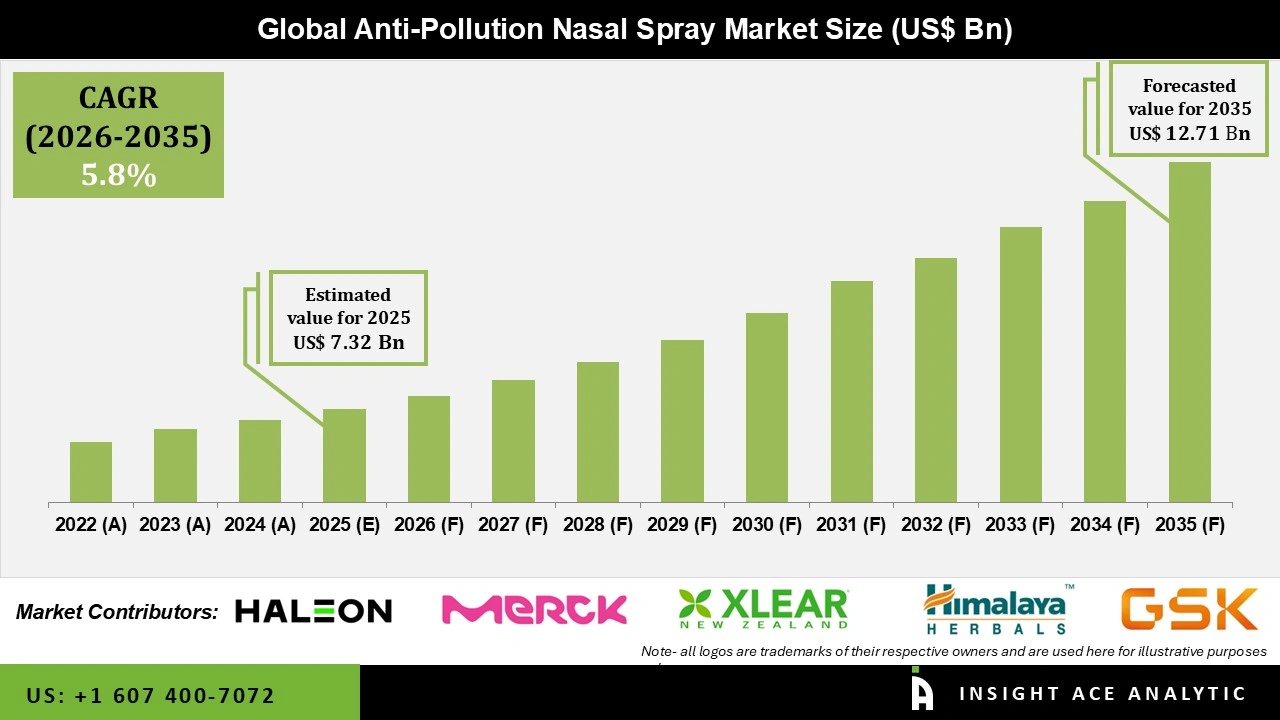
Anti-pollution nasal sprays are medical devices designed to protect the nose and respiratory system from airborne pollutants, allergens, dust, pollen, and other harmful particles in the air. They work by forming a gentle, invisible barrier inside the nasal passages that traps and blocks contaminants before they can reach the lungs or cause irritation and inflammation. Most sprays contain natural ingredients like seawater, sea minerals, saline solution, plant extracts, or oils that also cleanse, moisturize, and soothe the nasal lining. They are especially popular among people with allergies, sinus problems, rhinitis, or those living in cities with poor air quality, offering a simple, drug-free way to reduce exposure to pollution and allergens during daily activities.
The rising air pollution levels and the growing frequency of respiratory and nasal health problems in urban and industrialized areas are the main factors propelling the anti-pollution nasal spray market. The consumers are adopting preventative healthcare solutions as a result of increased public knowledge of the detrimental effects of allergens, hazardous pollutants, and particulate matter on nasal passages and general respiratory health. Additionally, the wider product accessibility is also made possible by rising healthcare costs, better access to over-the-counter nasal sprays, and the growth of pharmacy and e-commerce distribution channels. Furthermore, the anti-pollution nasal spray market is rising as a result of government measures that support preventative healthcare and the increased focus on individual wellness.
Furthermore, the anti-pollution nasal spray market has substantial prospects because of continuous product innovation and the creation of sophisticated formulations with improved moisturizing, barrier-forming, and anti-inflammatory qualities. The use of longer-lasting protection technologies, preservative-free formulations, and natural and plant-based substances is increasing patient compliance and product appeal. These developments enable producers to target a wider consumer base, improve brand positioning, and differentiate their products, all of which provide favorable conditions for long-term anti-pollution nasal spray market growth. However, the anti-pollution nasal spray market is limited by a number of problems. Strong recommendations from medical professionals are limited, and consumer confidence is impacted by the lack of scientific data proving long-term efficacy and preventive advantages.
Competitive Landscape
Which are the Leading Players in Anti-Pollution Nasal Spray Market?
- Merck
- Jost Chemical Co.
- American Elements
- Otsuka Chemical Co., Ltd.
- AG CHEMI GROUP s.r.o.
- Star Grace Mining Co., Ltd
- Takasugi Pharmaceutical Co., Ltd.
- KISHIDA CHEMICAL CO., LTD.
- SQM
- Mineral Technologies, Inc.
Market Dynamics
Driver
Increasing Respiratory Health Awareness
The prevalence of sinus problems, asthma, and allergic rhinitis has raised awareness of the significance of respiratory health. In 2022, 2.8 million Australians suffered from asthma, according to the National Asthma Council of Australia. Preventive healthcare practices have been adopted by consumers as a result of media attention, public health campaigns, and post-pandemic health consciousness. The anti-pollution nasal sprays are becoming more widely recognized as user-friendly devices that support nose hygiene and lower exposure to airborne pollutants. As consumers move toward proactive health routines, particularly in polluted surroundings, these products are becoming more and more popular as part of daily self-care and respiratory protection, which is fueling the anti-pollution nasal spray market expansion.
Restrain/Challenge
Low Consumer Awareness Among Consumers
The low consumer awareness and view of anti-pollution nasal sprays as unnecessary preventive measures is a major barrier to the market. Customers in many areas are still unfamiliar with the idea of nasal sprays made expressly to protect against air pollution, and they frequently just think of nasal sprays as a way to relieve congestion or cure allergies. Furthermore, compared to more obvious protective measures like face masks or air purifiers, these items are often deprioritized because they are preventive in nature and do not offer many customers instantaneous, obvious comfort. This problem is further exacerbated by the absence of extensive educational campaigns and the scant advice from medical experts, which leads to slower adoption rates and limited anti-pollution nasal spray market expansion.
The Pollution Defense Products Segment is Expected to Drive the Anti-Pollution Nasal Spray Market
The Pollution Defense Products category held the largest share in the Anti-Pollution Nasal Spray market in 2025. Nasal sprays that are intended to shield the nasal passages from the damaging effects of air pollution are known as pollution protection products. In order to keep irritants and pollutants out of the body, these sprays frequently include chemicals that aid in filtering, cleaning, or calming the nasal membranes. These nasal sprays' primary goal is to lessen discomfort and possible health problems brought on by exposure to airborne pollutants like dust, smoke, smog, allergies, and other pollutants. Since they offer a straightforward method of shielding the respiratory system from the immediate effects of pollution, pollution defense nasal sprays are particularly well-liked among residents of high-pollution locations. Therefore, growing pollution is anticipated to fuel market expansion.
Online Channels Segment is Growing at the Highest Rate in the Anti-Pollution Nasal Spray Market
In 2025, the Online Channels category dominated the Anti-Pollution Nasal Spray market because it offers consumers looking for anti-pollution nasal sprays unmatched accessibility and ease. With a vast array of product alternatives at their fingertips and a hassle-free shopping experience, the emergence of e-commerce platforms has completely changed how customers purchase. Particularly in tier 2 and tier 3 cities where brick-and-mortar specialized stores or pharmacies may be few, online channels enable manufacturers and brands to directly engage end-users without the limits of physical storefronts, providing better geographic penetration. Additionally, because consumers preferred contactless purchasing and trusted online platforms for prompt product delivery, the COVID-19 epidemic accelerated the adoption of digital technology.
Why North America Led the Anti-Pollution Nasal Spray Market?
The Anti-Pollution Nasal Spray market was dominated by the North America region in 2025 because consumers are highly conscious of the irritation caused by pollution in their noses. There is a greater interest in preventive nose care in urban areas due to reports of increased particle exposure. Widespread product placement in big cities is supported by pharmacy and retail networks.
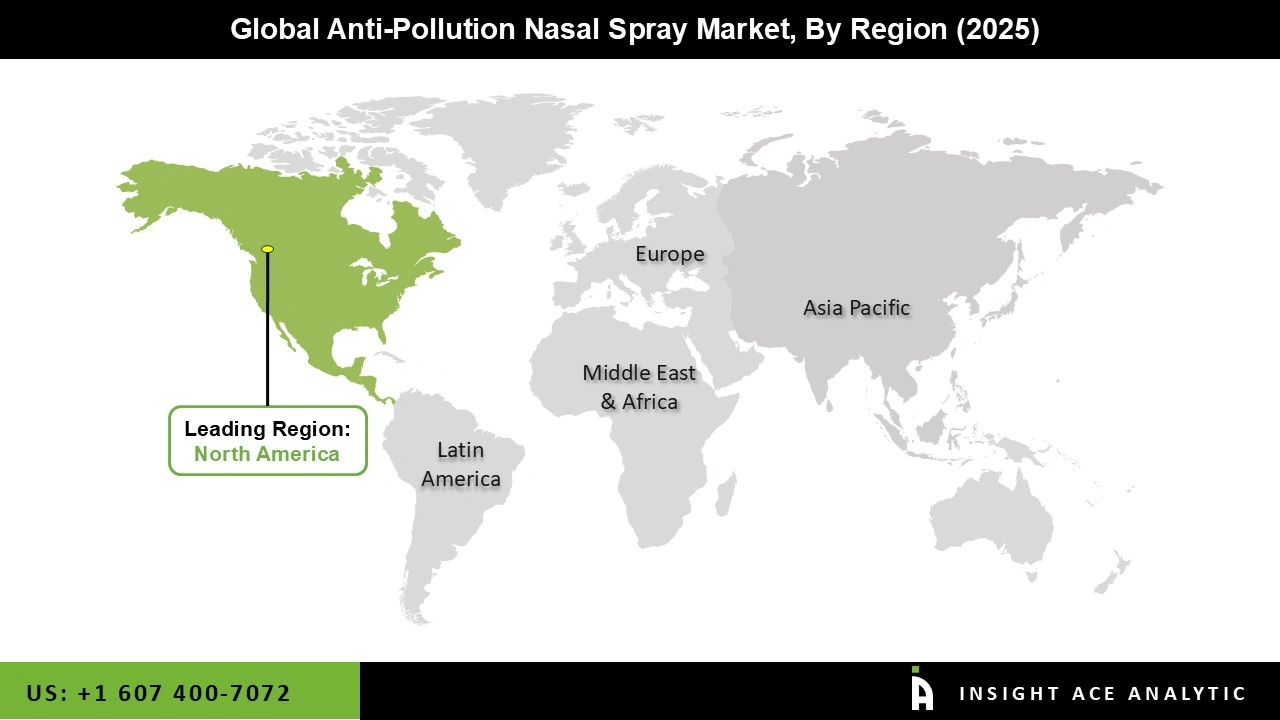
Businesses launch cutting-edge formulas that prioritize barrier protection and everyday comfort. Health-conscious consumers adopt OTC more readily. Additionally, local customers are well-informed about self-care goods and favour over-the-counter respiratory wellness remedies. Widespread product access is supported by availability through pharmacies, retail chains, and internet platforms. Furthermore, the consumer trust is influenced by product claims on safety and efficacy as well as regulatory approvals, which propel the anti-pollution nasal spray market.
Anti-Pollution Nasal Spray Market Report Scope :
| Report Attribute | Specifications |
| Market size value in 2025 | USD 7.32 Bn |
| Revenue forecast in 2035 | USD 12.71 Bn |
| Growth Rate CAGR | CAGR of 5.8% from 2026 to 2035 |
| Quantitative Units | Representation of revenue in US$ Bn and CAGR from 2026 to 2035 |
| Historic Year | 2022 to 2025 |
| Forecast Year | 2026-2035 |
| Report Coverage | The forecast of revenue, the position of the company, the competitive market structure, growth prospects, and trends |
| Segments Covered | Product Type, Distribution Channel, and By Region |
| Regional Scope | North America; Europe; Asia Pacific; Latin America; Middle East & Africa |
| Country Scope | U.S.; Canada; U.K.; Germany; China; India; Japan; Brazil; Mexico; The UK; France; Italy; Spain; China; Japan; India; South Korea; Southeast Asia; South Korea; Southeast Asia |
| Competitive Landscape | Merck, Jost Chemical Co., American Elements, Otsuka Chemical Co., Ltd., AG CHEMI GROUP s.r.o., Star Grace Mining Co., Ltd, Takasugi Pharmaceutical Co., Ltd., KISHIDA CHEMICAL CO., LTD., SQM, and Mineral Technologies, Inc. |
| Customization Scope | Free customization report with the procurement of the report, Modifications to the regional and segment scope. Geographic competitive landscape. |
| Pricing and Available Payment Methods | Explore pricing alternatives that are customized to your particular study requirements. |
Segmentation of Anti-Pollution Nasal Spray Market :
Anti-Pollution Nasal Spray Market, By Product Type-
- Hydrating Nasal Sprays
- Pollution Defense Products
- Cleansing Nasal Sprays
- Symptomatic Relief Nasal Sprays
- Others
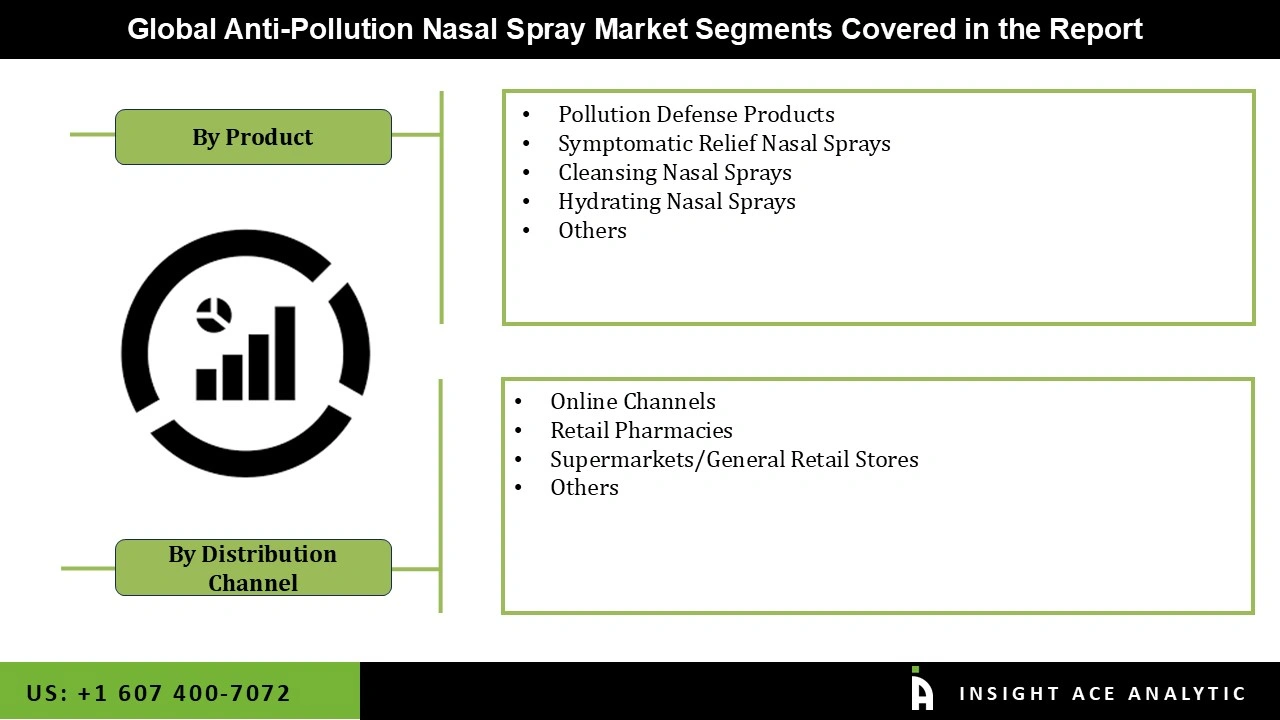
Anti-Pollution Nasal Spray Market, By Distribution Channel-
- Online Channels
- Supermarkets/General Retail Stores
- Retail Pharmacies
- Others
Anti-Pollution Nasal Spray Market, By Region-
- North America-
- The US
- Canada
- Europe-
- Germany
- The UK
- France
- Italy
- Spain
- Rest of Europe
- Asia-Pacific-
- China
- Japan
- India
- South Korea
- South East Asia
- Rest of Asia Pacific
- Latin America-
- Brazil
- Argentina
- Mexico
- Rest of Latin America
- Middle East & Africa-
- GCC Countries
- South Africa
- Rest of Middle East and Africa
Research Design and Approach
This study employed a multi-step, mixed-method research approach that integrates:
- Secondary research
- Primary research
- Data triangulation
- Hybrid top-down and bottom-up modelling
- Forecasting and scenario analysis
This approach ensures a balanced and validated understanding of both macro- and micro-level market factors influencing the market.
Secondary Research
Secondary research for this study involved the collection, review, and analysis of publicly available and paid data sources to build the initial fact base, understand historical market behaviour, identify data gaps, and refine the hypotheses for primary research.
Sources Consulted
Secondary data for the market study was gathered from multiple credible sources, including:
- Government databases, regulatory bodies, and public institutions
- International organizations (WHO, OECD, IMF, World Bank, etc.)
- Commercial and paid databases
- Industry associations, trade publications, and technical journals
- Company annual reports, investor presentations, press releases, and SEC filings
- Academic research papers, patents, and scientific literature
- Previous market research publications and syndicated reports
These sources were used to compile historical data, market volumes/prices, industry trends, technological developments, and competitive insights.

Primary Research
Primary research was conducted to validate secondary data, understand real-time market dynamics, capture price points and adoption trends, and verify the assumptions used in the market modelling.
Stakeholders Interviewed
Primary interviews for this study involved:
- Manufacturers and suppliers in the market value chain
- Distributors, channel partners, and integrators
- End-users / customers (e.g., hospitals, labs, enterprises, consumers, etc., depending on the market)
- Industry experts, technology specialists, consultants, and regulatory professionals
- Senior executives (CEOs, CTOs, VPs, Directors) and product managers
Interview Process
Interviews were conducted via:
- Structured and semi-structured questionnaires
- Telephonic and video interactions
- Email correspondences
- Expert consultation sessions
Primary insights were incorporated into demand modelling, pricing analysis, technology evaluation, and market share estimation.
Data Processing, Normalization, and Validation
All collected data were processed and normalized to ensure consistency and comparability across regions and time frames.
The data validation process included:
- Standardization of units (currency conversions, volume units, inflation adjustments)
- Cross-verification of data points across multiple secondary sources
- Normalization of inconsistent datasets
- Identification and resolution of data gaps
- Outlier detection and removal through algorithmic and manual checks
- Plausibility and coherence checks across segments and geographies
This ensured that the dataset used for modelling was clean, robust, and reliable.
Market Size Estimation and Data Triangulation
Bottom-Up Approach
The bottom-up approach involved aggregating segment-level data, such as:
- Company revenues
- Product-level sales
- Installed base/usage volumes
- Adoption and penetration rates
- Pricing analysis
This method was primarily used when detailed micro-level market data were available.

Top-Down Approach
The top-down approach used macro-level indicators:
- Parent market benchmarks
- Global/regional industry trends
- Economic indicators (GDP, demographics, spending patterns)
- Penetration and usage ratios
This approach was used for segments where granular data were limited or inconsistent.
Hybrid Triangulation Approach
To ensure accuracy, a triangulated hybrid model was used. This included:
- Reconciling top-down and bottom-up estimates
- Cross-checking revenues, volumes, and pricing assumptions
- Incorporating expert insights to validate segment splits and adoption rates
This multi-angle validation yielded the final market size.
Forecasting Framework and Scenario Modelling
Market forecasts were developed using a combination of time-series modelling, adoption curve analysis, and driver-based forecasting tools.
Forecasting Methods
- Time-series modelling
- S-curve and diffusion models (for emerging technologies)
- Driver-based forecasting (GDP, disposable income, adoption rates, regulatory changes)
- Price elasticity models
- Market maturity and lifecycle-based projections
Scenario Analysis
Given inherent uncertainties, three scenarios were constructed:
- Base-Case Scenario: Expected trajectory under current conditions
- Optimistic Scenario: High adoption, favourable regulation, strong economic tailwinds
- Conservative Scenario: Slow adoption, regulatory delays, economic constraints
Sensitivity testing was conducted on key variables, including pricing, demand elasticity, and regional adoption.
Request Customization
Add countries, segments, company profiles, or extend forecast — free 10% customization with purchase.
Customize This Report →Enquire Before Buying
Speak with our analyst team about scope, methodology, pricing, or deliverable formats.
Enquire Now →Frequently Asked Questions
Anti-Pollution Nasal Spray Market Size is valued at USD 7.32 Bn in 2025 and is predicted to reach USD 12.71 Bn by the year 2035
Anti-Pollution Nasal Spray Market is expected to grow at a 5.8% CAGR during the forecast period for 2026 to 2035
Merck, Jost Chemical Co., American Elements, Otsuka Chemical Co., Ltd., AG CHEMI GROUP s.r.o., Star Grace Mining Co., Ltd, Takasugi Pharmaceutical Co., Ltd., KISHIDA CHEMICAL CO., LTD., SQM, Mineral Technologies, Inc. and Other.
Anti-Pollution Nasal Spray Market si segmented in Product Type (Hydrating Nasal Sprays, Pollution Defense Products, Cleansing Nasal Sprays, Symptomatic Relief Nasal Sprays, and Others), Distribution Channel (Online Channels, Supermarkets/General Retail Stores, Retail Pharmacies, and Others) and Other.
North America region is leading the Anti-Pollution Nasal Spray Market.