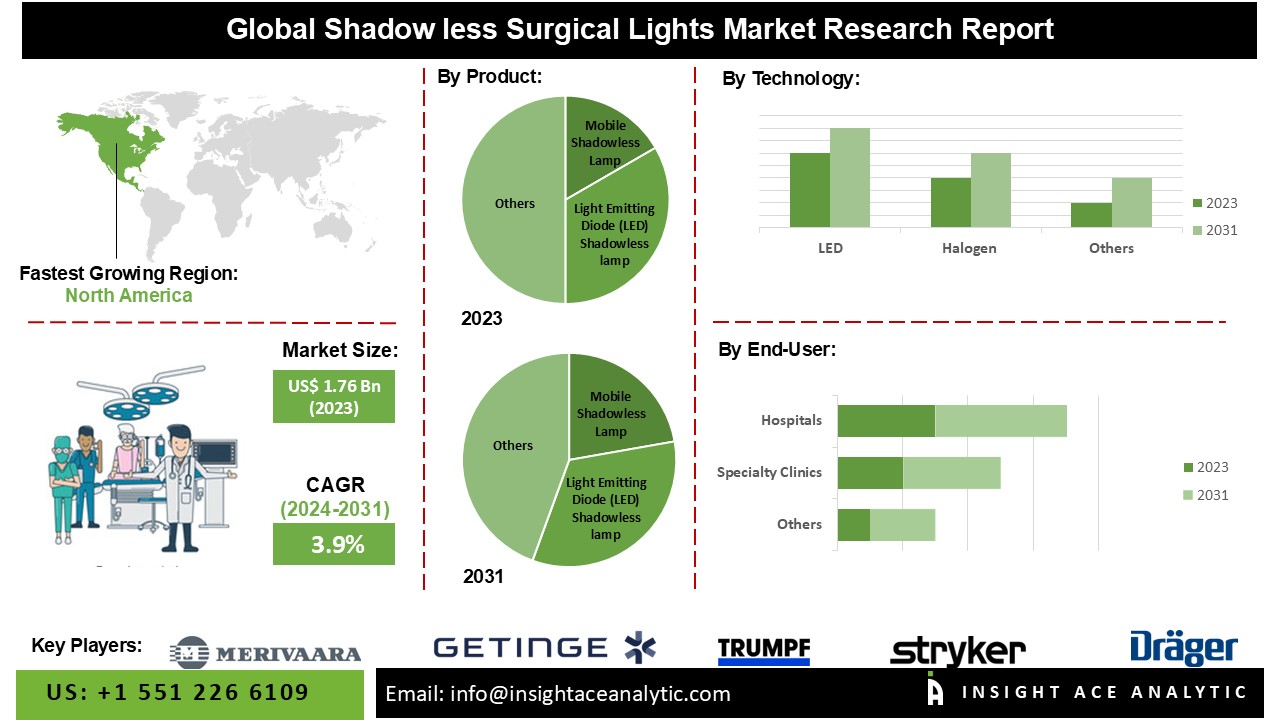
The Shadow less Surgical Lights Market Size is valued at USD 1.76 Bn in 2023 and is predicted to reach USD 2.39 Bn by the year 2031 at an 3.9% CAGR during the forecast period for 2024-2031.
Shadowless surgical lights are essential in operating rooms, designed to provide optimal surgical site illumination by eliminating shadows and minimizing color distortion. These lights ensure that small, low-contrast objects, often located deep within human cavities and incisions, are visible to the surgical team. Eliminating shadows caused by the surgeon's head, hands, and instruments provide an unobstructed view, crucial for highlighting critical anatomical structures. This improves precision during procedures like appendectomies, hernia repairs, and tumor removals. Additionally, these lights are engineered to run continuously for long periods without generating excessive heat, which could cause discomfort to the surgeon and dry out exposed tissue. As a result, shadowless surgical lights are key in improving surgical outcomes, allowing medical teams to work safely and efficiently while minimizing the risks associated with poor visibility or lighting inconsistencies.
The growing demand for cosmetic and reconstructive surgeries has led to increased use of shadowless surgical lights, as these procedures often involve delicate work in small, precise areas where optimal lighting is essential for achieving the desired aesthetic outcomes. Additionally, regulatory bodies have implemented strict standards for surgical equipment, including lighting, to ensure patient safety and high-quality care. This has prompted manufacturers to develop more advanced shadowless lights that meet stringent safety and performance requirements. Furthermore, the shift toward outpatient surgeries and ambulatory surgical centers has increased the need for compact, efficient, and user-friendly surgical equipment. These facilities typically perform multiple surgeries in a day, making shadowless lights a valuable tool for maintaining consistent and reliable illumination across a wide range of procedures.
Competitive Landscape
Some of the Major Key Players in the Shadow less Surgical Lights Market are
- Stryker Corporation
- TRUMPF
- Karl Storz
- Mizuho OSI
- Skytron
- STERIS plc
- Eschmann
- Kenswick
- Merivaara
- Philips Healthcare
- KLS Martin Group
- Getinge
- Drager
- Mindray
- Heal Force Bio-meditech Holdings
- XYC Medical
- Honle
- Seoul Medical Systems
- Other Prominent Players
Market Segmentation
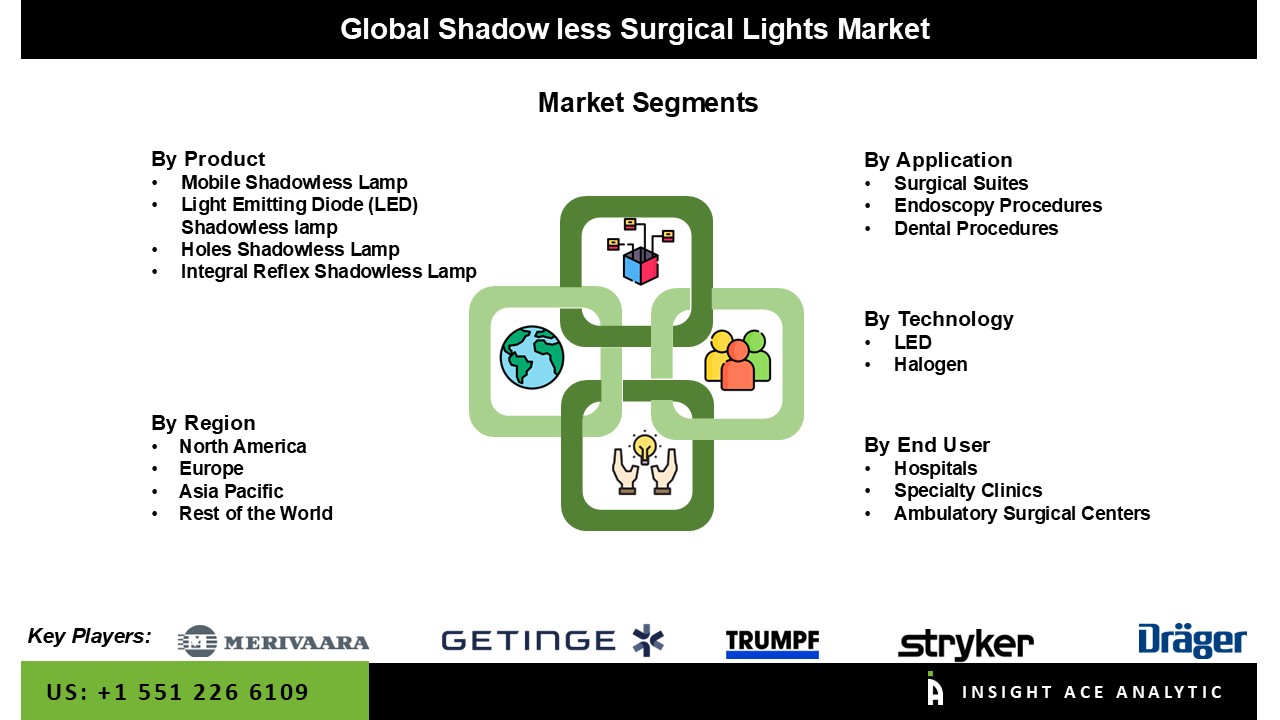
The Shadow less Surgical Lights Market is segmented based on the product, technology, application, and end user. Based on the product, the market is divided into mobile shadowless lamp, light emitting diode (LED) shadowless lamp, holes shadowless lamp, and integral reflex shadowless lamp. Based on the technology, the market is divided led, halogen. Based on the application, the market is divided into surgical suites, endoscopy procedures, and dental procedures. Based on end user, the market is divided into hospitals, specialty clinics, and ambulatory surgical centers.
The Light Emitting Diode (LED) Shadowless Lamp Segment is Expected to Have the Highest Growth Rate During the Forecast Period
Based on the product, the market is divided into mobile shadowless lamps, light emitting diode (LED) shadowless lamps, holes shadowless lamps, and integral reflex shadowless lamps. Among these, the light-emitting diode (LED) shadowless lamp segment is expected to have the highest growth rate during the forecast period. LED shadowless lamps emit minimal heat, which prevents the surgical area from heating up. This is critical for ensuring the comfort of both the surgical team and the patient and avoiding tissue drying during prolonged procedures. LEDs offer a superior color rendering index (CRI), allowing surgeons to distinguish between tissues with greater accuracy. This is crucial for procedures that require high precision, such as neurosurgery or plastic surgery. Continuous innovation in LED technology has made these lights more energy-efficient, durable, and effective at providing shadow-free illumination. Advancements like adjustable intensity, better focus, and enhanced color rendering ensure that LEDs meet the precise needs of modern surgeries, driving their market growth.
The Surgical Suites Segment Dominates the Market
Based on the application, the market is divided into surgical suites, endoscopy procedures, and dental procedures. Among these, Surgical suites, where primary and complex operations are performed, require high-quality illumination to provide optimal visibility for surgeons. Procedures in surgical suites, such as orthopedic surgeries, cardiothoracic surgeries, and neurosurgeries, rely heavily on shadowless surgical lights to enhance precision and ensure patient safety. These suites often handle long, intricate operations, which demand advanced lighting that can operate continuously without emitting excessive heat. The increasing popularity of minimally invasive surgeries (MIS) and robotic-assisted surgeries in surgical suites has heightened the demand for precise, adaptable lighting solutions.
North America Has the Largest Market Share During the Forecast Period.
North America, especially the U.S., sees a high volume of surgeries, both elective and necessary, due to its large population, aging demographic, and increasing prevalence of chronic diseases. With the rise of procedures such as cardiovascular surgeries, orthopedic surgeries, and minimally invasive surgeries, there is a growing need for optimal lighting solutions in operating rooms. North America has well-established regulatory frameworks for medical devices, ensuring high surgical equipment safety and performance standards. Regulatory bodies like the U.S. Food and Drug Administration (FDA) have stringent requirements for medical lighting equipment, pushing manufacturers to develop high-quality, compliant shadowless lights.
Recent Developments:
- In January 2024, Getinge presented the most recent Maquet Ezea. Emphasizing critical characteristics for OR personnel, this multipurpose surgical light is user-friendly, long-lasting, and made to comply with changing risk management guidelines.
Shadow less Surgical Lights Market Report Scope
|
Report Attribute
|
Specifications
|
|
Market Size Value In 2023
|
USD 1.76 Bn
|
|
Revenue Forecast In 2031
|
USD 2.39 Bn
|
|
Growth Rate CAGR
|
CAGR of 3.9% from 2024 to 2031
|
|
Quantitative Units
|
Representation of revenue in US$ Bn and CAGR from 2024 to 2031
|
|
Historic Year
|
2019 to 2023
|
|
Forecast Year
|
2024-2031
|
|
Report Coverage
|
The forecast of revenue, the position of the company, the competitive market structure, growth prospects, and trends
|
|
Segments Covered
|
Product, Technology, Application, and End User
|
|
Regional Scope
|
North America; Europe; Asia Pacific; Latin America; Middle East & Africa
|
|
Country Scope
|
U.S.; Canada; U.K.; Germany; China; India; Japan; Brazil; Mexico; France; Italy; Spain; South Korea; South East Asia
|
|
Competitive Landscape
|
Stryker Corporation, TRUMPF, Karl Storz, Mizuho OSI, Skytron, STERIS plc, Eschmann, Kenswick, Merivaara, Philips Healthcare, KLS Martin Group, Getinge, Drager, Mindray, Heal Force Bio-Meditech Holdings, XYC Medical, Dr. Honle, Seoul Medical Systems
|
|
Customization Scope
|
Free customization report with the procurement of the report and modifications to the regional and segment scope. Particular Geographic competitive landscape.
|
|
Pricing and Available Payment Methods
|
Explore pricing alternatives that are customized to your particular study requirements.
|
Segmentation of Shadow less Surgical Lights Market
Global Shadow less Surgical Lights Market- By Product
- Mobile Shadowless Lamp
- Light Emitting Diode (LED) Shadowless lamp
- Holes Shadowless Lamp
- Integral Reflex Shadowless Lamp
Global Shadow less Surgical Lights Market – By Technology
Global Shadow less Surgical Lights Market – By Application
- Surgical Suites
- Endoscopy Procedures
- Dental Procedures
Global Shadow less Surgical Lights Market – By End User
- Hospitals
- Specialty Clinics
- Ambulatory Surgical Centers
Global Shadow less Surgical Lights Market – By Region
North America-
Europe-
- Germany
- The UK
- France
- Italy
- Spain
- Rest of Europe
Asia-Pacific-
- China
- Japan
- India
- South Korea
- Southeast Asia
- Rest of Asia Pacific
Latin America-
- Brazil
- Argentina
- Rest of Latin America
Middle East & Africa-
- GCC Countries
- South Africa
- Rest of the Middle East