Laser Resurfacing Market Size, Share and Forecast 2025 to 2034
Laser Resurfacing Market Size is valued at USD 457.6 Mn in 2025 and is predicted to reach USD 786.3 Mn by the year 2034 at a 6.2% CAGR during the forecast period for 2025 to 2034.
Laser Resurfacing Market Size, Share & Trends Analysis Distribution by Type (Ablative and Non-Ablative), Indication (Acne Scars and Facial Wrinkles), Device (CO2 Skin Laser Scanner Machine, Laser Skin Resurfacing Machine, and Others), End-user (Hospitals, Cosmetic Surgery Centers/Clinics, and Multi-Specialty Centers), and Segment Forecasts, 2025 to 2034
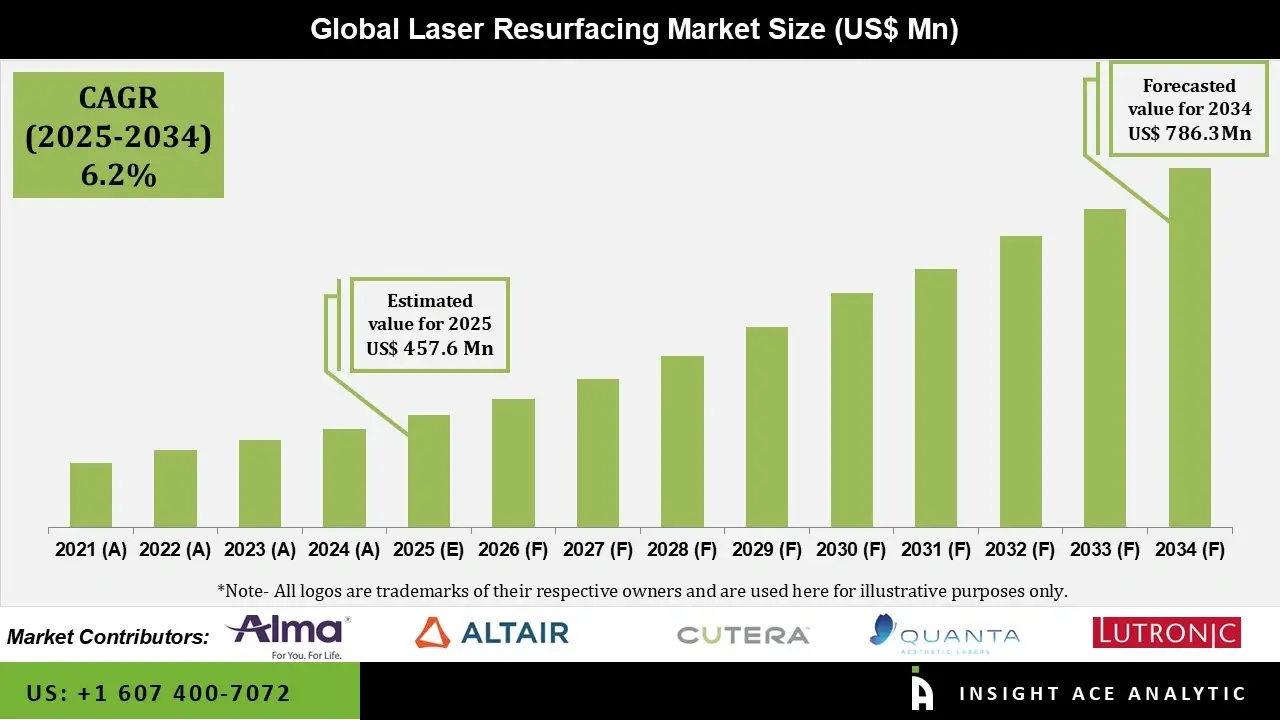
A dermatological process called laser resurfacing makes use of concentrated light beams to enhance the texture, tone, and appearance of the skin. In order to promote regeneration and increase the creation of collagen, it targets damaged skin layers. Compared to conventional treatments, the method is renowned for its accuracy, low level of invasiveness, and quicker recovery durations. Wrinkles, UV damage, pigmentation problems, and acne scars are all successfully addressed by laser resurfacing. Improved skin elasticity, fewer imperfections, and better overall skin quality are some advantages of this treatment. The growing skin issues like wrinkles, acne, and skin pigmentation are key factors driving the laser resurfacing market's expansion.
Furthermore, it is projected that the growing number of elderly people will fuel market trends for laser resurfacing. In addition to reducing wrinkles, laser resurfacing equipment can be used for sagging skin and aging hands in the elderly population. As a result, the growing number of elderly people raises the need for laser resurfacing procedures, which propels the growth of the laser resurfacing market. The market for laser resurfacing is expanding due to the rise in licensed medical facilities. Moreover, the rise in non-invasive procedures like ablative and non-ablative laser treatment is the cause of the growing number of medical centers. The changes in lifestyle and an increase in skin damage are the main causes of the growth in medical spas.
Moreover, the laser resurfacing market is expected to develop as young people become more conscious of their physical appearance and as women become more conscious of various facial aesthetic procedures. Additionally, constant innovation in laser, radiofrequency, and plasma technologies has increased results, decreased downtime, and improved safety. Fractional and hybrid systems, which provide precise energy and enhance skin regeneration while reducing problems, are becoming more and more popular among clinicians. The growth in both established and emerging economies is mostly driven by this technological improvement.
Competitive Landscape
Which are the Leading Players in the Laser Resurfacing Market?
• Lutronic Corporation
• Alma Lasers
• Lynton Lasers Ltd.
• Sciton, Inc.
• Cutera
• Altair Instruments
• Quanta Aesthetic Lasers USA
• Syneron Medical Ltd.
Market Dynamics
Driver
Growing Need for Aesthetic Procedures
The need for aesthetic procedures in the aging population is driving the growth of the laser resurfacing market. In order to address age-related skin problems like wrinkles, fine lines, & uneven skin tone, the aging population is increasingly looking for cosmetic surgeries. By stimulating collagen production and minimizing visible signs of aging, laser resurfacing is an effective treatment. Compared to conventional surgical techniques, the process offers minimally invasive treatment with quicker recovery times. For instance, fractional CO2 lasers are frequently used to improve the overall appearance of skin by treating laxity and texture concerns. Thus, the use of laser resurfacing technology is being driven by the aging population's increasing desire for aesthetic enhancement.
Restrain/Challenge
High Cost of Laser Resurfacing
One major barrier to the laser resurfacing market's expansion is the high procedure costs and restricted reimbursement. Skin resurfacing procedures can be costly, and several sessions are frequently needed to achieve the best results. The majority of insurance companies limit reimbursement choices by categorizing these procedures as elective cosmetic treatments. The adoption is hampered by this expense barrier, especially in developing nations or among consumers who are price-conscious. Additionally, the ability of the doctor determines how safe and effective resurfacing procedures are. The adoption is hampered by the lack of skilled aestheticians and dermatologists in some areas. Inappropriate usage of high-energy devices can result in problems like pigmentation changes and scarring. The expenses of certification and training requirements continue to be obstacles to laser resurfacing market expansion.
Market Segmentation
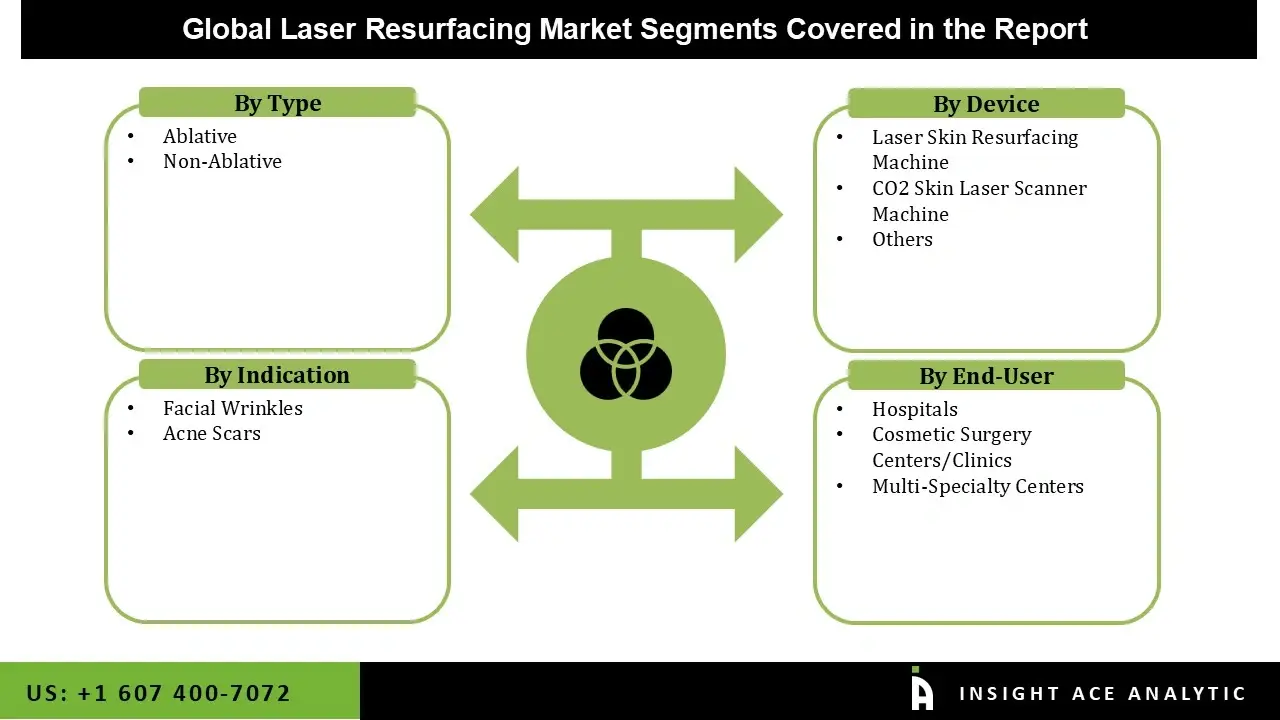
The laser resurfacing market is systematically segmented across four key dimensions. By type, it is divided into ablative and non-ablative lasers, representing the fundamental technological split between more invasive, deeper treatments and gentler, surface-level procedures. The market is further categorized by indication, with primary applications targeting acne scars and facial wrinkles. Segmentation by device includes major equipment categories such as the co2 skin laser scanner machine, general laser skin resurfacing machines, and other specialized systems. Finally, the market is analyzed by end-user, covering hospitals, specialized cosmetic surgery centers/clinics, and multi-specialty centers.
Ablative Segment is Growing at the Highest Rate in the Laser Resurfacing Market
In 2024, the ablative category dominated the Laser Resurfacing market. High-intensity skin resurfacing that eliminates damaged layers to promote collagen regeneration is the main emphasis of the ablative laser segment. The most widely used ablative lasers are carbon dioxide (CO2) and erbium lasers. These lasers are primarily used to treat a variety of skin disorders, including sun damage, warts, scars, deep wrinkles, and fine lines. When compared to other non-invasive methods, these lasers are also comparatively more successful in treating certain skin disorders. The aforementioned elements are thought to play a role in the segment's large market share.
The Facial Wrinkles Segment is Expected to Drive the Laser Resurfacing Market
The facial wrinkles category held the largest share in the Laser Resurfacing market in 2024. The growing consumer demand for a young appearance, greater aesthetic awareness, and the aging population in developed and emerging economies are the main drivers of the facial wrinkles category's dominance. The potential of laser and radiofrequency resurfacing techniques to tighten skin, promote collagen, and minimize fine-to-deep wrinkles makes them essential components of anti-aging treatment regimens. Additionally, since non-surgical techniques are less expensive and need less recovery, patients are choosing them over invasive cosmetic operations, including facelifts.
Why North America Led the Laser Resurfacing Market?
The Laser Resurfacing market was dominated by the North America region in 2024, attributable to a well-established healthcare infrastructure, the existence of major market participants, and the high adoption rate of modern cosmetic procedures. The market for laser resurfacing is dominated by North America, especially in the US and Canada. The market's performance in this area is greatly influenced by the high demand for laser resurfacing aesthetic treatments, sophisticated healthcare infrastructure, and the rising acceptance of non-invasive procedures.
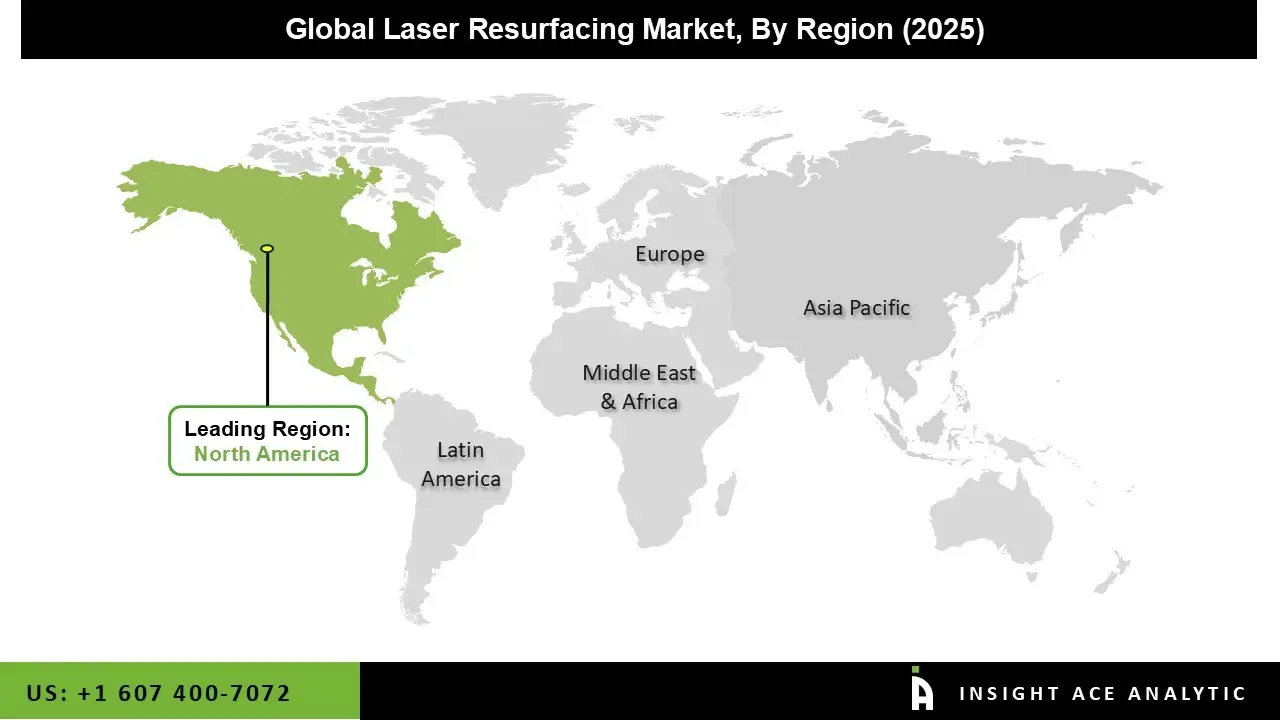
Additionally, the availability of cutting-edge technology and growing awareness of the advantages of laser resurfacing propel the growth of the laser resurfacing market. Furthermore, the market landscape in North America is significantly shaped by the existence of major market players and a strong focus on research and development.
Key Development
In Jan 2024, Alma Lasers launched the Alma Hybrid platform, integrating fractional CO2 and Erbium: YAG laser technologies in a single system. The platform is designed for tailored resurfacing, allowing practitioners to combine deep ablative and superficial treatments in one session for customized results in addressing scars and wrinkles.
Laser Resurfacing Market Report Scope:
| Report Attribute | Specifications |
| Market size value in 2025 | USD 457.6 Mn |
| Revenue forecast in 2034 | USD 786.3 Mn |
| Growth Rate CAGR | CAGR of 6.2% from 2025 to 2034 |
| Quantitative Units | Representation of revenue in US$ Mn and CAGR from 2025 to 2034 |
| Historic Year | 2021 to 2024 |
| Forecast Year | 2025-2034 |
| Report Coverage | The forecast of revenue, the position of the company, the competitive market structure, growth prospects, and trends |
| Segments Covered | Type, Indication, Device, End-user, and By Region |
| Regional Scope | North America; Europe; Asia Pacific; Latin America; Middle East & Africa |
| Country Scope | U.S.; Canada; U.K.; Germany; China; India; Japan; Brazil; Mexico; The UK; France; Italy; Spain; China; Japan; India; South Korea; Southeast Asia; South Korea; Southeast Asia |
| Competitive Landscape | Lutronic Corporation, Alma Lasers, Lynton Lasers Ltd., Sciton, Inc., Cutera, Altair Instruments, Quanta Aesthetic Lasers USA, and Syneron Medical Ltd. |
| Customization Scope | Free customization report with the procurement of the report, Modifications to the regional and segment scope. Geographic competitive landscape. |
| Pricing and Available Payment Methods | Explore pricing alternatives that are customized to your particular study requirements. |
Market Segmentation:
Laser Resurfacing Market by Type-
• Ablative
• Non-Ablative
Laser Resurfacing Market by Indication-
• Acne Scars
• Facial Wrinkles
Laser Resurfacing Market by Device-
• CO2 Skin Laser Scanner Machine
• Laser Skin Resurfacing Machine
• Others
Laser Resurfacing Market by End-user-
• Hospitals
• Cosmetic Surgery Centers/Clinics
• Multi-Specialty Centers
By Region-
North America-
• The US
• Canada
Europe-
• Germany
• The UK
• France
• Italy
• Spain
• Rest of Europe
Asia-Pacific-
• China
• Japan
• India
• South Korea
• South East Asia
• Rest of Asia Pacific
Latin America-
• Brazil
• Argentina
• Mexico
• Rest of Latin America
Middle East & Africa-
• GCC Countries
• South Africa
• Rest of Middle East and Africa
Research Design and Approach
This study employed a multi-step, mixed-method research approach that integrates:
- Secondary research
- Primary research
- Data triangulation
- Hybrid top-down and bottom-up modelling
- Forecasting and scenario analysis
This approach ensures a balanced and validated understanding of both macro- and micro-level market factors influencing the market.
Secondary Research
Secondary research for this study involved the collection, review, and analysis of publicly available and paid data sources to build the initial fact base, understand historical market behaviour, identify data gaps, and refine the hypotheses for primary research.
Sources Consulted
Secondary data for the market study was gathered from multiple credible sources, including:
- Government databases, regulatory bodies, and public institutions
- International organizations (WHO, OECD, IMF, World Bank, etc.)
- Commercial and paid databases
- Industry associations, trade publications, and technical journals
- Company annual reports, investor presentations, press releases, and SEC filings
- Academic research papers, patents, and scientific literature
- Previous market research publications and syndicated reports
These sources were used to compile historical data, market volumes/prices, industry trends, technological developments, and competitive insights.
Primary Research
Primary research was conducted to validate secondary data, understand real-time market dynamics, capture price points and adoption trends, and verify the assumptions used in the market modelling.
Stakeholders Interviewed
Primary interviews for this study involved:
- Manufacturers and suppliers in the market value chain
- Distributors, channel partners, and integrators
- End-users / customers (e.g., hospitals, labs, enterprises, consumers, etc., depending on the market)
- Industry experts, technology specialists, consultants, and regulatory professionals
- Senior executives (CEOs, CTOs, VPs, Directors) and product managers
Interview Process
Interviews were conducted via:
- Structured and semi-structured questionnaires
- Telephonic and video interactions
- Email correspondences
- Expert consultation sessions
Primary insights were incorporated into demand modelling, pricing analysis, technology evaluation, and market share estimation.
Data Processing, Normalization, and Validation
All collected data were processed and normalized to ensure consistency and comparability across regions and time frames.
The data validation process included:
- Standardization of units (currency conversions, volume units, inflation adjustments)
- Cross-verification of data points across multiple secondary sources
- Normalization of inconsistent datasets
- Identification and resolution of data gaps
- Outlier detection and removal through algorithmic and manual checks
- Plausibility and coherence checks across segments and geographies
This ensured that the dataset used for modelling was clean, robust, and reliable.
Market Size Estimation and Data Triangulation
Bottom-Up Approach
The bottom-up approach involved aggregating segment-level data, such as:
- Company revenues
- Product-level sales
- Installed base/usage volumes
- Adoption and penetration rates
- Pricing analysis
This method was primarily used when detailed micro-level market data were available.
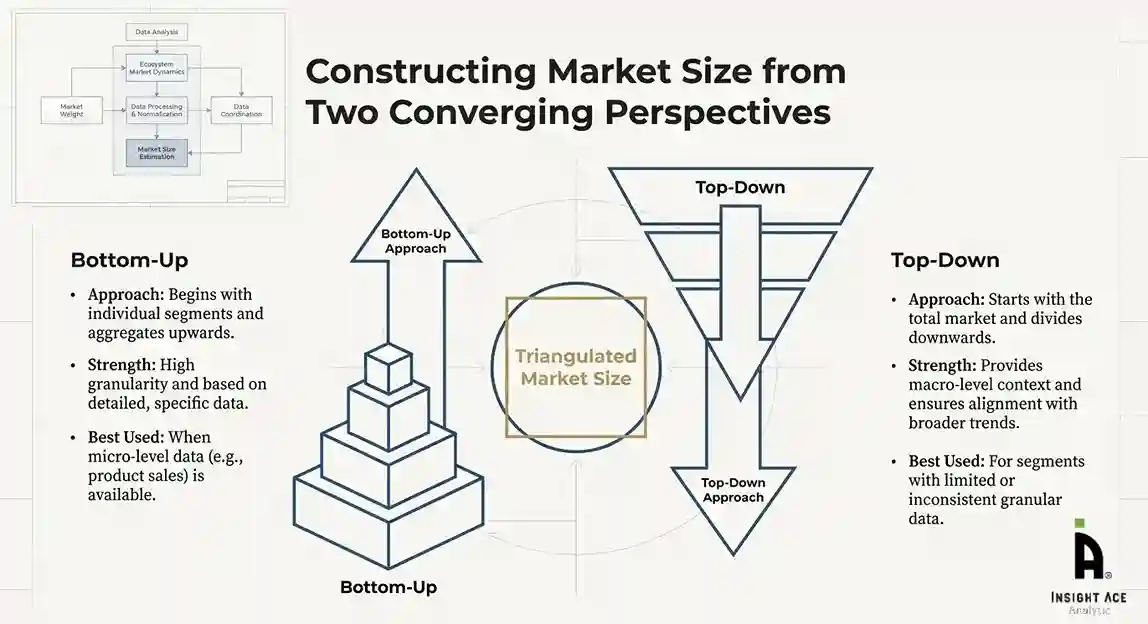
Top-Down Approach
The top-down approach used macro-level indicators:
- Parent market benchmarks
- Global/regional industry trends
- Economic indicators (GDP, demographics, spending patterns)
- Penetration and usage ratios
This approach was used for segments where granular data were limited or inconsistent.
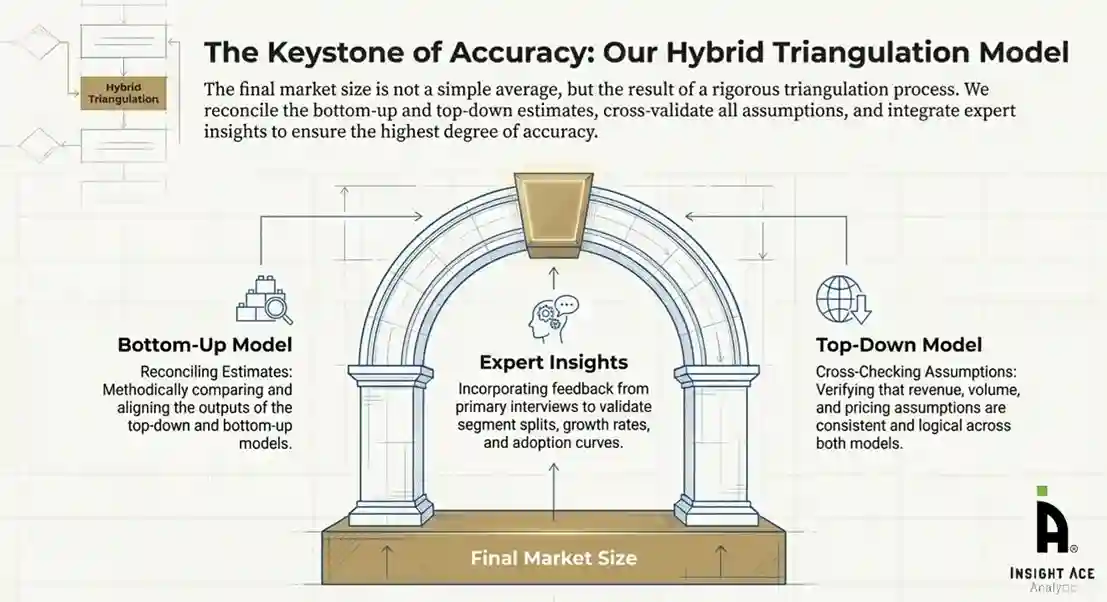
Hybrid Triangulation Approach
To ensure accuracy, a triangulated hybrid model was used. This included:
- Reconciling top-down and bottom-up estimates
- Cross-checking revenues, volumes, and pricing assumptions
- Incorporating expert insights to validate segment splits and adoption rates
This multi-angle validation yielded the final market size.
Forecasting Framework and Scenario Modelling
Market forecasts were developed using a combination of time-series modelling, adoption curve analysis, and driver-based forecasting tools.
Forecasting Methods
- Time-series modelling
- S-curve and diffusion models (for emerging technologies)
- Driver-based forecasting (GDP, disposable income, adoption rates, regulatory changes)
- Price elasticity models
- Market maturity and lifecycle-based projections
Scenario Analysis
Given inherent uncertainties, three scenarios were constructed:
- Base-Case Scenario: Expected trajectory under current conditions
- Optimistic Scenario: High adoption, favourable regulation, strong economic tailwinds
- Conservative Scenario: Slow adoption, regulatory delays, economic constraints
Sensitivity testing was conducted on key variables, including pricing, demand elasticity, and regional adoption.
Request Customization
Add countries, segments, company profiles, or extend forecast — free 10% customization with purchase.
Customize This Report →Enquire Before Buying
Speak with our analyst team about scope, methodology, pricing, or deliverable formats.
Enquire Now →Frequently Asked Questions
Laser Resurfacing Market Size is valued at USD 457.6 Mn in 2025 and is predicted to reach USD 786.3 Mn by the year 2034 at a 6.2% CAGR during the forecast period for 2025 to 2034.
Lutronic Corporation, Alma Lasers, Lynton Lasers Ltd., Sciton, Inc., Cutera, Altair Instruments, Quanta Aesthetic Lasers USA, and Syneron Medical Ltd.
Laser Resurfacing Market is further categorized by indication, with primary applications targeting acne scars and facial wrinkles.
North America region is leading the Laser Resurfacing Market.