Global Flexible Batteries Market Size is valued at USD 233.9 Mn in 2024 and is predicted to reach USD 2212.9 Mn by the year 2034 at a 25.4% CAGR during the forecast period for 2025-2034.
Portable batteries, known as flexible batteries, are made to replace traditional batteries, and these batteries are adaptable enough to bend or twist to fit into any shape of the device. The primary market growth drivers will be rising demand from the automotive and transportation sectors.
Key Industry Insights & Findings from the Report:
- The ongoing improvements in flexible electronic technology, like flexible displays, foldable smartphones, and e-textiles, feed the demand for flexible batteries.
- Due to its ability to retain its shape in a range of forms and sizes, demand is expected to increase, notably in healthcare, consumer electronics, and other industries, supporting market growth.
- Asia Pacific dominated the market and accounted for a revenue share of global revenue in 2024.
- Flexible batteries typically have lower energy density than traditional rigid batteries. This constraint limits their ability to store and transmit power, making them unsuitable for some high-power applications or devices that demand a lengthy battery life.
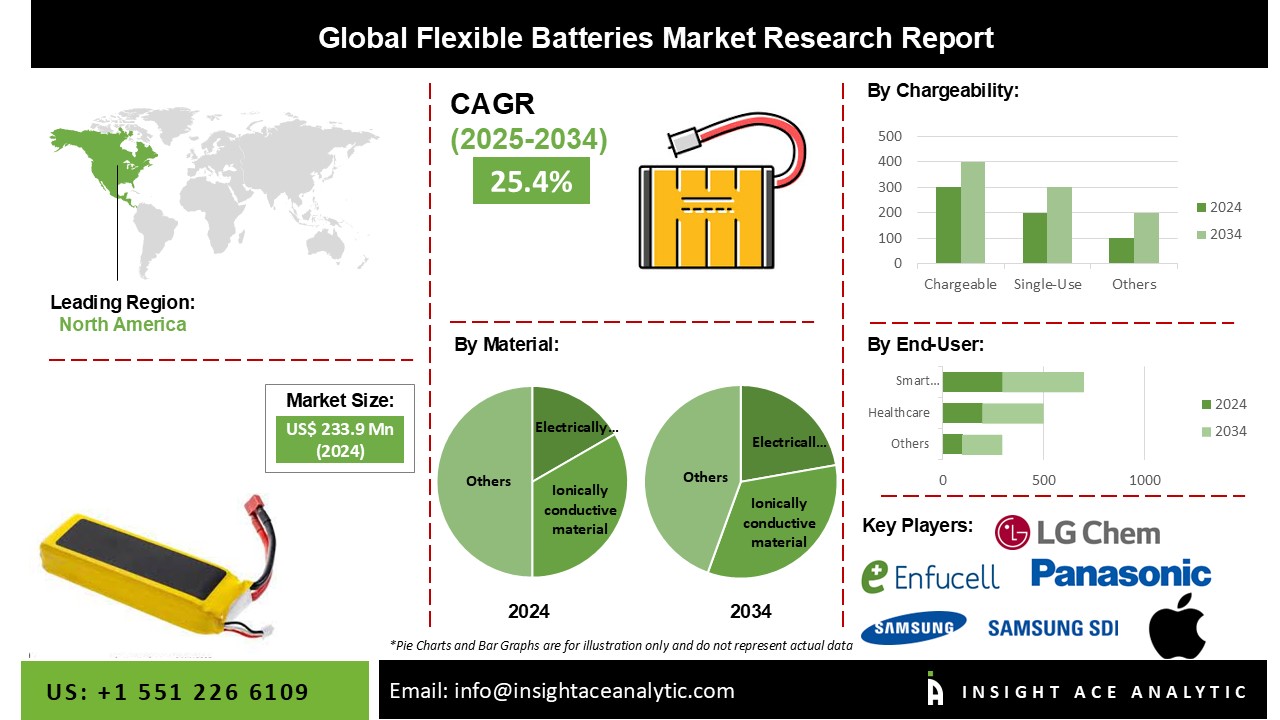
The flexible batteries market revenue will be further harmed by rising consumer awareness of the advantages of using flexible batteries, rapid technological advancements in the battery manufacturing process, rising product innovations, rising demand for smart wearable electronics, medical devices, and consumer electronics, and widespread industrialization. Growing investment in R&D activities and accelerating IoT technology deployment by small and medium-sized manufacturing enterprises will pave the way for the flexible batteries market expansion.
However, the high expenditures associated with research and development capabilities will constrain the market's ability to grow. Additionally, a lack of standardization and strict regulations in developing nations will slow the market's expansion. Large-scale technology and infrastructure constraints will make it more difficult for the market to grow.
Recent Developments:
- In June 2023, Forsee Power unveiled FLEX PLUS, a new high-value-added battery system for large electric vehicles (buses, trucks, and off-road vehicles). This new FLEX PLUS battery pack rounds out the PLUS format product family.
- In May 2023, EVLO Energy Storage Inc. (EVLO) unveiled their new product EVLOFLEX at CLEANPOWER 2023, the renewable energy industry's flagship event.
Competitive Landscape:
Some of the flexible batteries market are:
- Apple Inc.
- Blue Spark Technology
- Brightvolt Inc.
- Energy Diagnostics
- Enfucell Oy Ltd.
- Guangzhou Fullriver Battery New Technology Co., Ltd.
- Imprint Energy Inc.
- ITEN SA
- Jenax
- LG Chem Ltd.
- MOLEX
- NEC Energy Solutions Inc.
- Panasonic Corporation
- Polyplus Battery Company
- Prologium Technology Co., Ltd.
- Samsung Sdi
- ST Microelectronics N.V.
- Ultralife Corporation
Market Segmentation:
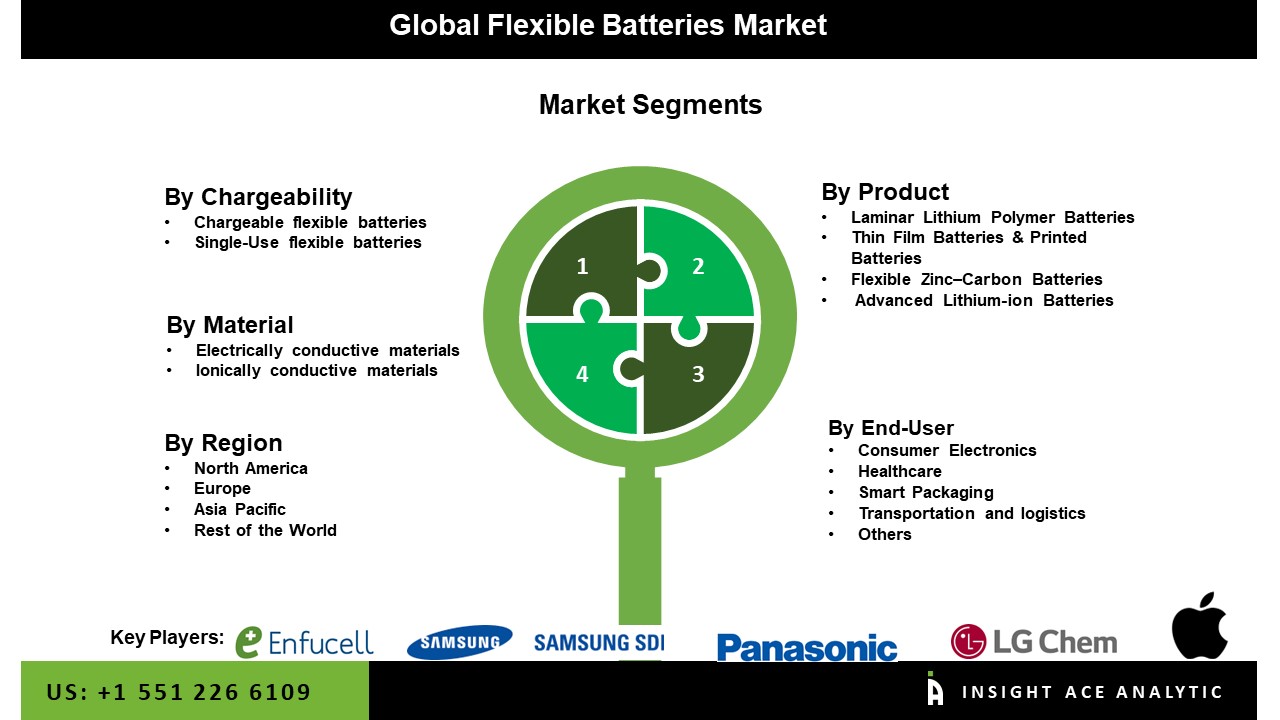
The flexible batteries market is segmented on the product, chargeability, material and end-user. Based on product, the market is segmented into laminar lithium polymer batteries, thin film batteries and printed batteries, flexible zinc-carbon batteries and advanced lithium-ion batteries. Based on chargeability, the market is segmented into chargeable flexible batteries and single-use flexible batteries.
Based on material, the market is segmented into electrically conductive materials (carbon nanotube, graphene, carbon nano-fiber, aluminum foil, copper foil) and lonically conductive materials (gel electrolytes, solid electrolytes, liquid electrolytes). Based on end-user, the market is segmented into consumer electronics (flexible displays, wearable devices, interactive media, toys and games, smart cards), health care (cosmetic and medical patches, implantable medical devices, medical sensors and medical diagnostic devices), smart packaging, transportation and logistics and other.
Based On Product, The Thin Film Batteries And Printed Batteries Segment Is Accounted As A Significant Contributor To The Flexible Batteries Market
The thin film batteries and printed batteries category grabbed the highest revenue share, and it is anticipated that they will continue to hold that position during the anticipated time. Wearable technology, smart cards, smart packaging, and medical equipment all frequently use thin-film batteries. Compared to large solid-state batteries, these batteries have better performance, a higher average output voltage, and a decreased likelihood of electrolyte leaks.
Thin-film lithium-ion flexible batteries are becoming more widely used, which has boosted the need for miniaturized products used in these applications and greatly accelerated the growth of the thin-film batteries market. The rising demand for smart cards has also aided the rise of the flexible battery market's thin-film batteries in the banking, transportation, and telecommunications industries for use in payment applications.
The Consumer Electronics Segment Witnessed Growth At A Rapid Rate
The consumer electronics category is anticipated to grow at a significant rate over the forecast period. The variables contributing to the segment's expansion are related to an increase in the number of new product launches and technological developments. To ensure a constant power source, these gadgets need extremely flexible and portable batteries.
The Asia Pacific Flexible Batteries Market Holds A Significant Revenue Share In The Region
The Asia Pacific flexible batteries market is expected to register the highest market share in revenue in the near future. For compatibility with the flexible projects of their products, major consumer microelectronics manufacturers in this region are developing their product designs to run on thin power sources. Thus, the expansion of the worldwide flexible battery market in APAC was primarily driven by technological advancements in smart packaging, consumer electronics, and the rising popularity of wearable devices in this region.
In addition, North America is projected to grow rapidly in the global flexible batteries market due to the expanding manufacturing industries, rising infrastructural development activities, increasing popularity of wearable technology in this region, and rising technical changes in the industrial sector. Due to continued research and development, new goods are now entering the market thanks to the existence of certain significant major manufacturers.
Flexible Batteries Market Report Scope:
|
Report Attribute
|
Specifications
|
|
Market size value in 2024
|
USD 233.9 Mn
|
|
Revenue forecast in 2034
|
USD 2212.9 Mn
|
|
Growth rate CAGR
|
CAGR of 25.4% from 2025 to 2034
|
|
Quantitative units
|
Representation of revenue in US$ Billion, Volume (Units) and CAGR from 2025 to 2034
|
|
Historic Year
|
2021 to 2024
|
|
Forecast Year
|
2025-2034
|
|
Report coverage
|
The forecast of revenue, the position of the company, the competitive market statistics, growth prospects, and trends
|
|
Segments covered
|
Product, Chargeability, Material And End-User
|
|
Regional scope
|
North America; Europe; Asia Pacific; Latin America; Middle East & Africa
|
|
Country scope
|
U.S.; Canada; U.K.; Germany; China; India; Japan; Brazil; Mexico; The UK; France; Italy; Spain; China; Japan; India; South Korea; Southeast Asia; South Korea; Southeast Asia
|
|
Competitive Landscape
|
Apple Inc., Blue Spark Technology, Brightvolt Inc., Enfucell Oy, LG, Chem Ltd., NEC Energy Solutions Inc., Panasonic Corporation, Samsung SDI Co. Ltd., ST Microelectronics N.V., and Ultralife Corporation.
|
|
Customization scope
|
Free customization report with the procurement of the report, Modifications to the regional and segment scope. Particular Geographic competitive landscape.
|
|
Pricing and available payment methods
|
Explore pricing alternatives that are customized to your particular study requirements.
|
Segmentation of Flexible Batteries Market-
Flexible Batteries Market By Product
- Laminar Lithium Polymer Batteries
- Thin Film Batteries & Printed Batteries
- Flexible Zinc-carbon Batteries
- Advanced Lithium-ion Batteries
Flexible Batteries Market By Chargeability
- Chargeable Flexible Batteries
- Single-use Flexible Batteries
Flexible Batteries Market By Material
- Electrically Conductive Materials
- Carbon Nanotubes (CNT)
- Graphene
- Carbon Nanofibers (CNF)
- Aluminum Foils
- Copper Foils
- Others
- Lonically Conductive Materials
- Gel Electrolytes
- Solid Electrolytes
- Liquid Electrolytes
Flexible Batteries Market By End-user
- Consumer Electronics
- Flexible Displays
- Wearable Devices
- Interactive Media and Toys & Games
- Smart Cards
- Health Care
- Cosmetic and Medical Patches
- Implantable Medical Devices
- Medical Sensors & Medical Diagnostic Devices
- Smart Packaging
- Transportation & Logistics
- Others
Flexible Batteries Market By Region-
North America-
Europe-
- Germany
- The UK
- France
- Italy
- Spain
- Rest of Europe
Asia-Pacific-
- China
- Japan
- India
- South Korea
- South East Asia
- Rest of Asia Pacific
Latin America-
- Brazil
- Mexico
- Argentina
- Rest of Latin America
Middle East & Africa-
- GCC Countries
- South Africa
- Rest of Middle East and Africa