Exosome Development and Manufacturing Services Market by Types of Service(s) Offered (Isolated Exosomes, Exosome Characterization, Purification, Chromatography, Engineering, Targeted Delivery, Diagnostic Biomarker, and Quality Control), Scale of Operation (Discovery / Research, Pre-Clinical, Clinical or Commercialized) and By Scalability, Region, and Segment Forecasts, 2024-2031
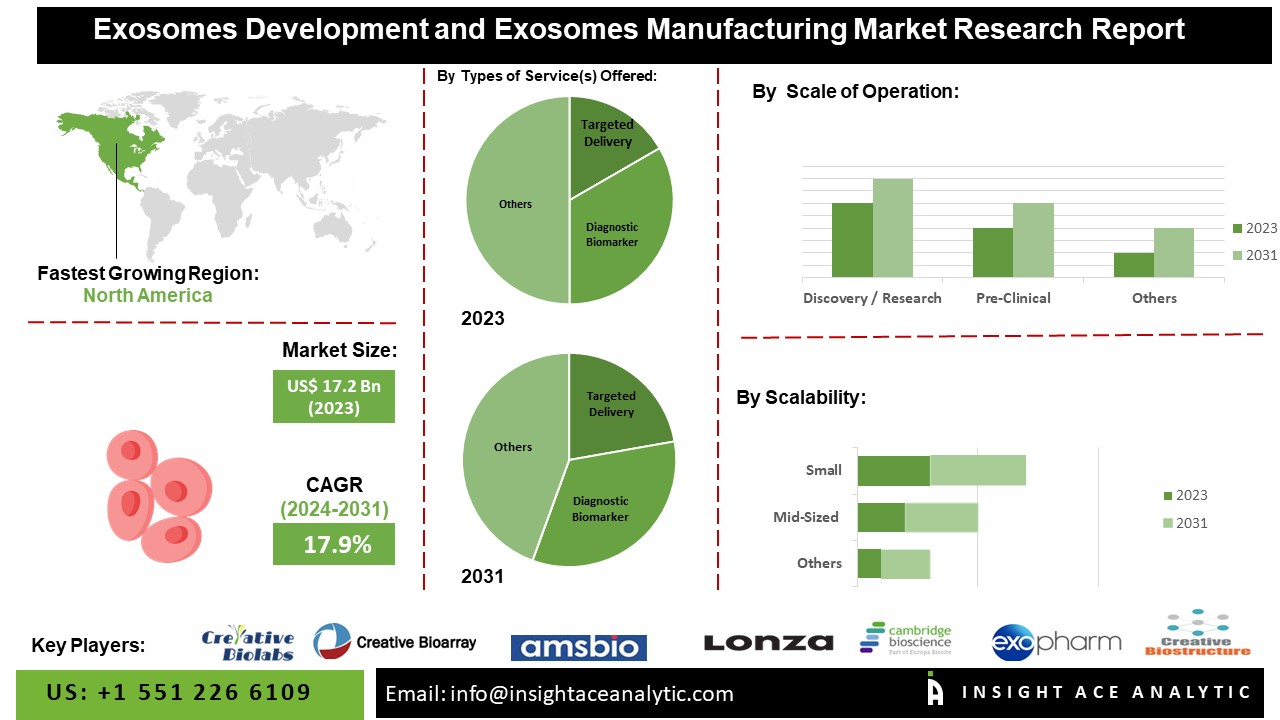
Exosome Development and Manufacturing Services Market Size is valued at USD 17.2 Bn in 2023 and is predicted to reach USD 62.8 Bn by the year 2031 at an 17.9% CAGR during the forecast period for 2024-2031.
Exosomes, which range in diameter from 30 to 150 nm and are membrane-bound extracellular vesicles, are secreted into the extracellular environment by a wide variety of cell types. They develop inside the multivesicular bodies (MVBs) that contain cells and are expelled when the MVBs merge with the plasma membrane. Exosomes are essential for the transfer of biomolecules between cells, including lipids, proteins, RNA, and DNA. This allows for intercellular communication. Exosomes are being studied as biomarkers for diagnosing diseases, as their composition reflects the state of their cells of origin. Their capacity to target certain cells and their biocompatibility make them ideal candidates for use as natural delivery systems for medications, RNA treatments, and gene editing instruments. Exosomes generated from stem cells are being researched in regenerative medicine for their ability to aid in tissue regeneration and repair.
The rising prevalence of chronic disease and conditions associated with aging populations is fueling demand for innovative therapeutic solutions, including exosome-based treatment. The need for novel therapies to address them is rising. The use of exosome-based technologies in cancer research and treatment has increased dramatically as a result of this need. In cancer diagnosis, the idea of "liquid biopsy," which entails examining biomarkers in physiological fluids like blood, urine, or saliva, is becoming increasingly popular. Exosomes are excellent candidates for liquid biopsy techniques because they are stable molecular information carriers. Exosome biomarkers are being investigated by researchers as a means of tracking the course of disease, gauging the effectiveness of treatment, and identifying minimally residual disease.
Competitive Landscape
Some of the Major Key Players in the Exosome Development and Manufacturing Services Market are
- 101 Bio
- 10x Genomics
- Aegle Therapeutics
- Aethlon Medical
- AMSBIO
- Anjarium Biosciences
- Aruna Bio
- Bio-Techne
- Capricor Therapeutics
- CD Bioparticles
- Cell Guidance Systems
- Cellular Biomedicine Group (CBMG)
- Clara Biotech
- Codiak BioSciences
- Creative Biolabs
- Creative Biostructure
- Creative Bioarray
- Creative Proteomics
- Curexsys
- Direct Biologics
- EV Therapeutics
- EVerZom
- Evox Therapeutics
- ExoCoBio
- Exogenus Therapeutics
- Exosome Diagnostics
- Exosome Plus
- Exosomics
- Exopharm
- Exosome Sciences
- Exosome Diagnostics
- Exosome Plus
- Izon Science
- Kimera Labs
- Lonza
- MDimune
- Miltenyi Biotec
- NanoView Biosciences
- Norgen Biotek
- NurExone Biologic
- System Biosciences (SBI)
- Takeda
- Thermo Fisher Scientific
- Vesigen Therapeutics
- VivaZome Therapeutics
- XOStem
Market Segmentation:
The Exosome Development and Manufacturing Services Market is segmented based on types of service(s) offered, scale of operation, and scalability. The Types of Service(s) Offered segments isolated exosomes, exosome characterization, purification, chromatography, engineering, targeted delivery, diagnostic biomarker, and quality control. The Scale of Operation segments discovery / research, pre-clinical, clinical or commercialized. The scalability segment comprises small, mid-sized or large.
The Target Delivery Segment Dominate the Market
Based on the types of service(s) offered, the exosome development and manufacturing services market is segmented into isolated exosomes, exosome characterization, purification, chromatography, engineering, targeted delivery, diagnostic biomarker, and quality control. The target delivery segment is expected to drive the market. The application of exosomes in targeted delivery systems, especially in drug delivery, is a major driver. Targeted delivery through exosomes represents a cutting-edge approach in the field of drug delivery. Exosomes, naturally occurring vesicles, are inherently biocompatible and capable of transporting a broad spectrum of therapeutic molecules. Exosomes can be engineered to deliver therapeutic agents to specific cells or tissues, improving treatment effectiveness and lowering side effects.
The Discovery / Research Segment is Expected to Drive the Exosome Development and Manufacturing Services Market in the Upcoming Years.
The Discovery / Research Segment is Expected to Drive the Exosome Development and Manufacturing Services Market. Exosomes' enormous potential in therapeutics and diagnostics, including drug transport and regenerative medicine, can be attributable to this. Within academic and scientific institutes, research activities have surged due to the interest surrounding these prospective uses. Exosomes are being investigated by scientists as potential indicators for a number of diseases and as delivery systems for specific drugs, which is driving an increase in research projects.
Regionally, North America Led The Exosome Development and Manufacturing Services Market In 2023.
North America has a well-established framework for financing R&D projects, offering monetary assistance to businesses engaged in exosome investigation. Furthermore, North America's regulatory framework frequently encourages innovation in the life sciences industry. Many government-funded studies have been carried out to investigate the potential involvement of medications utilizing exosomes in diverse cancer types, including pancreatic cancer, lung cancer, melanoma, and breast cancer.
Exosome Development and Manufacturing Services Market Report Scope
| Report Attribute | Specifications |
| Market Size Value In 2023 | USD 17.2 Bn |
| Revenue Forecast In 2031 | USD 62.8 Bn |
| Growth Rate CAGR | CAGR of 17.9% from 2024 to 2031 |
| Quantitative Units | Representation of revenue in US$ Bn and CAGR from 2024 to 2031 |
| Historic Year | 2019 to 2023 |
| Forecast Year | 2024-2031 |
| Report Coverage | The forecast of revenue, the position of the company, the competitive market structure, growth prospects, and trends |
| Segments Covered | By Types of Service(s) Offered, Scale of Operation, and Scalability |
| Regional Scope | North America; Europe; Asia Pacific; Latin America; Middle East & Africa |
| Country Scope | U.S.; Canada; U.K.; Germany; China; India; Japan; Brazil; Mexico; The UK; France; Italy; Spain; China; Japan; India; South Korea; Southeast Asia; South Korea; South East Asia |
| Competitive Landscape | 101 Bio,10x Genomics, Aegle Therapeutics, Aethlon Medical, AMSBIO, Anjarium Biosciences, Aruna Bio, Bio-Techne,Capricor Therapeutics,CD Bioparticles, Cell Guidance Systems, Cellular Biomedicine Group (CBMG),Clara Biotech,Codiak, BioSciences, Creative Biolabs, Creative Biostructure, Creative Bioarray, Creative ProteomicsCurexsys, Direct Biologics, EV Therapeutics, EVerZom,Evox Therapeutics, ExoCoBio, Exogenus Therapeutics, Exosome Diagnostics, Exosome Plus, Exosomics, Exopharm, Exosome Sciences, Exosome Diagnostics, Exosome Plus, Izon Science, Kimera Labs, Lonza, MDimune, Miltenyi Biotec, NanoView Biosciences, Norgen Biotek, NurExone Biologic, System Biosciences (SBI), Takeda, Thermo Fisher Scientific, Vesigen Therapeutics, VivaZome Therapeutics, XOStem. |
| Customization Scope | Free customization report with the procurement of the report, Modifications to the regional and segment scope. Particular Geographic competitive landscape. |
| Pricing and Available Payment Methods | Explore pricing alternatives that are customized to your particular study requirements. |
Segmentation of Exosome Development and Manufacturing Services Market
Exosome Development and Manufacturing Services Market, By Types of Service(s) Offered
- Isolated Exosomes
- Exosome Characterization
- Purification
- Chromatography
- Engineering
- Targeted Delivery
- Diagnostic Biomarker
- Quality Control
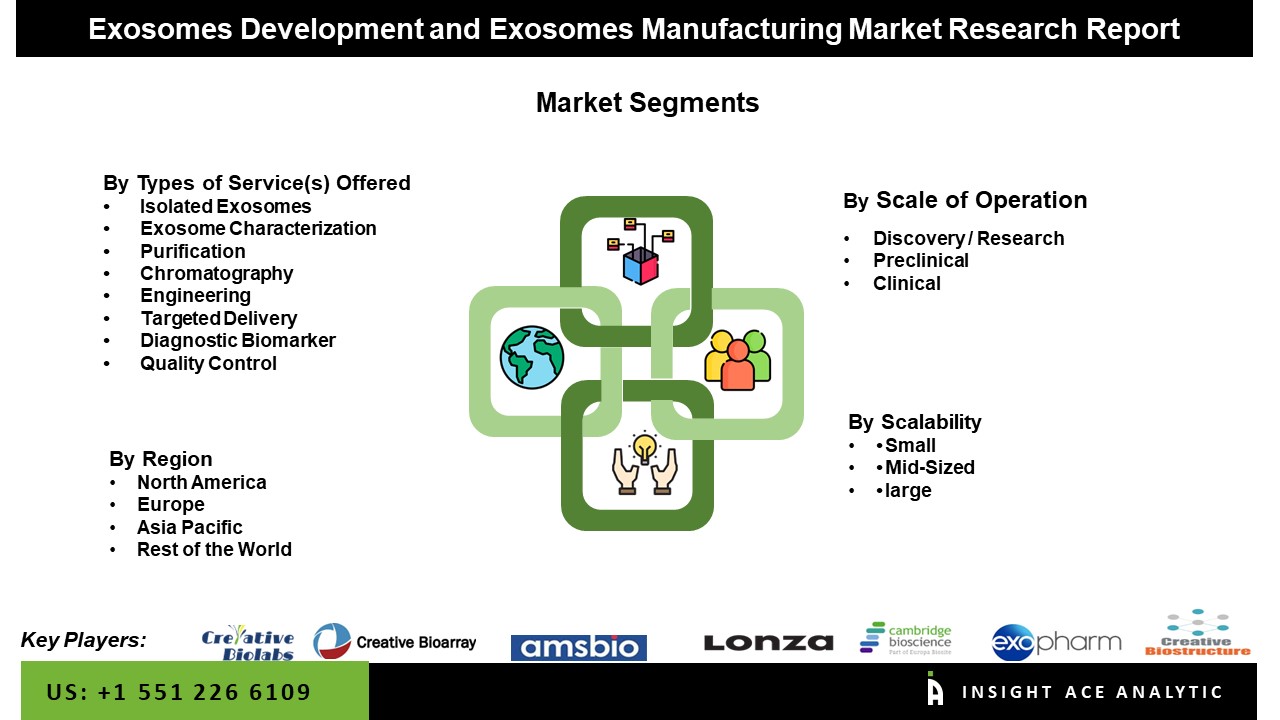
Exosome Development and Manufacturing Services Market, By Scale of Operation
- Discovery / Research
- Preclinical
- Clinical
Exosome Development and Manufacturing Services Market, By Scalability
- Small
- Mid-sized
- Large
Exosome Development and Manufacturing Services Market, by Region
- North America
- Europe
- Asia Pacific
- Latin America
- Middle East & Africa
North America-
- The US
- Canada
- Mexico
Europe-
- Germany
- The UK
- France
- Italy
- Spain
- Rest of Europe
Asia-Pacific-
- China
- Japan
- India
- South Korea
- Southeast Asia
- Rest of Asia Pacific
Latin America-
- Brazil
- Argentina
- Rest of Latin America
Middle East & Africa-
- GCC Countries
- South Africa
- Rest of the Middle East and Africa
Research Design and Approach
This study employed a multi-step, mixed-method research approach that integrates:
- Secondary research
- Primary research
- Data triangulation
- Hybrid top-down and bottom-up modelling
- Forecasting and scenario analysis
This approach ensures a balanced and validated understanding of both macro- and micro-level market factors influencing the market.
Secondary Research
Secondary research for this study involved the collection, review, and analysis of publicly available and paid data sources to build the initial fact base, understand historical market behaviour, identify data gaps, and refine the hypotheses for primary research.
Sources Consulted
Secondary data for the market study was gathered from multiple credible sources, including:
- Government databases, regulatory bodies, and public institutions
- International organizations (WHO, OECD, IMF, World Bank, etc.)
- Commercial and paid databases
- Industry associations, trade publications, and technical journals
- Company annual reports, investor presentations, press releases, and SEC filings
- Academic research papers, patents, and scientific literature
- Previous market research publications and syndicated reports
These sources were used to compile historical data, market volumes/prices, industry trends, technological developments, and competitive insights.

Primary Research
Primary research was conducted to validate secondary data, understand real-time market dynamics, capture price points and adoption trends, and verify the assumptions used in the market modelling.
Stakeholders Interviewed
Primary interviews for this study involved:
- Manufacturers and suppliers in the market value chain
- Distributors, channel partners, and integrators
- End-users / customers (e.g., hospitals, labs, enterprises, consumers, etc., depending on the market)
- Industry experts, technology specialists, consultants, and regulatory professionals
- Senior executives (CEOs, CTOs, VPs, Directors) and product managers
Interview Process
Interviews were conducted via:
- Structured and semi-structured questionnaires
- Telephonic and video interactions
- Email correspondences
- Expert consultation sessions
Primary insights were incorporated into demand modelling, pricing analysis, technology evaluation, and market share estimation.
Data Processing, Normalization, and Validation
All collected data were processed and normalized to ensure consistency and comparability across regions and time frames.
The data validation process included:
- Standardization of units (currency conversions, volume units, inflation adjustments)
- Cross-verification of data points across multiple secondary sources
- Normalization of inconsistent datasets
- Identification and resolution of data gaps
- Outlier detection and removal through algorithmic and manual checks
- Plausibility and coherence checks across segments and geographies
This ensured that the dataset used for modelling was clean, robust, and reliable.
Market Size Estimation and Data Triangulation
Bottom-Up Approach
The bottom-up approach involved aggregating segment-level data, such as:
- Company revenues
- Product-level sales
- Installed base/usage volumes
- Adoption and penetration rates
- Pricing analysis
This method was primarily used when detailed micro-level market data were available.

Top-Down Approach
The top-down approach used macro-level indicators:
- Parent market benchmarks
- Global/regional industry trends
- Economic indicators (GDP, demographics, spending patterns)
- Penetration and usage ratios
This approach was used for segments where granular data were limited or inconsistent.
Hybrid Triangulation Approach
To ensure accuracy, a triangulated hybrid model was used. This included:
- Reconciling top-down and bottom-up estimates
- Cross-checking revenues, volumes, and pricing assumptions
- Incorporating expert insights to validate segment splits and adoption rates
This multi-angle validation yielded the final market size.
Forecasting Framework and Scenario Modelling
Market forecasts were developed using a combination of time-series modelling, adoption curve analysis, and driver-based forecasting tools.
Forecasting Methods
- Time-series modelling
- S-curve and diffusion models (for emerging technologies)
- Driver-based forecasting (GDP, disposable income, adoption rates, regulatory changes)
- Price elasticity models
- Market maturity and lifecycle-based projections
Scenario Analysis
Given inherent uncertainties, three scenarios were constructed:
- Base-Case Scenario: Expected trajectory under current conditions
- Optimistic Scenario: High adoption, favourable regulation, strong economic tailwinds
- Conservative Scenario: Slow adoption, regulatory delays, economic constraints
Sensitivity testing was conducted on key variables, including pricing, demand elasticity, and regional adoption.
Request Customization
Add countries, segments, company profiles, or extend forecast — free 10% customization with purchase.
Customize This Report →Enquire Before Buying
Speak with our analyst team about scope, methodology, pricing, or deliverable formats.
Enquire Now →Frequently Asked Questions
Exosome Development and Manufacturing Services Market Size is valued at USD 17.2 Bn in 2023 and is predicted to reach USD 62.8 Bn by the year 2031
Exosome Development and Manufacturing Services Market is predicted to develop at an 17.9% CAGR during the forecast period for 2024-2031.
Exosomics, Exopharm, Exosome Sciences, Exosome Diagnostics, Exosome Plus, Izon Science, Kimera Labs, Lonza, MDimune, Miltenyi Biotec, NanoView Bioscie