eConsent In Healthcare Market Size, Scope, Revenue Report 2026 to 2035
What is eConsent In Healthcare Market Size?
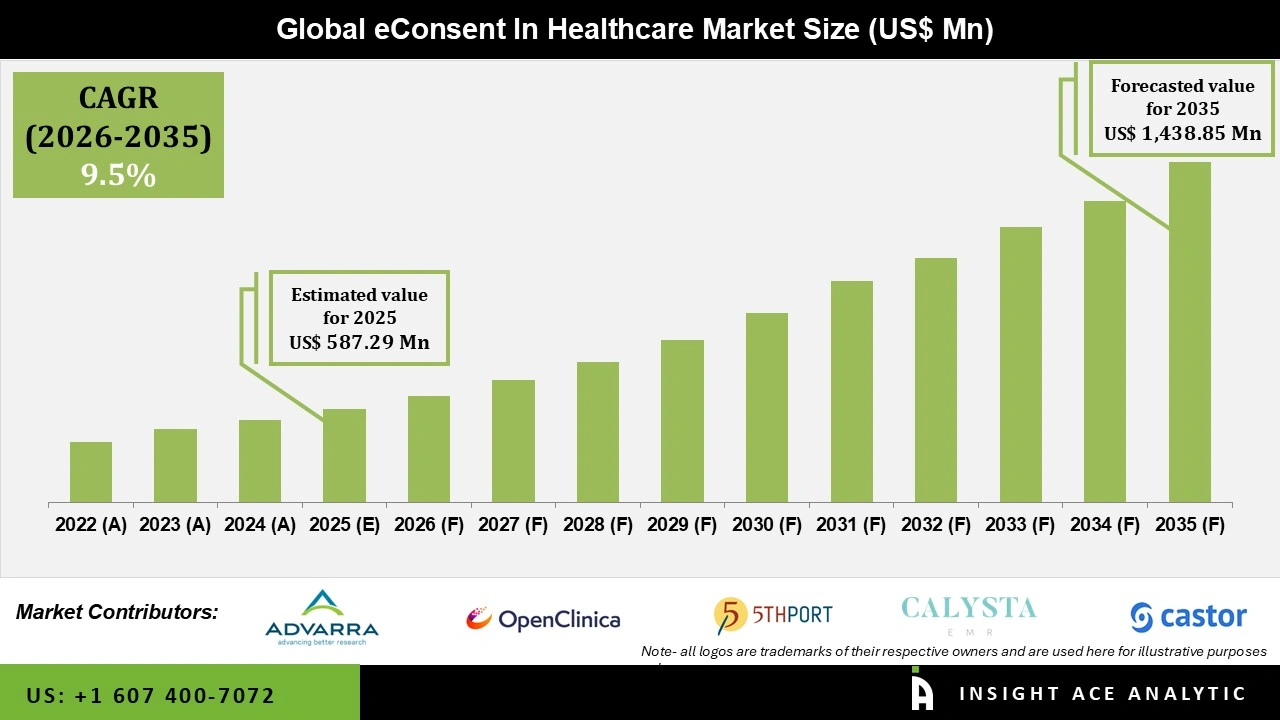
Global eConsent In Healthcare Market Size is valued at USD 587.29 Mn in 2025 and is predicted to reach USD 1,438.85 Mn by the year 2035 at a 9.5% CAGR during the forecast period for 2026 to 2035.
eConsent In Healthcare Market Size, Share & Trends Analysis Report by Platform (Cloud-based, Web-based), By Enrollment Type (On-Site, Remote), By Form Type (General Consent, General Consent With Specific Denial(S), General Denial With Specific Consent(S) And General Denial), Region And Segment Forecasts, 2026 to 2035
eConsent In Healthcare Market Key Takeaways:
|
Consent is a critical procedure in clinical trials involving communication, discussion, and agreement between participants and researchers. Participation in the trial is not feasible without consent. eConsent in Healthcare refers to the electronic process of obtaining informed consent from patients or participants in various healthcare settings, particularly in clinical trials. It is a digital alternative to traditional paper-based consent forms, where participants give their voluntary permission to participate in a study or receive medical treatment after being informed about the study or procedure's purpose, risks, benefits, and other relevant information.
For many healthcare organizations, particularly smaller or resource-constrained ones, successfully implementing eConsent can take time and effort. The expertise and investments in technology that are required could be challenging.
Additionally, lack of interoperability can impede market expansion, resulting in inefficient procedures, data silos, and a disjointed patient consent process. However, eConsent quickens the consent procedure, saving time for patients and healthcare professionals, which helps the market grow. Creating national guidelines makes designing, getting regulatory clearance, and using eConsent strategies easier. Moreover, clinical trial consent is streamlined with eConsent, increasing productivity and lowering administrative costs.
It makes it possible to record data in real-time, monitor it remotely, and exchange documents more quickly, streamlining trial procedures and promoting market expansion. eConsent plays a crucial role in the ongoing digital transformation of the healthcare industry. The need for enhanced efficiency, precision, and patient involvement is the primary catalyst for the expanding acceptance of technology-driven solutions like eConsent.
- In October 2024, Veeva Systems released Veeva ePRO, a patient-centric digital trial innovation. The software helps patients’ complete assessments on mobile devices or web browsers and gives sponsors and clinical research sites real-time data. Study teams can utilise ePRO to transmit high-quality data across the clinical ecosystem for transparency and collaboration as part of a connected clinical trial platform.
- In July 2023, Castor introduced a scalable patient enrollment and electronic consent platform in order to improve patient access and shorten recruitment cycles. Participants who have an easy, transparent enrolling process know what is expected of them in the study.
Competitive Landscape:
Some of the major key players in the eConsent In Healthcare market are:
- Advarra
- OpenClinica, LLC
- 5thPort, LLC
- Calysta EMR
- Castor
- Citadel Group
- Climedo Health GmbH
- ClinConsent, LLC
- Clinical ink
- Clinical Trials Arena
- ClinOne
- Cloudbyz
- Concentric Health Ltd
- Crucial Data Solutions
- Curebase
- Dacima Software Inc (EvidentIQ Group)
- Datacubed Health
- DataRiver S.r.l.
- Definitive Healthcare, LLC
- Delve Health
- EClinCloud (Shenzhen) Technology Co., Ltd
- eClinicalHealth
- Eclipse
- EvidentIQ Group GmbH
- Florence Healthcare
- ICON plc
- Interlace Health
- IQVIA
- Jeeva Clinical Trials Inc.
- Kayentis
- Magentus
- Medable Inc.
- Medidata
- Mednet
- Medrio
- Milo Healthcare
- Obvio Health USA, Inc.
- Octalsoft (Glorant, LLC USA)
- RealTime Software Solutions, LLC
- Signant Health
- Sitero
- StudyKIK (Syneos Health)
- Suvoda LLC
- Thieme Compliance GmbH
- THREAD
- Veeva Systems
- Wellbeing Software
- YonaLink
- Y-Prime, LLC
- ?lin?apture
Market Segmentation:
The eConsent In the Healthcare market is segmented based on platform, enrollment, and form. Based on product, the eConsent In the Healthcare market is segmented as cloud-based and web-based. By enrollment type, the market is segmented into on-site and remote. The market is segmented by enrollment type into general consent, general consent with specific denial(s), general denial with specific consent(s) and general denial.
Based On The Form Type, The General Consent Segment Is A Major Contributor To The eConsent In The Healthcare Market
The general consent category will hold a major share in the global eConsent In Healthcare market 2022. Electronic health records (EHRs) and health information exchange (HIE) systems, both readily available, make it easier to adopt broad consent, which in turn fuels market expansion. Research and data analysis have new directions thanks to general consent. Researchers can access a plethora of data for population health studies, epidemiological research, and clinical trials by acquiring broad consent from a broader pool of patients. This increases the scope of available research projects, hastens medical advancements, and enhances patient care.
Cloud-based Segment Witness Growth At A Rapid Rate
The cloud-based segment is projected to develop rapidly in the global eConsent In Healthcare market. Healthcare professionals, researchers, and patients can easily collaborate thanks to cloud-based eConsent technologies. Cloud-based eConsent solutions improve data security and privacy, resolve concerns and satisfy regulatory standards, build trust, and speed up market adoption. Remote access is made possible by cloud-based eConsent technologies, allowing patients to consent at any time, from any location. Remote capabilities simplify the consent procedure, lower geographical obstacles, and enhance patient comfort, ultimately spurring market expansion.
The North American eConsent In Healthcare Market Holds A Significant Revenue Share In The Region
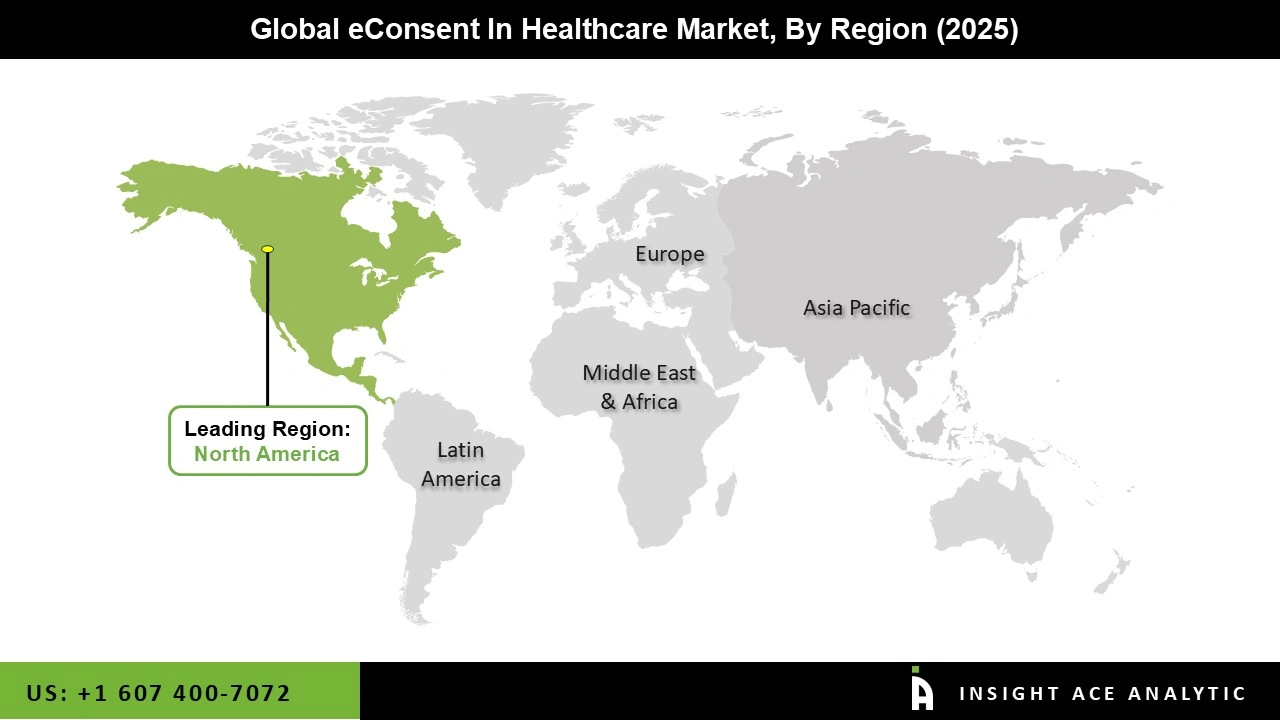
The North America eConsent In the Healthcare market is expected to register a tremendous market share Regulations compliance, technical improvements, patient-centered care models, the prominence of research and clinical trials, integration with EHRs, and broader digital transformation activities in the healthcare industry all drive the market for eConsent in North America. In addition, the Europe regional market is projected to grow rapidly in the global eConsent In Healthcare market.
Autonomy and patient rights are highly valued in the European region. eConsent systems empower patients to participate actively in their healthcare choices by providing comprehensive data on treatment options, risks, and benefits. This facilitates informed decision-making and encourages patients to engage in their healthcare actively. The growing acceptance of eConsent solutions in Europe reflects a shift toward patient-centered care.
eConsent In Healthcare Market Report Scope:
| Report Attribute | Specifications |
| Market size value in 2025 | USD 587.29 Mn |
| Revenue Forecast in 2035 | USD 1,438.85 Mn |
| Growth rate CAGR | CAGR of 8.1 % from 2025 to 2034 |
| Quantitative units | Representation of revenue in US$ Million, and CAGR from 2026 to 2035 |
| Historic Year | 2022 to 2025 |
| Forecast Year | 2026 to 2035 |
| Report coverage | The forecast of revenue, the position of the company, the competitive market statistics, growth prospects, and trends |
| Segments covered | Platform, Enrollment, And Form |
| Regional scope | North America; Europe; Asia Pacific; Latin America; Middle East & Africa |
| Country scope | U.S.; Canada; U.K.; Germany; China; India; Japan; Brazil; Mexico; France; Italy; Spain; India; Southeast Asia; South Korea |
| Competitive Landscape | Advarra, OpenClinica, LLC, 5thPort, LLC, Calysta EMR, Castor, Citadel Group, Climedo Health GmbH, ClinConsent, LLC, Clinical ink, Clinical Trials Arena, ClinOne, Cloudbyz, Concentric Health Ltd, Crucial Data Solutions, Curebase, Dacima Software Inc (EvidentIQ Group), Datacubed Health, DataRiver S.r.l., Definitive Healthcare, LLC, Delve Health, EClinCloud (Shenzhen) Technology Co., Ltd, eClinicalHealth, Eclipse, EvidentIQ Group GmbH, Florence Healthcare, ICON plc, Interlace Health, IQVIA, Jeeva Clinical Trials Inc., Kayentis, Magentus, Medable Inc., Medidata, Mednet, Medrio, Milo Healthcare, Obvio Health USA, Inc., Octalsoft (Glorant, LLC USA), RealTime Software Solutions, LLC, Signant Health, Sitero, StudyKIK (Syneos Health), Suvoda LLC, Thieme Compliance GmbH, THREAD, Veeva Systems, Wellbeing Software, YonaLink, Y-Prime, LLC and Others. |
| Customization scope | Free customization report with the procurement of the report, Modifications to the regional and segment scope. Particular Geographic competitive landscape. |
| Pricing and available payment methods | Explore pricing alternatives that are customized to your particular study requirements. |
Segmentation of eConsent In Healthcare Market-
eConsent In Healthcare Market, By Platform-
- Cloud-based
- Web-based
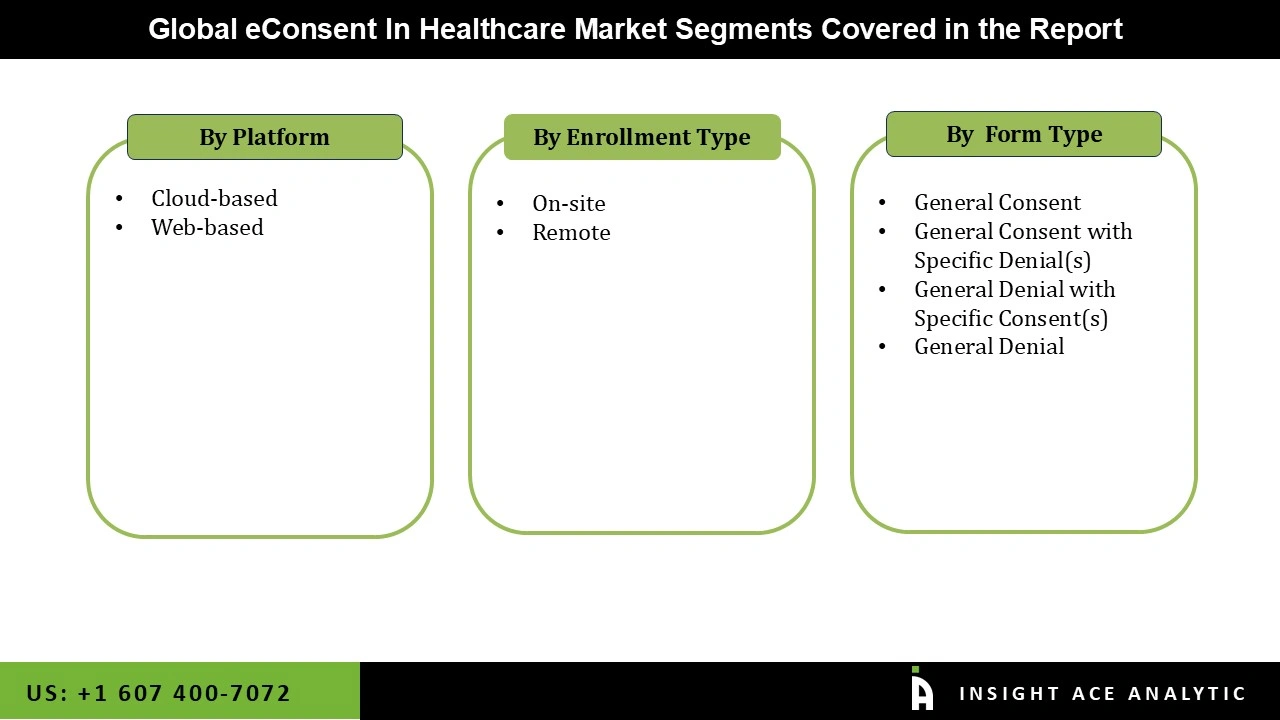
eConsent In Healthcare Market, By Enrollment Type-
- On-site
- Remote
eConsent In Healthcare Market, By Form Type-
- General Consent
- General Consent with Specific Denial(s)
- General Denial with Specific Consent(s)
- General Denial
eConsent In Healthcare Market, By Region-
- North America-
- The US
- Canada
- Europe-
- Germany
- The UK
- France
- Italy
- Spain
- Rest of Europe
- Asia-Pacific-
- China
- Japan
- India
- South Korea
- South East Asia
- Rest of Asia Pacific
- Latin America-
- Brazil
- Argentina
- Mexico
- Rest of Latin America
- Middle East and Africa-
- GCC Countries
- South Africa
- Rest of Middle East and Africa
Research Design and Approach
This study employed a multi-step, mixed-method research approach that integrates:
- Secondary research
- Primary research
- Data triangulation
- Hybrid top-down and bottom-up modelling
- Forecasting and scenario analysis
This approach ensures a balanced and validated understanding of both macro- and micro-level market factors influencing the market.
Secondary Research
Secondary research for this study involved the collection, review, and analysis of publicly available and paid data sources to build the initial fact base, understand historical market behaviour, identify data gaps, and refine the hypotheses for primary research.
Sources Consulted
Secondary data for the market study was gathered from multiple credible sources, including:
- Government databases, regulatory bodies, and public institutions
- International organizations (WHO, OECD, IMF, World Bank, etc.)
- Commercial and paid databases
- Industry associations, trade publications, and technical journals
- Company annual reports, investor presentations, press releases, and SEC filings
- Academic research papers, patents, and scientific literature
- Previous market research publications and syndicated reports
These sources were used to compile historical data, market volumes/prices, industry trends, technological developments, and competitive insights.

Primary Research
Primary research was conducted to validate secondary data, understand real-time market dynamics, capture price points and adoption trends, and verify the assumptions used in the market modelling.
Stakeholders Interviewed
Primary interviews for this study involved:
- Manufacturers and suppliers in the market value chain
- Distributors, channel partners, and integrators
- End-users / customers (e.g., hospitals, labs, enterprises, consumers, etc., depending on the market)
- Industry experts, technology specialists, consultants, and regulatory professionals
- Senior executives (CEOs, CTOs, VPs, Directors) and product managers
Interview Process
Interviews were conducted via:
- Structured and semi-structured questionnaires
- Telephonic and video interactions
- Email correspondences
- Expert consultation sessions
Primary insights were incorporated into demand modelling, pricing analysis, technology evaluation, and market share estimation.
Data Processing, Normalization, and Validation
All collected data were processed and normalized to ensure consistency and comparability across regions and time frames.
The data validation process included:
- Standardization of units (currency conversions, volume units, inflation adjustments)
- Cross-verification of data points across multiple secondary sources
- Normalization of inconsistent datasets
- Identification and resolution of data gaps
- Outlier detection and removal through algorithmic and manual checks
- Plausibility and coherence checks across segments and geographies
This ensured that the dataset used for modelling was clean, robust, and reliable.
Market Size Estimation and Data Triangulation
Bottom-Up Approach
The bottom-up approach involved aggregating segment-level data, such as:
- Company revenues
- Product-level sales
- Installed base/usage volumes
- Adoption and penetration rates
- Pricing analysis
This method was primarily used when detailed micro-level market data were available.

Top-Down Approach
The top-down approach used macro-level indicators:
- Parent market benchmarks
- Global/regional industry trends
- Economic indicators (GDP, demographics, spending patterns)
- Penetration and usage ratios
This approach was used for segments where granular data were limited or inconsistent.
Hybrid Triangulation Approach
To ensure accuracy, a triangulated hybrid model was used. This included:
- Reconciling top-down and bottom-up estimates
- Cross-checking revenues, volumes, and pricing assumptions
- Incorporating expert insights to validate segment splits and adoption rates
This multi-angle validation yielded the final market size.
Forecasting Framework and Scenario Modelling
Market forecasts were developed using a combination of time-series modelling, adoption curve analysis, and driver-based forecasting tools.
Forecasting Methods
- Time-series modelling
- S-curve and diffusion models (for emerging technologies)
- Driver-based forecasting (GDP, disposable income, adoption rates, regulatory changes)
- Price elasticity models
- Market maturity and lifecycle-based projections
Scenario Analysis
Given inherent uncertainties, three scenarios were constructed:
- Base-Case Scenario: Expected trajectory under current conditions
- Optimistic Scenario: High adoption, favourable regulation, strong economic tailwinds
- Conservative Scenario: Slow adoption, regulatory delays, economic constraints
Sensitivity testing was conducted on key variables, including pricing, demand elasticity, and regional adoption.
Request Customization
Add countries, segments, company profiles, or extend forecast — free 10% customization with purchase.
Customize This Report →Enquire Before Buying
Speak with our analyst team about scope, methodology, pricing, or deliverable formats.
Enquire Now →Frequently Asked Questions
eConsent In Healthcare Market Size is valued at USD 587.29 Mn in 2025 and is predicted to reach USD 1,438.85 Mn by the year 2035
eConsent In Healthcare Market expected to grow at a 9.5% CAGR during the forecast period for 2026 to 2035
Advarra, OpenClinica, LLC, 5thPort, LLC, Calysta EMR, Castor, Citadel Group, Climedo Health GmbH, ClinConsent, LLC, Clinical ink, Clinical Trials Arena, ClinOne, Cloudbyz, Concentric Health Ltd, Crucial Data Solutions, Curebase, Dacima Software Inc (EvidentIQ Group), Datacubed Health, DataRiver S.r.l., Definitive Healthcare, LLC, Delve Health, EClinCloud (Shenzhen) Technology Co., Ltd, eClinicalHealth, Eclipse, EvidentIQ Group GmbH, Florence Healthcare, ICON plc, Interlace Health, IQVIA, Jeeva Clinical Trials Inc., Kayentis, Magentus, Medable Inc., Medidata, Mednet, Medrio, Milo Healthcare, Obvio Health USA, Inc., Octalsoft (Glorant, LLC USA) and Others.
eConsent In Healthcare Market is segmented into Platform, Enrolment, Form and Other.
North American region is leading the eConsent In Healthcare Market Market