Dental Unit Waterlines (DUWL) Market Current Trends Analysis 2025 to 2034
Dental Unit Waterlines (DUWL) Market is predicted to reach at a 4.0% CAGR during the forecast period for 2025-2034.
Dental Unit Waterlines (DUWL) Market Size, Share & Trends Analysis Distribution by Type (Self-Contained Water Systems, Waterline Treatment Solutions, Water Treatment Systems, and Municipal Water Systems), Application (General Dentistry, Orthodontics, Pediatric Dentistry, and Oral Surgery), End-user (Dental Clinics, Hospitals, Dental Schools, and Research Institutes), and Segment Forecasts, 2025-2034
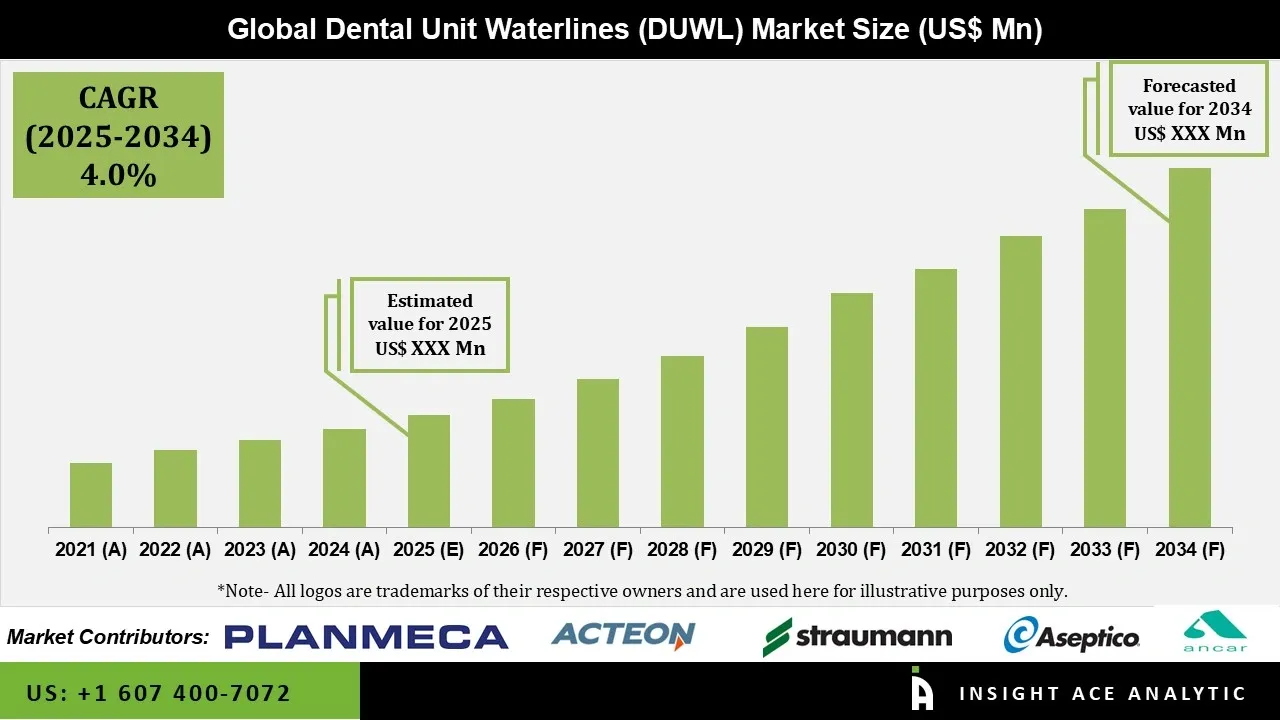
The thin, flexible tubing systems in dental chairs that provide water to handpieces, air-water syringes, and ultrasonic scalers are called Dental Unit Waterlines (DUWL). These lines can readily form biofilms—layers of bacteria that stick to the inner surfaces—because they are tiny in diameter and frequently contain stagnant or slowly moving water. DUWL can contain high quantities of germs if it is not properly maintained, which could put patients and dental personnel at risk for infection.
These lines are necessary to ensure seamless clinical operations, cool tools, and to rinse the mouth. The growing awareness of dental hygiene and the significance of infection control in dental practices is driving the market expansion for dental unit waterline testing. Additionally, the demand for sophisticated DUWL solutions is increased by the expansion of the dentistry business and the rise in dental units installed globally.
The industry is also being driven ahead by growing regulatory demand on dental clinics to maintain sterile and safe conditions. Additionally, the requirement for effective waterline test kits indicates a promising future for the market, as dental professionals are more than ever seeking to provide a safe environment where both patients and staff can enjoy peace of mind. The industry is also being driven by technological improvements in waterline testing techniques.
Dental practices can more easily comply with health requirements due to the development of modern testing kits and methods that are quick, accurate, and user-friendly. Furthermore, advanced DUWL systems with greater antibacterial qualities, better self-cleaning mechanisms, and better water quality monitoring systems have been developed as a result of dental technological improvements. Thus, the need for sophisticated DUWL systems that are both economical and effective for dental offices has increased as a result of these developments.
In addition, stricter regulations from health authorities like the U.S. Centers for Disease Control and Prevention (CDC), which advise that water used in non-surgical dental procedures contain no more than 500 colony-forming units per milliliter (CFU/mL) of heterotrophic water bacteria in accordance with the Environmental Protection Agency's (EPA) standards for drinking water, further encourage the adoption of such technologies. Moreover, the CDC states that the microbiological guidelines for water used in dental units should be the same as those for drinking water.
The need for high-quality DUWL systems is increasing due to the significance of safe and clean water in dental offices, which is driving market expansion. However, the technological complexity of efficiently maintaining and cleaning waterlines is one of the primary obstacles in the DUWL business. Despite the sophisticated features of contemporary DUWL systems, many dental offices still find it difficult to establish efficient cleaning procedures.
Competitive Landscape
Which are the Leading Players in the Dental Unit Waterlines (DUWL) Market?
• KaVO Dental
• ACTEON GROUP
• Aixin Medical Equipment
• Planmeca
• Castellini
• ANCAR Dental
• Straumann
• Aseptico Inc.
• Bien-Air Dental
• Cefla Dental
Market Dynamics
Driver
Growing Emphasis on Preventive Care
The need for high-quality waterlines is rising as a result of the growing emphasis on preventative care and the ageing of the global population. The need for safe and efficient waterline systems will keep growing as more people seek dental care to address age-related oral health issues.
For businesses providing cutting-edge DUWL solutions that satisfy the changing demands of the dental sector, this change offers a huge opportunity. Additionally, the businesses can profit from the growing need for safe, effective water systems that enhance patient outcomes and uphold high standards of care by focusing on both new and current dental practices. Thus, this is anticipated to boost the dental unit waterlines (DUWL) market expansion.
Restrain/Challenge
High Cost and Limited Awareness of DUWLs
The high expense of waterline cleaning technologies and sophisticated DUWL systems is one of the main obstacles. It may be challenging for small and medium-sized dental offices to make the costly investments in waterline maintenance systems, especially in developing nations. Due to the delayed adoption of cutting-edge dental equipment in these areas compared to developed markets, this restricts the market potential.
In certain areas, there is also a dearth of knowledge and instruction regarding the significance of DUWL upkeep. Dental professionals may not prioritize waterline cleaning in many regions of the world because of the perceived expenses and time commitment associated with maintaining these systems. This may lead to microbiological contamination, which raises the possibility of infection and cross-contamination, ultimately compromising patient safety and the reputation of the clinic.
Self-Contained Water Systems Segment is Expected to Drive the Dental Unit Waterlines (DUWL) Market
The self-contained water systems category held the largest share in the dental unit waterlines (DUWL) market in 2024, mostly due to tighter water quality regulations in dental settings and growing awareness of infection control. The clinics can better control water quality and reduce the risk of microbial contamination by using self-contained systems, which use independent reservoirs (typically bottle-based) instead of depending only on municipal water.
Additionally, the need for self-contained systems has increased as dental offices implement stricter procedures to adhere to regulations suggesting water quality at or below drinking water levels and to lower dangers associated with biofilm for patients and employees. Dental practitioners have been urged to invest in cutting-edge water distribution and treatment technologies due to the emphasis on patient safety and regulatory compliance; self-contained systems offer a workable solution for constant water quality.
Market Segmentation
The dental unit waterlines (DUWL) market is structured by three key segmentation categories. By type, it encompasses the various water delivery and treatment systems used in practice, including self-contained water systems, waterline treatment solutions, water treatment systems, and reliance on municipal water systems. Segmentation by application reflects the different dental specialties driving demand, such as general dentistry, orthodontics, pediatric dentistry, and oral surgery. Finally, the market is analyzed by end-user, identifying the primary settings where these systems are implemented: dental clinics, hospitals, dental schools, and research institutes. This framework organizes the market by technology, clinical use, and operational environment.
The Hospitals Segment is Growing at the Highest Rate in the Dental Unit Waterlines (DUWL) Market
In 2024, the hospitals category dominated the dental unit waterlines (DUWL) market because the number of dental operations carried out in hospital settings is increasing. Hospitals frequently have specialized dentistry units with cutting-edge equipment, and keeping waterlines clean in these settings is essential to preventing infections. The risk of cross-contamination is decreased by installing advanced waterline systems, which guarantee that water used in dental treatments is cleaned, filtered, and sterilized. Furthermore, hospitals usually handle more dental patients, which raises the need for DUWL systems to guarantee constant water quality and patient safety throughout treatments.
Why North America Led the Dental Unit Waterlines (DUWL) Market?
The dental unit waterlines (DUWL) market was dominated by the North America region in 2024, mostly due to extremely strict guidelines and rules on infection control in the medical industry, particularly dentistry offices.
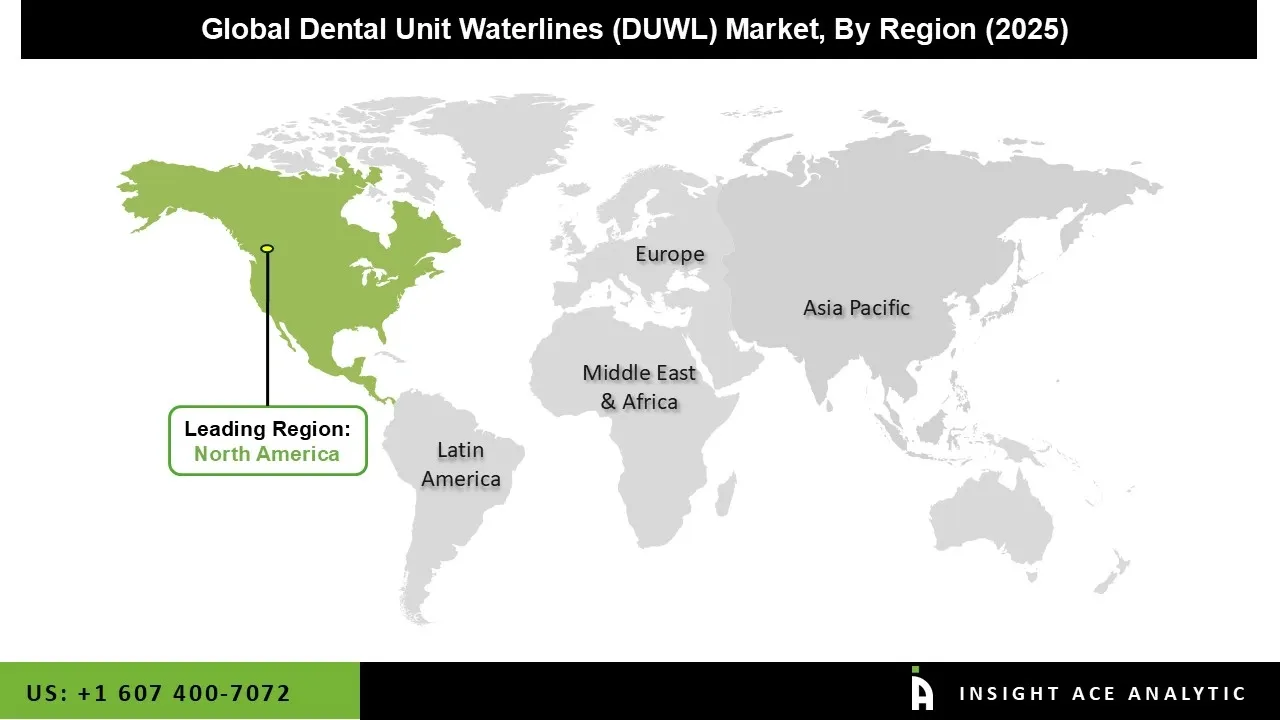
The most important factors driving the need for and demand for such services and goods in this region are patient safety, high-quality care, and the widespread use of the newest dental technologies and procedures. Furthermore, North America continues to hold the top spot in the dental unit waterlines (DUWL) market due to the presence of numerous important industry participants and initiatives to inform the public about good dental hygiene in this area.
Dental Unit Waterlines (DUWL) Market Report Scope:
| Report Attribute | Specifications |
| Growth Rate CAGR | CAGR of 4.0% from 2025 to 2034 |
| Quantitative Units | Representation of revenue in US$ Bn and CAGR from 2024 to 2034 |
| Historic Year | 2021 to 2024 |
| Forecast Year | 2025-2034 |
| Report Coverage | The forecast of revenue, the position of the company, the competitive market structure, growth prospects, and trends |
| Segments Covered | Type, Application, End-user, and By Region |
| Regional Scope | North America; Europe; Asia Pacific; Latin America; Middle East & Africa |
| Country Scope | U.S.; Canada; U.K.; Germany; China; India; Japan; Brazil; Mexico; The UK; France; Italy; Spain; China; Japan; India; South Korea; Southeast Asia; South Korea; Southeast Asia |
| Competitive Landscape | KaVO Dental, ACTEON GROUP, Aixin Medical Equipment, Planmeca, Castellini, ANCAR Dental, Straumann, Aseptico Inc., Bien-Air Dental, and Cefla Dental. |
| Customization Scope | Free customization report with the procurement of the report, Modifications to the regional and segment scope. Geographic competitive landscape. |
| Pricing and Available Payment Methods | Explore pricing alternatives that are customized to your particular study requirements. |
Market Segmentation:
Dental Unit Waterlines (DUWL) Market by Type-
• Self-Contained Water Systems
• Waterline Treatment Solutions
• Water Treatment Systems
• Municipal Water Systems
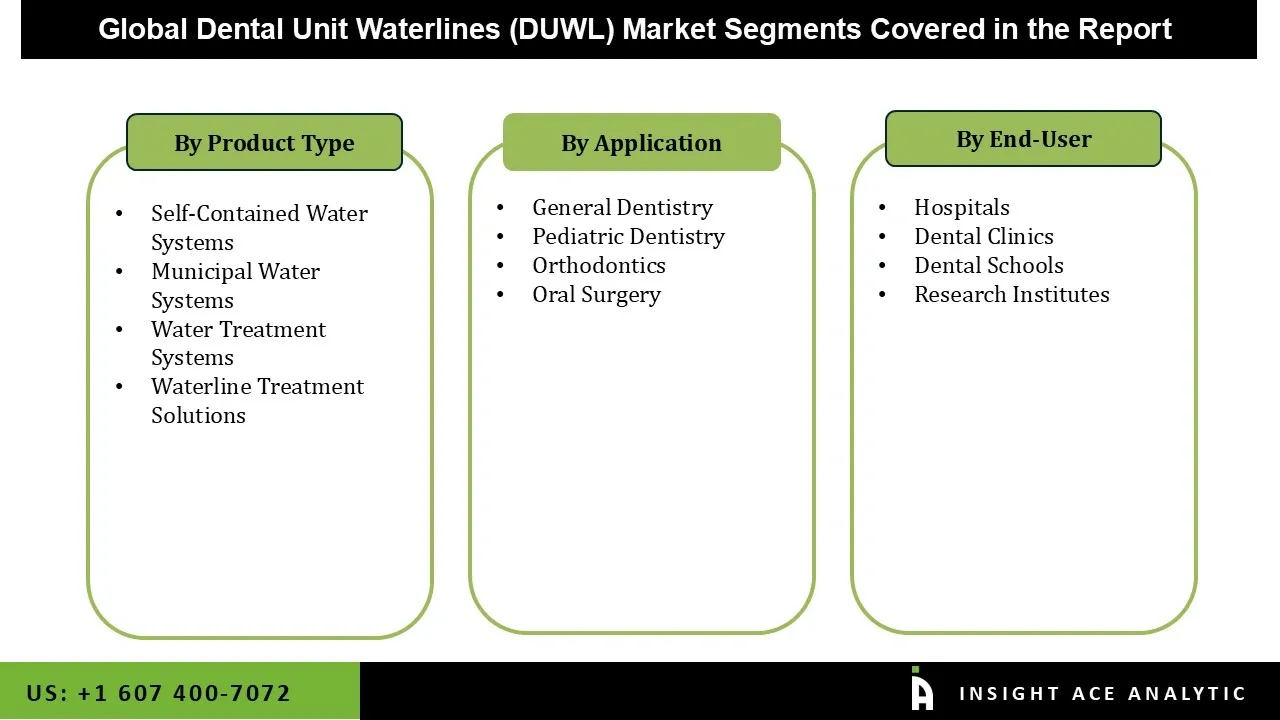
Dental Unit Waterlines (DUWL) Market by Application-
• General Dentistry
• Orthodontics
• Pediatric Dentistry
• Oral Surgery
Dental Unit Waterlines (DUWL) Market by End-user-
• Dental Clinics
• Hospitals
• Dental Schools
• Research Institutes
Research Design and Approach
This study employed a multi-step, mixed-method research approach that integrates:
- Secondary research
- Primary research
- Data triangulation
- Hybrid top-down and bottom-up modelling
- Forecasting and scenario analysis
This approach ensures a balanced and validated understanding of both macro- and micro-level market factors influencing the market.
Secondary Research
Secondary research for this study involved the collection, review, and analysis of publicly available and paid data sources to build the initial fact base, understand historical market behaviour, identify data gaps, and refine the hypotheses for primary research.
Sources Consulted
Secondary data for the market study was gathered from multiple credible sources, including:
- Government databases, regulatory bodies, and public institutions
- International organizations (WHO, OECD, IMF, World Bank, etc.)
- Commercial and paid databases
- Industry associations, trade publications, and technical journals
- Company annual reports, investor presentations, press releases, and SEC filings
- Academic research papers, patents, and scientific literature
- Previous market research publications and syndicated reports
These sources were used to compile historical data, market volumes/prices, industry trends, technological developments, and competitive insights.

Primary Research
Primary research was conducted to validate secondary data, understand real-time market dynamics, capture price points and adoption trends, and verify the assumptions used in the market modelling.
Stakeholders Interviewed
Primary interviews for this study involved:
- Manufacturers and suppliers in the market value chain
- Distributors, channel partners, and integrators
- End-users / customers (e.g., hospitals, labs, enterprises, consumers, etc., depending on the market)
- Industry experts, technology specialists, consultants, and regulatory professionals
- Senior executives (CEOs, CTOs, VPs, Directors) and product managers
Interview Process
Interviews were conducted via:
- Structured and semi-structured questionnaires
- Telephonic and video interactions
- Email correspondences
- Expert consultation sessions
Primary insights were incorporated into demand modelling, pricing analysis, technology evaluation, and market share estimation.
Data Processing, Normalization, and Validation
All collected data were processed and normalized to ensure consistency and comparability across regions and time frames.
The data validation process included:
- Standardization of units (currency conversions, volume units, inflation adjustments)
- Cross-verification of data points across multiple secondary sources
- Normalization of inconsistent datasets
- Identification and resolution of data gaps
- Outlier detection and removal through algorithmic and manual checks
- Plausibility and coherence checks across segments and geographies
This ensured that the dataset used for modelling was clean, robust, and reliable.
Market Size Estimation and Data Triangulation
Bottom-Up Approach
The bottom-up approach involved aggregating segment-level data, such as:
- Company revenues
- Product-level sales
- Installed base/usage volumes
- Adoption and penetration rates
- Pricing analysis
This method was primarily used when detailed micro-level market data were available.

Top-Down Approach
The top-down approach used macro-level indicators:
- Parent market benchmarks
- Global/regional industry trends
- Economic indicators (GDP, demographics, spending patterns)
- Penetration and usage ratios
This approach was used for segments where granular data were limited or inconsistent.
Hybrid Triangulation Approach
To ensure accuracy, a triangulated hybrid model was used. This included:
- Reconciling top-down and bottom-up estimates
- Cross-checking revenues, volumes, and pricing assumptions
- Incorporating expert insights to validate segment splits and adoption rates
This multi-angle validation yielded the final market size.
Forecasting Framework and Scenario Modelling
Market forecasts were developed using a combination of time-series modelling, adoption curve analysis, and driver-based forecasting tools.
Forecasting Methods
- Time-series modelling
- S-curve and diffusion models (for emerging technologies)
- Driver-based forecasting (GDP, disposable income, adoption rates, regulatory changes)
- Price elasticity models
- Market maturity and lifecycle-based projections
Scenario Analysis
Given inherent uncertainties, three scenarios were constructed:
- Base-Case Scenario: Expected trajectory under current conditions
- Optimistic Scenario: High adoption, favourable regulation, strong economic tailwinds
- Conservative Scenario: Slow adoption, regulatory delays, economic constraints
Sensitivity testing was conducted on key variables, including pricing, demand elasticity, and regional adoption.
Request Customization
Add countries, segments, company profiles, or extend forecast — free 10% customization with purchase.
Customize This Report →Enquire Before Buying
Speak with our analyst team about scope, methodology, pricing, or deliverable formats.
Enquire Now →Frequently Asked Questions
Dental Unit Waterlines (DUWL) Market is predicted to reach at a 4.0% CAGR during the forecast period for 2025 to 2034.
KaVO Dental, ACTEON GROUP, Aixin Medical Equipment, Planmeca, Castellini, ANCAR Dental, Straumann, Aseptico Inc., Bien-Air Dental, and Cefla Dental.
Type, Application, End-user, and By Region are the key segments of the Dental unit waterlines (DUWL) market.
North America region is leading the Dental Unit Waterlines (DUWL) Market.