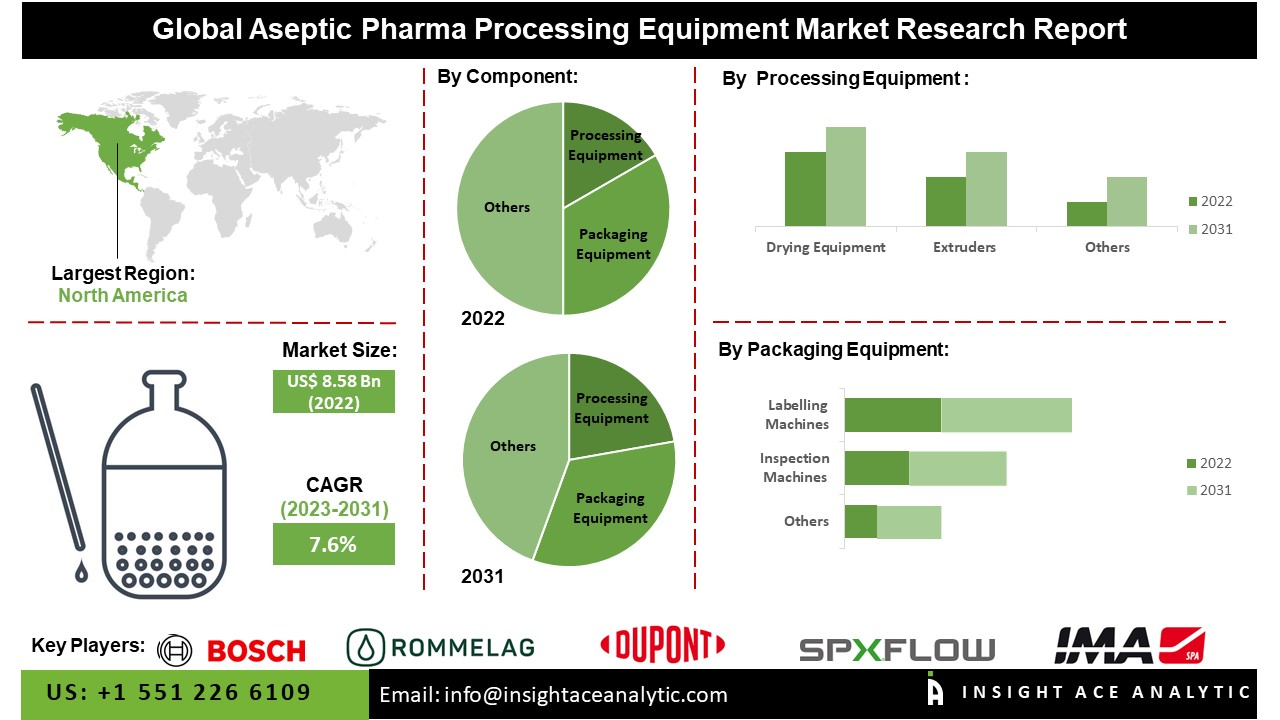
Aseptic Pharma Processing Equipment Market Size is valued at USD 8.58 Bn in 2022 and is predicted to reach USD 16.39 Bn by the year 2031 at a 7.6% CAGR during the forecast period for 2023-2031.
The aseptic processing technology is constantly developing, resulting in more effective and dependable machinery. The pharmaceutical business is promoting the use of these systems through manufacturers' ongoing innovation to enhance their functionality and automation. The demand for pharmaceutical products has grown due to the expanding world population and the development of several diseases and health issues.
The market is expanding because aseptic processing equipment is essential for guaranteeing the sterility and safety of these products. The demand for aseptic processing equipment has surged due to the biotechnology industry's recent significant growth. Aseptic manufacturing is necessary to maintain the safety and effectiveness of biopharmaceutical products like vaccines and cell treatments. Single-use aseptic processing systems are gaining popularity due to their cost-effectiveness, reduced risk of contamination, and faster setup times. As a result, pharmaceutical manufacturers are increasingly adopting single-use equipment, boosting the market for aseptic processing equipment. More effective and dependable machinery results from ongoing developments in aseptic processing technology.
Additionally, manufacturers' ongoing innovations fuel this industry's adoption of these systems to increase functionality and automation. A tremendous rise in the demand for pharmaceutical products can be attributed to the expanding world population and several diseases and health issues. Furthermore, the market is developing due to the vital function of aseptic processing equipment in guaranteeing these goods' sterility and safety. Aseptic processing equipment has become more in demand due to the recent enormous growth of the biotechnology industry. Aseptic manufacturing is necessary for biopharmaceutical goods, such as vaccines and cell treatments, to assure product safety and effectiveness.
Competitive Landscape
Some major key players in the Aseptic Pharma Processing Equipment Market:
- Robert Bosch GmbH
- Rommelag,
- DuPont
- SPX Flow, Inc.
- Industria Macchine Automatiche S.P.A.
- Becton, Dickinson, and Company
- AMCOR plc
- GEA Group
- Greatview Aseptic Packaging Co., Ltd.
- John Bean Technologies (JBT) Corporation
- Automated Systems of Tacoma, LLC (AST)
- Nicos Group
Market Segmentation:
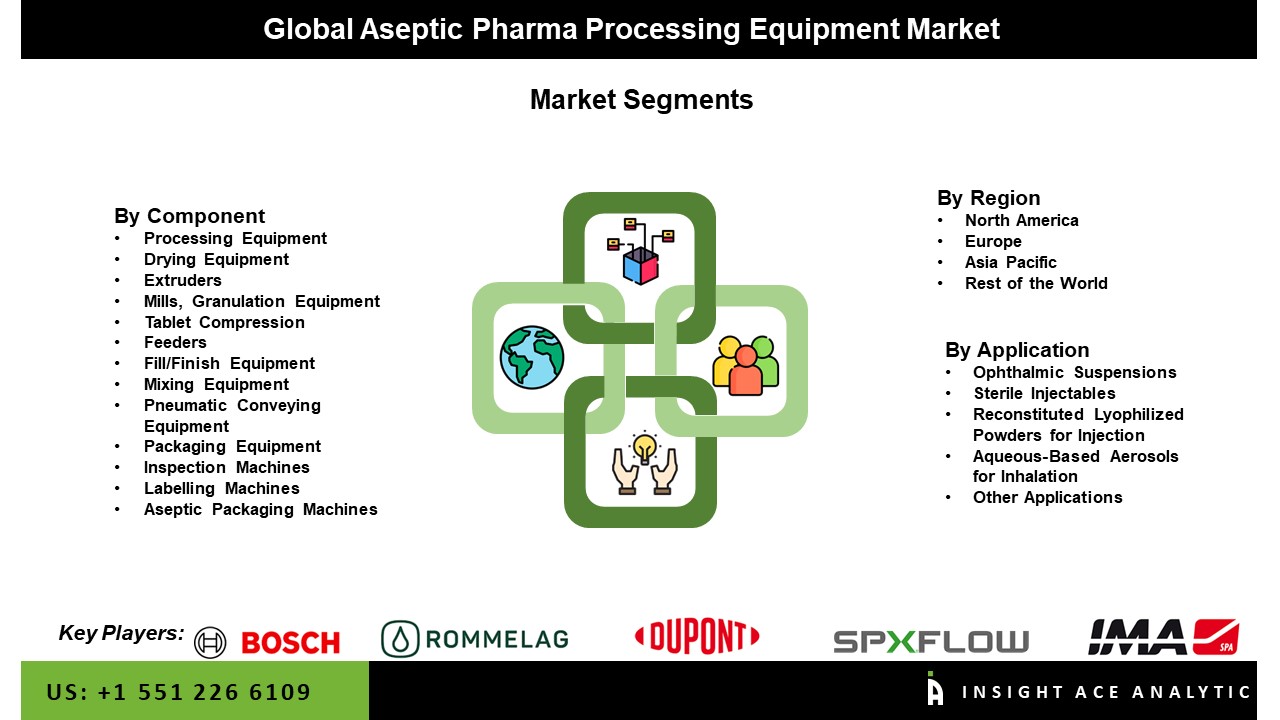
The aseptic pharma processing equipment market is segmented based on components, processing equipment, packaging equipment and application. The market is segmented based on processing and packaging equipment components. Based on processing equipment, the market is segmented as drying equipment, extruders, mills, granulation equipment, tablet compression, feeders, fill/finish equipment, mixing equipment, and pneumatic conveying equipment.
Based on packaging equipment, the market is segmented into inspection, labelling, and aseptic packaging machines. Based on applications, the aseptic pharma processing equipment market is segmented as ophthalmic suspensions, sterile injectables, reconstituted lyophilized powders for injection, aqueous-based aerosols for inhalation, and others."
Based On Packaging Equipment, The Labelling Machine Segment Is A Major Contributor To The Aseptic Pharma Processing Equipment Market
The labelling machine category will hold a major share of the global Aseptic Pharma Processing Equipment market in 2022 due to the growiing demand for labelling machines in the Aseptic Pharma Processing Equipment Market is driven by the need for regulatory compliance, product identification, aseptic processing requirements, automation, and the growth of the global pharmaceutical industry. The demand for efficient and accurate labelling solutions will remain robust as the pharmaceutical market evolves.
The global pharmaceutical industry continues to expand, driven by an ageing population, the occurance of chronic diseases, and increased healthcare spending. As the pharmaceutical market grows, the demand for labelling machines also rises to meet increased production needs. The adoption of single-use aseptic processing systems has grown in the pharmaceutical industry due to their advantages in reducing contamination risks and setup times. Similarly, single-use labelling solutions have gained popularity, as they eliminate the need for cleaning and sterilization between batches, further supporting the demand for labelling machines.
The Drying Equipment Segment Witnessed Growth At A Rapid Rate
The drying equipment segment is projected to grow rapidly in the global aseptic pharma processing equipment market. The global pharmaceutical market continues to expand, driven by population growth, increased healthcare awareness, and advancements in medical treatments. As the demand for pharmaceutical products rises, so does the need for efficient and reliable drying equipment. Aseptic pharmaceutical processing requires all components and materials used in the manufacturing process, including the product itself, to be free from microbial contamination. Drying equipment removes moisture from the products and packaging materials, ensuring their sterility and preventing the growth of microorganisms.
The North America Aseptic Pharma Processing Equipment Market Holds A Significant Revenue Share.
The North American Regional Aseptic Pharma Processing Equipment market is projected to register a tremendous share. North American pharmaceutical companies continue investing heavily in research and development to introduce novel and innovative therapies. This drive for innovation fuels the demand for advanced aseptic processing equipment to accommodate new drug development and manufacturing processes. In addition, Asia Pacific is projected to grow rapidly in the global aseptic pharma processing equipment market. International pharmaceutical companies are establishing partnerships and investing in research and manufacturing facilities in the APAC region. These collaborations and investments further boost the region's demand for aseptic processing equipment.
Aseptic Pharma Processing Equipment Market Report Scope:
|
Report Attribute
|
Specifications
|
|
Market Size Value In 2022
|
USD 8.58 Bn
|
|
Revenue Forecast In 2031
|
USD 16.39 Bn
|
|
Growth Rate CAGR
|
CAGR of 7.6% from 2023 to 2031
|
|
Quantitative Units
|
Representation of revenue in US$ Bn and CAGR from 2023 to 2031
|
|
Historic Year
|
2019 to 2022
|
|
Forecast Year
|
2023-2031
|
|
Report Coverage
|
The forecast of revenue, the position of the company, the competitive market structure, growth prospects, and trends
|
|
Segments Covered
|
By Component, Application
|
|
Regional Scope
|
North America; Europe; Asia Pacific; Latin America; Middle East & Africa
|
|
Country Scope
|
U.S.; Canada; U.K.; Germany; China; India; Japan; Brazil; Mexico ;The UK; France; Italy; Spain; China; Japan; India; South Korea; South East Asia; South Korea; South East Asia
|
|
Competitive Landscape
|
Robert Bosch GmbH, Romelia, DuPont, SPX Flow, Inc., Industrial Machine Automatiche S.P.A., Becton, Dickinson, and Company, AMCOR plc, GEA Group, Great view Aseptic Packaging Co., Ltd., John Bean Technologies (JBT) Corporation, Automated Systems of Tacoma, LLC (AST), Nicos Group
|
|
Customization Scope
|
Free customization report with the procurement of the report, Modifications to the regional and segment scope. Particular Geographic competitive landscape.
|
|
Pricing And Available Payment Methods
|
Explore pricing alternatives that are customized to your particular study requirements.
|
Segmentation of Aseptic Pharma Processing Equipment Market-
Aseptic Pharma Processing Equipment Market By Component
- Processing Equipment
- Drying Equipment
- Extruders
- Mills, Granulation Equipment
- Tablet Compression
- Feeders
- Fill/Finish Equipment
- Mixing Equipment
- Pneumatic Conveying Equipment
- Packaging Equipment
- Inspection Machines
- Labelling Machines
- Aseptic Packaging Machines
Aseptic Pharma Processing Equipment Market By Applications
- Ophthalmic Suspensions
- Sterile Injectables
- Reconstituted Lyophilized Powders for Injection
- Aqueous-based Aerosols for Inhalation
- Others
Aseptic Pharma Processing Equipment Market By Region-
North America-
Europe-
- Germany
- The UK
- France
- Italy
- Spain
- Rest of Europe
Asia-Pacific-
- China
- Japan
- India
- South Korea
- Southeast Asia
- Rest of Asia Pacific
Latin America-
- Brazil
- Argentina
- Rest of Latin America
Middle East & Africa-
- GCC Countries
- South Africa
- Rest of Middle East and Africa