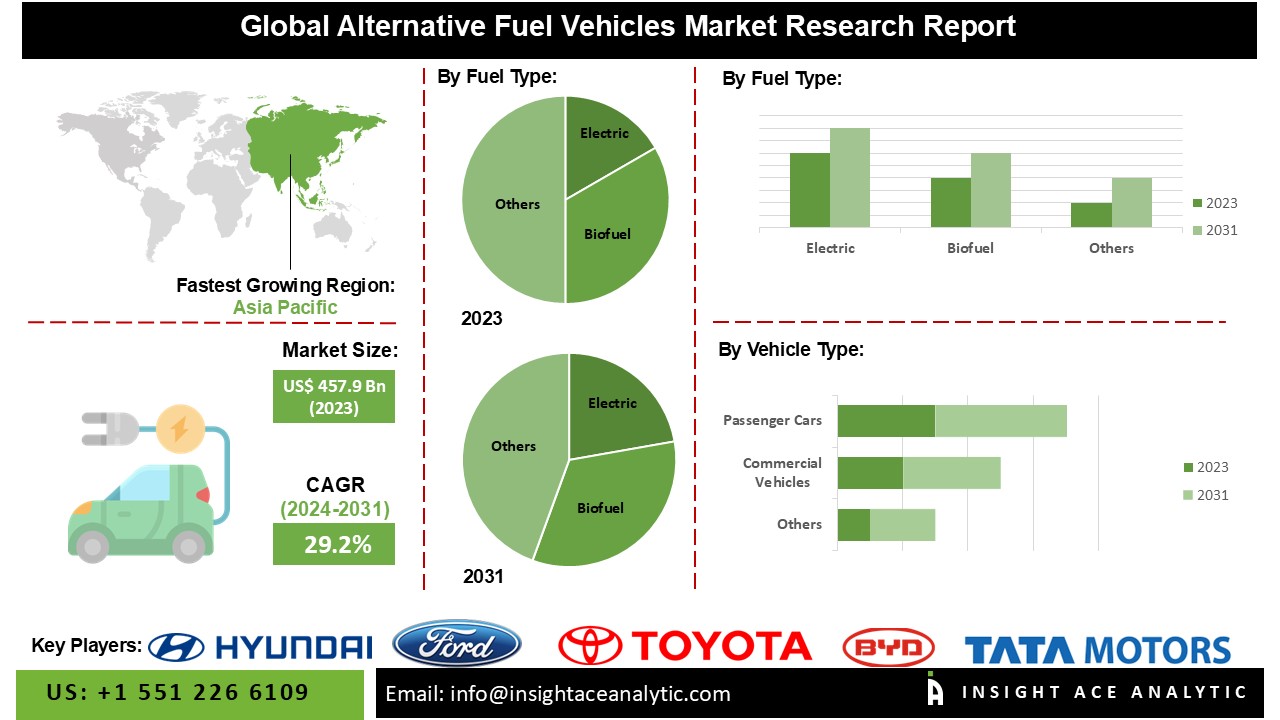
The Alternative Fuel Vehicles Market Size is valued at USD 457.9 Bn in 2023 and is predicted to reach USD 3,489.6 Bn by the year 2031 at an 29.2% CAGR during the forecast period for 2024-2031.
The adoption of Alternative Fuel Vehicles (AFVs) has the potential to significantly reduce carbon dioxide and other greenhouse gases, which are presently the largest source of greenhouse gas emissions in the United States, accounting for 28%. Cars and trucks are the primary emitters of these gases. AFVs frequently choose cleaner-burning alternatives that contribute to environmental sustainability, rather than traditional petroleum or diesel. These vehicles may operate on fuels that are derived from renewable biological sources, such as biodiesel (produced from vegetable oils or animal fats) or ethanol (produced from maize or sugarcane). Electricity is generated by certain AFVs, such as hydrogen fuel cell vehicles, through the use of hydrogen and oxygen. Their primary byproduct is water, rendering them an environmentally favorable solution to the reduction of transportation-related emissions.
In October 2023, the Federal Trade Commission (FTC) proposed a rule as part of its systematic review of all FTC rules and guides, seeking public comment on the costs, benefits, necessity, and overall regulatory and economic impact of its Labeling Requirements for Alternative Fuels and Alternative Fueled Vehicles. Research into biofuel technology is gaining momentum through continuous investments from both public and private sectors, exploring new feedstocks such as agricultural waste, municipal garbage, and algae oils to produce biofuels. The rapid depletion of non-renewable resources, coupled with rising gasoline and diesel prices, has driven widespread adoption of alternative fuels. Environmental protection is also a key factor boosting the demand for these fuels. Alternative fuels, advanced and unconventional, offer cleaner-burning alternatives to fossil fuels like gasoline and diesel, releasing fewer harmful emissions. Additionally, their domestic availability and potential to create jobs further support the expansion of the alternative fuel market, making them a promising solution for the future of energy.
Competitive Landscape
Some of the Major Key Players in the Alternative Fuel Vehicles Market are
- Honda Motor Co., Ltd.
- Toyota Motor Corporation
- Nissan Motor Corporation
- Daimler AG
- Tesla
- BYD Company Ltd.
- Ford Motor Company
- MITSUBISHI MOTORS CORPORATION.
- SHELL International B.V.
- JAGUAR LAND ROVER AUTOMOTIVE PLC
- Volkswagen AG
- AUDI AG
- BMW Group
- General Motors
- Zero Motorcycles, Inc.
- Nikola Motor Company
- Renault
- Tata Motors
- Polaris Industries
- Scania
- Hyundai Motor Company
- Bayerische Motoren Werke AG
- Suzuki Motor Corporation
- Other Prominent Players
Market Segmentation
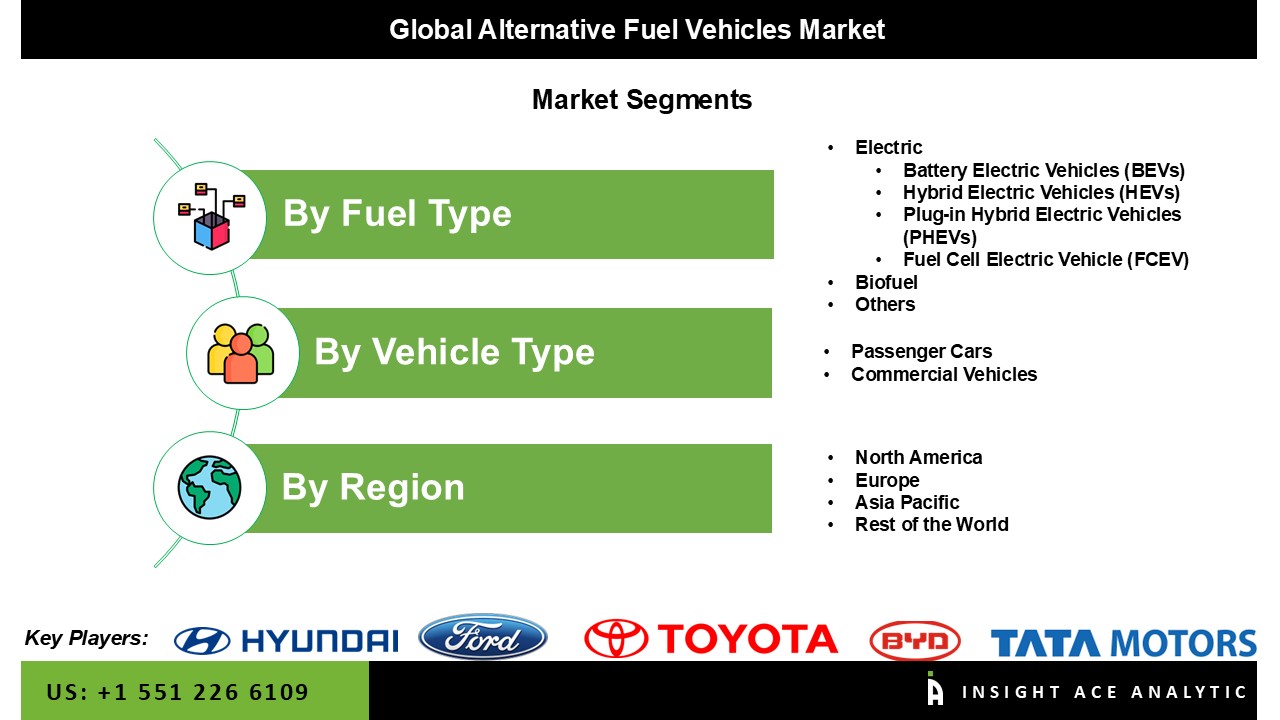
The Alternative Fuel Vehicles Market is segmented based on the technology application, and end-user. Based on the fuel type, the market is divided into Electric (Battery Electric Vehicles (BEVs), Hybrid Electric Vehicles (HEVs), Plug-in Hybrid Electric Vehicles (PHEVs), Fuel Cell Electric Vehicle (FCEV)), Biofuel. Based on the vehicle type, the market is divided into passenger cars and commercial vehicles.
The Battery Electric Vehicles (BEVs) Segment is Expected to Have the Highest Growth Rate During the Forecast Period
Based on the fuel type, the market is divided into Electric (Battery Electric Vehicles (BEVs), Hybrid Electric Vehicles (HEVs), Plug-in Hybrid Electric Vehicles (PHEVs), Fuel Cell Electric Vehicle (FCEV)), Biofuel). Among these, the battery electric vehicles (BEVS) segment is expected to have the highest growth rate during the forecast period. BEVs produce zero tailpipe emissions, which aligns with global efforts to reduce carbon emissions and combat climate change. The charging infrastructure for BEVs is rapidly expanding, which is making it more convenient for users to switch to electric vehicles. Leading automakers are heavily investing in BEV production, creating a wide variety of models to meet consumer demand.
The Passenger Cars Segment Dominates the Market
Based on the vehicle type, the market is divided into passenger cars and commercial vehicles. Among these, Passenger cars represent the majority of vehicles on the road, and there is increasing consumer demand for eco-friendly, cost-efficient alternatives like electric and hybrid vehicles. Many governments have implemented policies, such as tax incentives, rebates, and subsidies, to encourage the adoption of alternative fuel passenger cars. These incentives are often more accessible to individual consumers compared to commercial fleets. Passenger cars are commonly used in urban areas, where pollution concerns and emission regulations are stricter, further driving demand for clean energy vehicles in this segment.
Asia-Pacific Has the Largest Market Share During the Forecast Period.
The region is home to leading companies in battery technology and fuel cell development, making it a hub for innovation in the AFV sector. Increasing consumer awareness about environmental issues and the rising cost of conventional fuels have also contributed to the growing demand for AFVs in the region. Countries like China, Japan, and South Korea have implemented aggressive policies to promote the adoption of electric vehicles (EVs) and other alternative fuel vehicles. These policies include subsidies, tax exemptions, and mandates for manufacturers to produce more AFVs. China is the largest EV market globally, driven by its large population, significant government incentives, and investments in electric vehicle infrastructure. The country is also a major producer of electric vehicles and battery technologies.
Recent Developments:
- In Sept 2024, The BMW Group and Toyota Motor Corporation, extended their partnership to provide passenger car Fuel Cell Electric Vehicle (FCEV) choices. Plans Introduce its first fuel cell electric vehicle (FCEV) into series production in 2028, giving buyers another all-electric choice for a BMW with zero local emissions. The BMW Group and Toyota Motor Corporation are combining their creative strengths and technological skills to get a new generation of fuel cell powertrain technology onto the roadways. To take this locally zero-emission technology to the next level, both firms have extended their relationship to expand the hydrogen economy.
- In June 2022, Jaguar Land Rover Developed a Defender Fuel Cell Vehicle Prototype Powered by Hydrogen. Jaguar Land Rover Automotive PLC revealed that a hydrogen-powered Defender fuel cell prototype is being developed. The business started testing fuel cell electric cars (FCEVs) in 2022. The effort is a component of the company's goal to achieve carbon neutrality across its supply chain, operations, products, and services by 2039, as well as zero emissions from tailpipes by 2036.
Alternative Fuel Vehicles Market Report Scope
|
Report Attribute
|
Specifications
|
|
Market Size Value In 2023
|
USD 457.9 Bn
|
|
Revenue Forecast In 2031
|
USD 3,489.6 Bn
|
|
Growth Rate CAGR
|
CAGR of 29.2% from 2024 to 2031
|
|
Quantitative Units
|
Representation of revenue in US$ Bn and CAGR from 2024 to 2031
|
|
Historic Year
|
2019 to 2023
|
|
Forecast Year
|
2024-2031
|
|
Report Coverage
|
The forecast of revenue, the position of the company, the competitive market structure, growth prospects, and trends
|
|
Segments Covered
|
Fuel Type, Vehicle Type
|
|
Regional Scope
|
North America; Europe; Asia Pacific; Latin America; Middle East & Africa
|
|
Country Scope
|
U.S.; Canada; U.K.; Germany; China; India; Japan; Brazil; Mexico; The UK; France; Italy; Spain; China; Japan; India; South Korea; Southeast Asia; South Korea; South East Asia
|
|
Competitive Landscape
|
Honda Motor Co., Ltd., Toyota Motor Corporation, Nissan Motor Corporation, Daimler AG, Tesla, BYD Company Ltd., Ford Motor Company, MITSUBISHI MOTORS CORPORATION., SHELL International B.V., JAGUAR LAND ROVER AUTOMOTIVE PLC, Volkswagen AG, AUDI AG, BMW Group, General Motors, Zero Motorcycles, Inc., Nikola Motor Company, Renault, Tata Motors, Polaris Industries, Scania, Hyundai Motor Company, Bayerische Motoren Werke AG, Suzuki Motor Corporation
|
|
Customization Scope
|
Free customization report with the procurement of the report and modifications to the regional and segment scope. Particular Geographic competitive landscape.
|
|
Pricing and Available Payment Methods
|
Explore pricing alternatives that are customized to your particular study requirements.
|
Segmentation of Alternative Fuel Vehicles Market
Global Alternative Fuel Vehicles Market- By Fuel Type
- Electric
- Battery Electric Vehicles (BEVs)
- Hybrid Electric Vehicles (HEVs)
- Plug-in Hybrid Electric Vehicles (PHEVs)
- Fuel Cell Electric Vehicle (FCEV)
- Biofuel
- Others
Global Alternative Fuel Vehicles Market – By Vehicle Type
- Passenger Cars
- Commercial Vehicles (Buses, Trucks, Vans and Others)
Global Alternative Fuel Vehicles Market – By Region
North America-
Europe-
- Germany
- The UK
- France
- Italy
- Spain
- Rest of Europe
Asia-Pacific-
- China
- Japan
- India
- South Korea
- Southeast Asia
- Rest of Asia Pacific
Latin America-
- Brazil
- Argentina
- Rest of Latin America
Middle East & Africa-
- GCC Countries
- South Africa
- Rest of the Middle East and Africa