VCI Anti-Corrosion Film Market Size, Share & Trends Analysis Distribution by Type (Below 25 Microns, 25 To 100 Microns, 100 To 200 Microns, and Above 200 Microns), Application (Electronic & Electrical, Mining and Metallurgy, Aerospace, Transport & Logistic, and Others), and By Segment Forecasts, 2025-2034
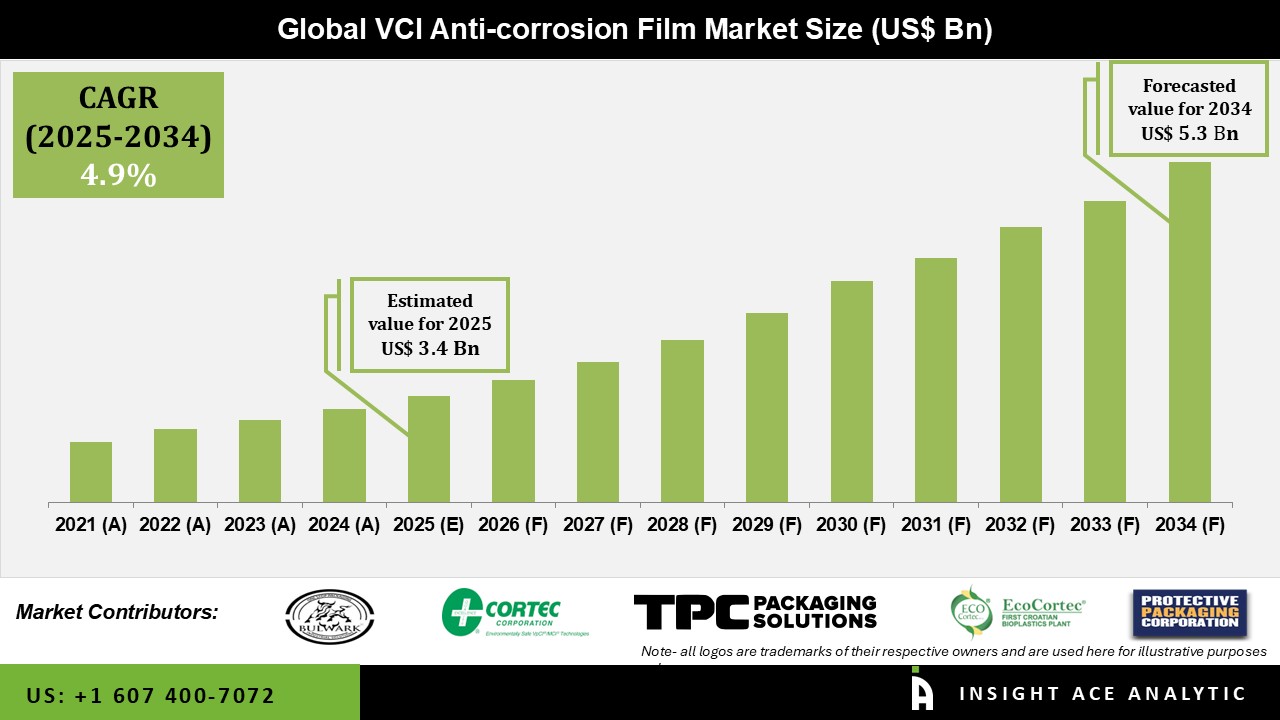
Global VCI Anti-Corrosion Film Market Size is valued at US$ 3.4 Bn in 2024 and is predicted to reach US$ 5.3 Bn by the year 2034 at an 4.9% CAGR during the forecast period for 2025-2034.
The most advanced protective packaging methods are vapor corrosion inhibitor (VCI) anti-corrosion films, which create a microscopic vapor barrier by encasing certain molecules in polymer matrices, neutralizing corrosive substances on metal surfaces. Providing a constant covering over complex assemblies without coming into direct contact, these films ensure reliable preservation in storage and transit environments.
Prevention of corrosion has become more important as enterprises battle supply chain disruptions, growing raw material costs, and stringent environmental requirements. The market for VCI anti-corrosion films has been steadily expanding due to increased awareness of the technology, its applications in various sectors, including industrial, automotive, and aerospace, as well as its affordability and material protection capabilities.
Another major driver of the global VCI anti-corrosion films market's expansion is the end-user industries' growing preference for sustainable packaging solutions in an effort to lessen their negative environmental effects. Major companies in the market for VCI anti-corrosion films are also fortifying their positions by focusing on technological advancements and business partnerships. The creation of VCI anti-corrosion film additives is a crucial field since it enhances the films' protective capabilities and permits their use in a wider range of industrial applications. However, when VCI anti-corrosion film is used excessively, quality can occasionally suffer. These wraps must also be used carefully because incorrect wrapping can result in air bubbles, which can further harm the goods by keeping them in contact with moisture. People who use it directly to wrap things have been known to experience certain health problems, like eye discomfort. The market expansion of VCI anti-corrosion film is impeded by these factors.
Competitive Landscape
Some of the Key Players in VCI Anti-Corrosion Film Market:
· Cortec Corporation
· Daubert Europe
· Protective Packaging Corporation
· TPC Packaging Solutions
· ZERUST
· Icero
· Associated Bag
· Ecocortec
· Bulwark Industrial Solution
· Other Prominent Players
Market Segmentation:
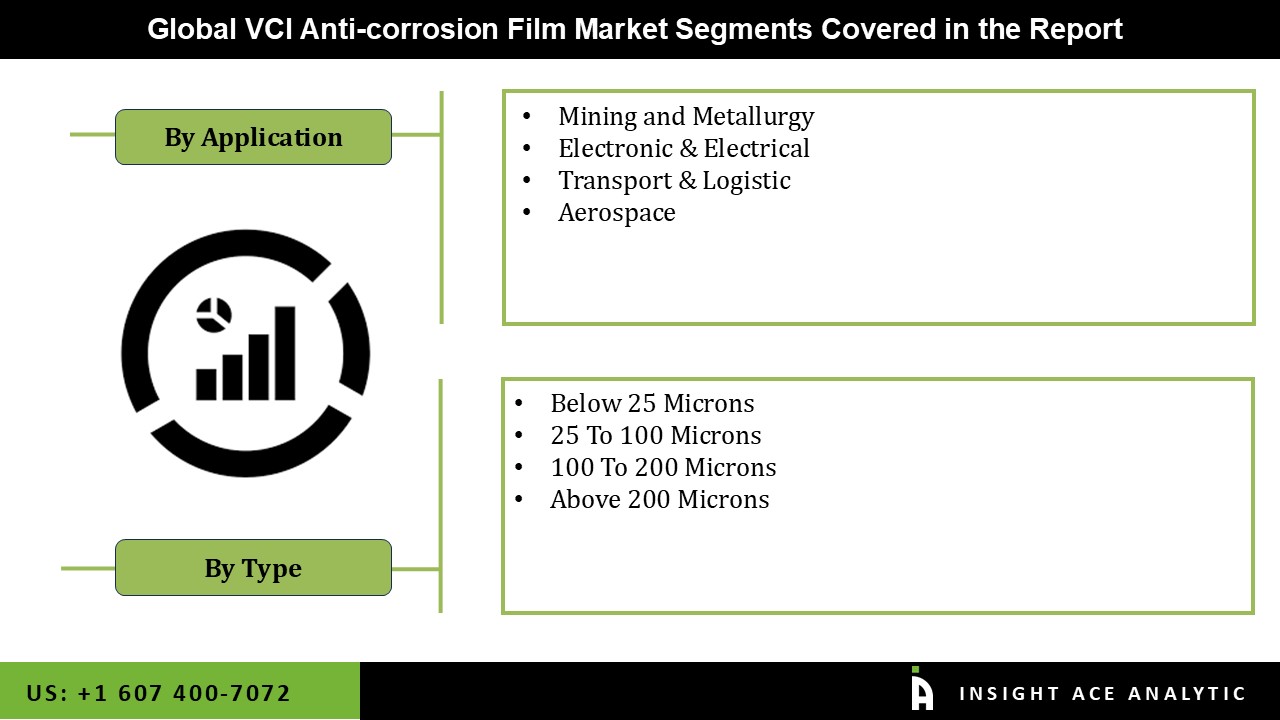
The VCI anti-corrosion film market is segmented by type and application. By type, the market is segmented into below 25 microns, 25 to 100 microns, 100 to 200 microns, and above 200 microns. By application, the market is segmented into electronic & electrical, mining and metallurgy, aerospace, transport & logistic, and others.
By Type, the Below 25 Microns Segment is Expected to Drive the VCI Anti-Corrosion Film Market
In 2024, the VCI anti-corrosion film market was dominated by the below 25 micron category. These wrapping films are ideal for preserving the freshness of items because of their airtight packaging properties. The development of these films has been facilitated by the increasing demand for environmentally friendly packaging across various industries. These films are suitable for the temporary storage and transit of metal parts, as they use less material without compromising protective effectiveness, which is why they are preferred in packaging applications. As producers and end users place a greater emphasis on cutting back on plastic waste and consumption, their smaller structure not only lowers material costs but also advances sustainability objectives.
Mining and Metallurgy Segment by Application is Growing at the Highest Rate in the VCI Anti-Corrosion Film Market
By application, the mining and metallurgy segment led the VCI anti-corrosion film market in 2024. The need for anti-corrosion films, which shield materials from long-term exposure to moisture, arose from the rising production of metals. Bulk metals removed from the Earth's core in mining locations must be stored safely due to the significant danger of corrosion. The segment's dominance has also been bolstered by the growth of mining operations worldwide, the rising demand for industrial metals like steel and aluminum, and the increase in exports of metallurgical goods.
Regionally, Asia Pacific Led the VCI Anti-Corrosion Film Market
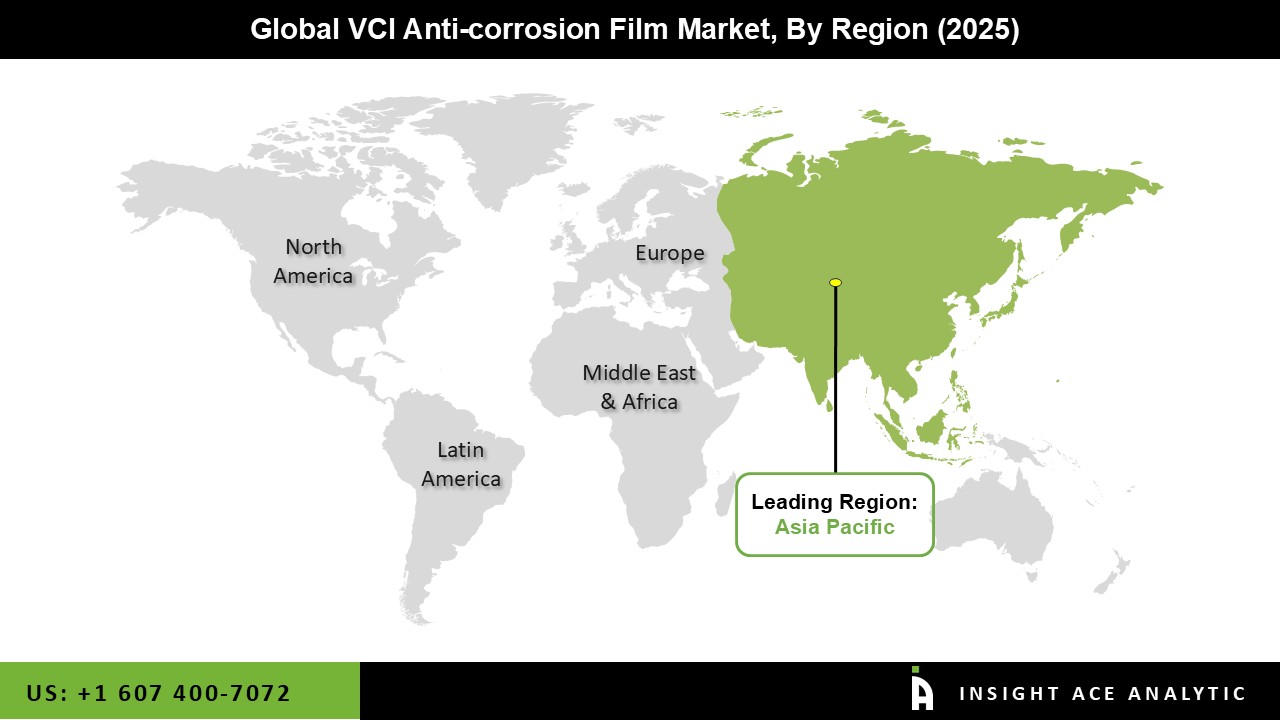
In 2024, Asia Pacific region had the largest market revenue share. This is mostly because there is a growing need for packaging solutions that are safe, effective, and impervious to corrosion. Strict regulations were put in place for the production of VCI films by the governments of nations including South Korea, Thailand, China, Japan, and India. The market for anti-corrosion film is being driven by the rising demand for robust packaging in this area. To satisfy the diverse needs of customers, regional producers are concentrating on creating recyclable and biodegradable films.
Over the course of the forecast period, North America is anticipated to experience the quickest growth in the VCI anti-corrosion market. To keep all of these components safe and damage-free, anti-corrosion film is in great demand due to the growing manufacturing of automotive and aerospace components. Players in the regional market are working to create goods that preserve the integrity and caliber of existing goods. Furthermore, the growth of the regional market is further fueled by the increasing output of metals.
VCI Anti-Corrosion Film Market Report Scope :
Segmentation of VCI Anti-Corrosion Film Market :
VCI Anti-Corrosion Film Market by Type-
· Below 25 Microns
· 25 To 100 Microns
· 100 To 200 Microns
· Above 200 Microns
VCI Anti-Corrosion Film Market by Application-
· Electronic & Electrical
· Mining and Metallurgy
· Aerospace
· Transport & Logistic
· Others
VCI Anti-Corrosion Film Market by Region-
North America-
· The US
· Canada
Europe-
· Germany
· The UK
· France
· Italy
· Spain
· Rest of Europe
Asia-Pacific-
· China
· Japan
· India
· South Korea
· Southeast Asia
· Rest of Asia Pacific
Latin America-
· Brazil
· Argentina
· Mexico
· Rest of Latin America
Middle East & Africa-
· GCC Countries
· South Africa
· Rest of the Middle East and Africa
Research Design and Approach
This study employed a multi-step, mixed-method research approach that integrates:
- Secondary research
- Primary research
- Data triangulation
- Hybrid top-down and bottom-up modelling
- Forecasting and scenario analysis
This approach ensures a balanced and validated understanding of both macro- and micro-level market factors influencing the market.
Secondary Research
Secondary research for this study involved the collection, review, and analysis of publicly available and paid data sources to build the initial fact base, understand historical market behaviour, identify data gaps, and refine the hypotheses for primary research.
Sources Consulted
Secondary data for the market study was gathered from multiple credible sources, including:
- Government databases, regulatory bodies, and public institutions
- International organizations (WHO, OECD, IMF, World Bank, etc.)
- Commercial and paid databases
- Industry associations, trade publications, and technical journals
- Company annual reports, investor presentations, press releases, and SEC filings
- Academic research papers, patents, and scientific literature
- Previous market research publications and syndicated reports
These sources were used to compile historical data, market volumes/prices, industry trends, technological developments, and competitive insights.

Primary Research
Primary research was conducted to validate secondary data, understand real-time market dynamics, capture price points and adoption trends, and verify the assumptions used in the market modelling.
Stakeholders Interviewed
Primary interviews for this study involved:
- Manufacturers and suppliers in the market value chain
- Distributors, channel partners, and integrators
- End-users / customers (e.g., hospitals, labs, enterprises, consumers, etc., depending on the market)
- Industry experts, technology specialists, consultants, and regulatory professionals
- Senior executives (CEOs, CTOs, VPs, Directors) and product managers
Interview Process
Interviews were conducted via:
- Structured and semi-structured questionnaires
- Telephonic and video interactions
- Email correspondences
- Expert consultation sessions
Primary insights were incorporated into demand modelling, pricing analysis, technology evaluation, and market share estimation.
Data Processing, Normalization, and Validation
All collected data were processed and normalized to ensure consistency and comparability across regions and time frames.
The data validation process included:
- Standardization of units (currency conversions, volume units, inflation adjustments)
- Cross-verification of data points across multiple secondary sources
- Normalization of inconsistent datasets
- Identification and resolution of data gaps
- Outlier detection and removal through algorithmic and manual checks
- Plausibility and coherence checks across segments and geographies
This ensured that the dataset used for modelling was clean, robust, and reliable.
Market Size Estimation and Data Triangulation
Bottom-Up Approach
The bottom-up approach involved aggregating segment-level data, such as:
- Company revenues
- Product-level sales
- Installed base/usage volumes
- Adoption and penetration rates
- Pricing analysis
This method was primarily used when detailed micro-level market data were available.

Top-Down Approach
The top-down approach used macro-level indicators:
- Parent market benchmarks
- Global/regional industry trends
- Economic indicators (GDP, demographics, spending patterns)
- Penetration and usage ratios
This approach was used for segments where granular data were limited or inconsistent.
Hybrid Triangulation Approach
To ensure accuracy, a triangulated hybrid model was used. This included:
- Reconciling top-down and bottom-up estimates
- Cross-checking revenues, volumes, and pricing assumptions
- Incorporating expert insights to validate segment splits and adoption rates
This multi-angle validation yielded the final market size.
Forecasting Framework and Scenario Modelling
Market forecasts were developed using a combination of time-series modelling, adoption curve analysis, and driver-based forecasting tools.
Forecasting Methods
- Time-series modelling
- S-curve and diffusion models (for emerging technologies)
- Driver-based forecasting (GDP, disposable income, adoption rates, regulatory changes)
- Price elasticity models
- Market maturity and lifecycle-based projections
Scenario Analysis
Given inherent uncertainties, three scenarios were constructed:
- Base-Case Scenario: Expected trajectory under current conditions
- Optimistic Scenario: High adoption, favourable regulation, strong economic tailwinds
- Conservative Scenario: Slow adoption, regulatory delays, economic constraints
Sensitivity testing was conducted on key variables, including pricing, demand elasticity, and regional adoption.
Request Customization
Add countries, segments, company profiles, or extend forecast — free 10% customization with purchase.
Customize This Report →Enquire Before Buying
Speak with our analyst team about scope, methodology, pricing, or deliverable formats.
Enquire Now →Frequently Asked Questions
The VCI Anti-Corrosion Film Market Size is valued at US$ 3.4 Bn in 2024 and is predicted to reach US$ 5.3 Bn by the year 2034 at an 4.9% CAGR over the forecast period.
The major players in the VCI Anti-Corrosion Film market are Cortec Corporation, Intercept Technology, Inc., Daubert Europe, Protective Packaging Corporation, TPC Packaging Solutions, ZERUST, Icero, Associated Bag, Ecocortec, and Bulwark Industrial Solution.
The primary VCI Anti-Corrosion Film market segments are Type and Application.
In 2024, Asia Pacific region had the largest market revenue share. This is mostly because there is a growing need for packaging solutions that are safe, effective, and impervious to corrosion.