Sparkling Functional Beverages Market Size, Share, Trend Report 2026 to 2035
What is Sparkling Functional Beverages Market Size?
Global Sparkling Functional Beverages Market Size is valued at USD 77.61 Bn in 2025 and is predicted to reach USD 184.99 Bn by the year 2035 at a 9.2% CAGR during the forecast period for 2025-2035.
Sparkling Functional Beverages Market, Share & Trends Analysis Report, By Product Type ( Functional Soda, Kombucha, Sparkling Juice Drinks, Sparkling Water) By Ingredients( Probiotics, Bifidobacterium, Lactobacillus, Vitamins and Minerals, Adaptogens and Botanicals, Caffeine and Natural Stimulants, Herbal Extracts and Superfoods, Natural Sweeteners and Low-Calorie Options), By Function, By Distribution Channel, By Packaging Format, By Flavor, By Consumer Demographic By Region, and Segment Forecasts, 2026 to 2035.
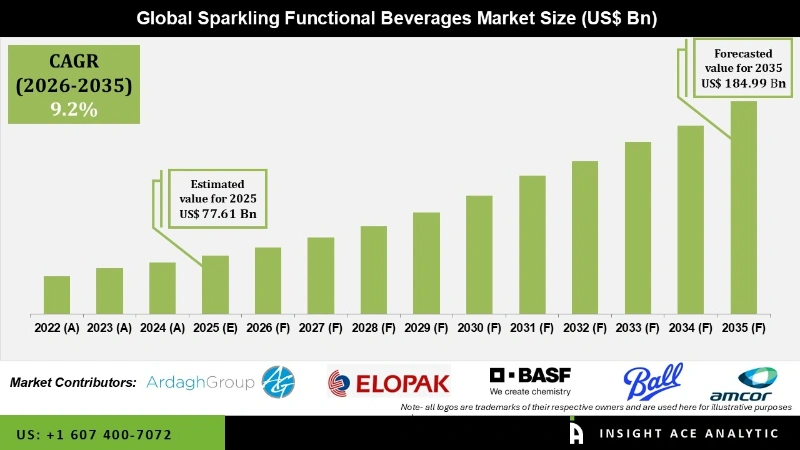
Sparkling Functional Beverages Market Key Takeaways:
|
Sparkling functional beverages are non-alcoholic, carbonated drinks infused with health-promoting ingredients that offer benefits beyond basic hydration. By combining the refreshing effervescence of sparkling water with functional components such as vitamins, minerals, probiotics, prebiotics, amino acids, adaptogens, and nootropics, these beverages are designed to support targeted health goals including enhanced energy, digestion, immune function, mental clarity, and stress relief.
Some formulations also include electrolytes, protein, or amino acids, making them ideal for post-workout recovery and appealing to athletes and fitness enthusiasts seeking to replenish nutrients and maintain hydration. The market is being driven by growing consumer demand for healthier, low-sugar alternatives to traditional soda, rising awareness around gut health, and a strong shift toward clean-label and plant-based ingredients.
Kombucha, a functional sparkling water, is naturally rich in probiotics and organic acids that support gut health and digestion, making it a popular choice among health-conscious consumers. It is typically made with organic tea, real fruit flavors, minimal sugar, and no preservatives, perfectly aligning with the growing demand for clean-label, vegan, and plant-based products. As a flavorful alternative to traditional sodas without artificial sweeteners, kombucha appeals to those seeking healthier beverage options. Its availability in ready-to-drink (RTD) bottled formats across mainstream retail stores, cafes, gyms, and wellness centers has enhanced its accessibility and convenience. The market growth is further fueled by a surge in interest in probiotic and gut-friendly drinks, as well as consumer preferences for functional, natural, and sustainable products.
Online platforms and direct-to-consumer (DTC) strategies have also played a significant role in expanding access to niche and premium kombucha brands, increasing brand visibility, and customer engagement. Millennials and Gen Z, in particular, are driving the rapid adoption of sparkling functional beverages like kombucha due to their preference for health-forward, and ethically sourced options that deliver both wellness benefits and clean ingredients.
Competitive Landscape
Some of the Major Key Players in the Sparkling Functional Beverages Market are:
- Beyond Water
- Big Watt Cold Beverage Co.
- Casamara Club
- CENTR Brands Corp
- Cold Spring Brewing Company
- Danone S.A.
- Flying Embers
- Fonterra Co-operative Group
- Glanbia PLC
- GLOW Beverages Inc.
- GT's Kombucha
- Hain Celestial Group
- Health-Ade LLC
- Hint, Inc.
- Keurig Dr Pepper Inc.
- Kevita, Inc.
- KICR Innovation Ltd
- Kombucha Wonder Drink
- Makana Beverages Inc.
- Monster Beverage Corporation
- National Beverage
- Nestlé S.A.
- OCA
- PepsiCo, Inc.
- Plants by People
- REBBL
- Red Bull GmBH
- Reed’s Inc.
- Resync, LLC
- Revive Kombucha
- Rishi Tea & Botanicals
- Spindrift Beverage Co., L.L.C.
- Talking Rain
- The Coca-Cola Company
- the Humm Kombucha LLC
- Ultima Replenisher
- Unique Beverage Company, LLC
- WakeWater Beverage Co.
- Zevia PBC
- Others
Market Segmentation
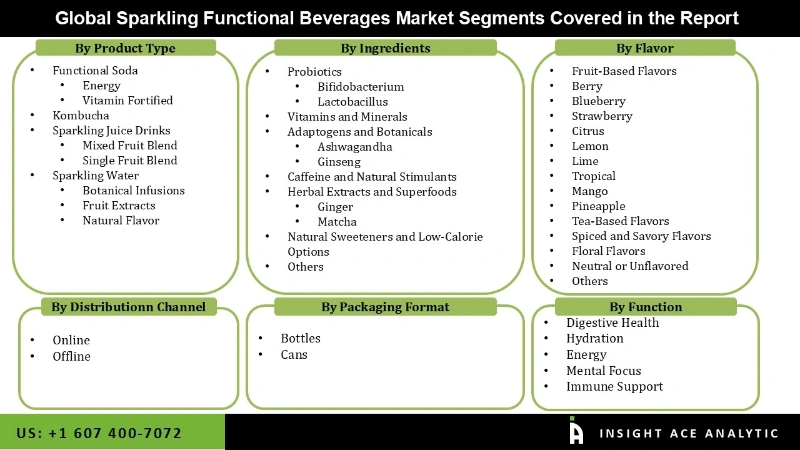
The sparkling functional beverages market is segmented based on product type, ingredients, function, distribution channel, packaging format, flavor, and consumer demographic. Based on product type, the market is segmented into functional soda, kombucha, sparkling juice drinks, and sparkling water. Based on the Ingredients, the market is divided into probiotics, bifidobacteria, lactobacilli, vitamins and minerals, adaptogens and botanicals, caffeine and natural stimulants, herbal extracts and superfoods, natural sweeteners and low-calorie options, and others. Based on the function, the market is divided into digestive health, hydration, energy, mental focus, and immune support. Based on the distribution channel, the market is divided into online, offline. Based on the packaging format, the market is divided into bottles, cans. Based on the flavor, the market is divided into fruit-based flavors, tea-based flavors, spiced and savory flavors, floral flavors, neutral or unflavored, and others. Based on the consumer demographic, the market is divided into adults, athletes, and millennials.
The Functional Soda Segment is Expected to Have the Highest Growth Rate During the Forecast Period
Based on technology, the market is segmented into therapeutic, machine learning, and natural language processing (NLP). Among these, the functional soda segment is expected to have the highest growth rate during the forecast period. The functional soda segment is experiencing rapid growth due to a combination of evolving consumer preferences, increasing health consciousness, and continuous market innovation. As traditional sugary sodas decline in popularity amid growing concerns over obesity, diabetes, and overall health, functional sodas have emerged as a healthier alternative. These beverages offer low-sugar or no-sugar options while delivering added health benefits, making them an attractive replacement for conventional soft drinks. Brands like Olipop and Poppi have gained popularity by infusing their sodas with prebiotics, fiber, and botanicals that support digestive health. With rising awareness of the gut-brain axis and the importance of the microbiome in overall wellness, functional sodas are perfectly positioned to meet the growing demand for daily digestive support.
The Caffeine and Natural Stimulants Segment Dominates the Market
Based on the Ingredients, the market is divided into probiotics, bifidobacteria, lactobacilli, vitamins and minerals, adaptogens and botanicals, caffeine and natural stimulants, herbal extracts and superfoods, natural sweeteners and low-calorie options, and others. Among these, the caffeine and natural stimulants segment dominates the market. The caffeine and natural stimulants segment dominate the sparkling functional beverages market due to its widespread appeal, energizing properties, and alignment with modern lifestyle demands. Consumers increasingly seek beverages that provide a clean energy boost without the crash associated with traditional energy drinks. This segment includes drinks infused with caffeine from natural sources like green tea extract, guarana, yerba mate, ginseng, and coffee fruit, as well as complementary compounds such as L-theanine, B-vitamins, and adaptogens that enhance alertness, focus, and endurance.
Asia?Pacific Has the Largest Market Share During the Forecast Period.
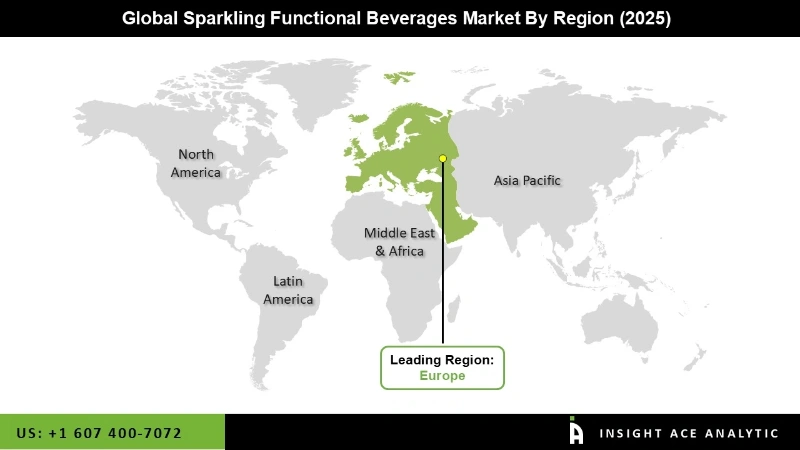
The Asia?Pacific (APAC) region currently holds the largest share of the market. Rapidly growing consumer awareness around healthy living, clean-label products, and plant-based wellness in countries like China, India, Japan, and South Korea is significantly boosting demand for sparkling functional beverages in the Asia-Pacific (APAC) region. Several APAC governments are actively supporting the health and functional food sector through favorable regulations and policies, further fostering industry growth. Additionally, the rapid expansion of digital retail and direct-to-consumer (DTC) models has enhanced brand visibility and product accessibility across urban and semi-urban areas. As disposable incomes continue to rise, consumers are increasingly shifting from traditional carbonated drinks to premium functional beverages that offer added health benefits, convenience, and alignment with modern wellness lifestyles.
Recent Developments:
- In Jun 2025, ALDI launched a new range of drinks that are tasty, good for gut, and affordable. Aldi is selling Kombucha in a bottle with three new flavours, and they’re perfect for summer. Launching earlier this week, the drinks are available in a range of refreshing flavours. The Juice Company Kombucha 330ml is available in passionfruit, ginger & lemon, and wild berry. With Kombucha growing in popularity in recent years over claims that it boosts your gut health, the retailer decided to launch their version after they noticed a 35% increase in searches on their website.
- In April 2025, Maison Perrier, a brand under Nestlé Waters, introduced Maison Perrier Chic, its first range of non-alcoholic sparkling drinks with cocktail influences. The brand's characteristic sparkling water, natural flavors, and real fruit juice are used to create four flavors in the new line that are meant to evoke traditional cocktails. The Chic collection, which was created in partnership with a French bartender from one of the World's 50 Best Bars, consists of the following: Citrus Fizz, a lemon-based version of the French 75; Piña Fizz, a coconut and pineapple nod to the Piña Colada; Peach Spritzer, a peach-forward take on the Bellini; and Daiquiri'red, a tart fruit twist on the classic Daiquiri.
- In April 2025, Waterloo Sparkling Water introduced three limited-edition flavors in partnership with Guy Fieri. The experiences of the chef and restaurateur, as well as the "Flavortown" brand, served as the inspiration for three new limited-edition flavors from Waterloo Sparkling Water. Huckleberry Cobbler, Spiced Mango Sorbet, and Lemon Italian Ice bring back Guy Fieri's favorite flavors and his family's memories. They don't include any calories, sugar, or sweeteners. Purified carbonated water and natural flavors that have been Non-GMO Project Verified are used to make all tastes.
Sparkling Functional Beverages Market Report Scope :
| Report Attribute | Specifications |
| Market Size Value In 2025 | USD 77.61 Bn |
| Revenue Forecast In 2035 | USD 184.99 Bn |
| Growth Rate CAGR | CAGR of 9.20% from 2026 to 2035 |
| Quantitative Units | Representation of revenue in US$ Bn and CAGR from 2026 to 2035 |
| Historic Year | 2022 to 2025 |
| Forecast Year | 2026-2035 |
| Report Coverage | The forecast of revenue, the position of the company, the competitive market structure, growth prospects, and trends |
| Segments Covered | By Product Type, Ingredients, Function, Distribution Channel, Packaging Format, Flavor, Consumer Demographic |
| Regional Scope | North America; Europe; Asia Pacific; Latin America; Middle East & Africa |
| Country Scope | U.S.; Canada; U.K.; Germany; China; India; Japan; Brazil; Mexico; The UK; France; Italy; Spain; China; Japan; India; South Korea; Southeast Asia; South Korea; South East Asia |
| Competitive Landscape | Beyond Water, Big Watt Cold Beverage Co, Casamara Club, CENTR Brands Corp, Cold Spring Brewing Company, Danone S.A., Flying Embers, Fonterra Co, operative Group, Glanbia PLC, GLOW Beverages Inc, GT's Kombucha, Hain Celestial Group, Health-Ade LLC, Hint, Inc, Keurig Dr Pepper Inc., Kevita, Inc., KICR Innovation Ltd. Kombucha Wonder Drink, Makana Beverages Inc., Monster Beverage Corporation, National Beverage, Nestlé S.A., OCA, PepsiCo, Inc, Plants by People, REBBL, Red Bull GmBH, Reed’s Inc, Resync, LLC, Revive Kombucha, Rishi Tea & Botanicals, Spindrift Beverage Co., L.L.C., Talking Rain, The Coca-Cola Company, the Humm Kombucha LLC, Ultima Replenisher, Unique Beverage Company, LLC, WakeWater Beverage Co, Zevia PBC |
| Customization Scope | Free customization report with the procurement of the report and modifications to the regional and segment scope. Particular Geographic competitive landscape. |
| Pricing and Available Payment Methods | Explore pricing alternatives that are customized to your particular study requirements. |
Segmentation of Sparkling Functional Beverages Market
Global Sparkling Functional Beverages Market - By Product Type
- Functional Soda
- Energy
- Vitamin Fortified
- Kombucha
- Sparkling Juice Drinks
- Mixed Fruit Blend
- Single Fruit Blend
- Sparkling Water
- Botanical Infusions
- Fruit Extracts
- Natural Flavor
Global Sparkling Functional Beverages Market – By Ingredients
- Probiotics
- Bifidobacterium
- Lactobacillus
- Vitamins and Minerals
- Adaptogens and Botanicals
- Ashwagandha
- Ginseng
- Caffeine and Natural Stimulants
- Herbal Extracts and Superfoods
- Ginger
- Matcha
- Natural Sweeteners and Low-Calorie Options
- Others
Global Sparkling Functional Beverages Market – By Function
- Digestive Health
- Hydration
- Energy
- Mental Focus
- Immune Support
Global Sparkling Functional Beverages Market – By Distribution Channel
- Online
- Offline
Global Sparkling Functional Beverages Market – By Packaging Format
- Bottles
- Cans
Global Sparkling Functional Beverages Market – By Flavor
- Fruit-Based Flavors
- Berry
- Blueberry
- Strawberry
- Citrus
- Lemon
- Lime
- Tropical
- Mango
- Pineapple
- Tea-Based Flavors
- Spiced and Savory Flavors
- Floral Flavors
- Neutral or Unflavored
- Others
- Berry
Global Sparkling Functional Beverages Market – By Consumer Demographics
- Adults
- Athletes
- Millennials
Global Sparkling Functional Beverages Market – By Region
North America-
- The US
- Canada
Europe-
- Germany
- The UK
- France
- Italy
- Spain
- Rest of Europe
Asia-Pacific-
- China
- Japan
- India
- South Korea
- Southeast Asia
- Rest of Asia Pacific
Latin America-
- Brazil
- Argentina
- Mexico
- Rest of Latin America
Middle East & Africa-
- GCC Countries
- South Africa
- Rest of the Middle East and Africa
Research Design and Approach
This study employed a multi-step, mixed-method research approach that integrates:
- Secondary research
- Primary research
- Data triangulation
- Hybrid top-down and bottom-up modelling
- Forecasting and scenario analysis
This approach ensures a balanced and validated understanding of both macro- and micro-level market factors influencing the market.
Secondary Research
Secondary research for this study involved the collection, review, and analysis of publicly available and paid data sources to build the initial fact base, understand historical market behaviour, identify data gaps, and refine the hypotheses for primary research.
Sources Consulted
Secondary data for the market study was gathered from multiple credible sources, including:
- Government databases, regulatory bodies, and public institutions
- International organizations (WHO, OECD, IMF, World Bank, etc.)
- Commercial and paid databases
- Industry associations, trade publications, and technical journals
- Company annual reports, investor presentations, press releases, and SEC filings
- Academic research papers, patents, and scientific literature
- Previous market research publications and syndicated reports
These sources were used to compile historical data, market volumes/prices, industry trends, technological developments, and competitive insights.

Primary Research
Primary research was conducted to validate secondary data, understand real-time market dynamics, capture price points and adoption trends, and verify the assumptions used in the market modelling.
Stakeholders Interviewed
Primary interviews for this study involved:
- Manufacturers and suppliers in the market value chain
- Distributors, channel partners, and integrators
- End-users / customers (e.g., hospitals, labs, enterprises, consumers, etc., depending on the market)
- Industry experts, technology specialists, consultants, and regulatory professionals
- Senior executives (CEOs, CTOs, VPs, Directors) and product managers
Interview Process
Interviews were conducted via:
- Structured and semi-structured questionnaires
- Telephonic and video interactions
- Email correspondences
- Expert consultation sessions
Primary insights were incorporated into demand modelling, pricing analysis, technology evaluation, and market share estimation.
Data Processing, Normalization, and Validation
All collected data were processed and normalized to ensure consistency and comparability across regions and time frames.
The data validation process included:
- Standardization of units (currency conversions, volume units, inflation adjustments)
- Cross-verification of data points across multiple secondary sources
- Normalization of inconsistent datasets
- Identification and resolution of data gaps
- Outlier detection and removal through algorithmic and manual checks
- Plausibility and coherence checks across segments and geographies
This ensured that the dataset used for modelling was clean, robust, and reliable.
Market Size Estimation and Data Triangulation
Bottom-Up Approach
The bottom-up approach involved aggregating segment-level data, such as:
- Company revenues
- Product-level sales
- Installed base/usage volumes
- Adoption and penetration rates
- Pricing analysis
This method was primarily used when detailed micro-level market data were available.

Top-Down Approach
The top-down approach used macro-level indicators:
- Parent market benchmarks
- Global/regional industry trends
- Economic indicators (GDP, demographics, spending patterns)
- Penetration and usage ratios
This approach was used for segments where granular data were limited or inconsistent.
Hybrid Triangulation Approach
To ensure accuracy, a triangulated hybrid model was used. This included:
- Reconciling top-down and bottom-up estimates
- Cross-checking revenues, volumes, and pricing assumptions
- Incorporating expert insights to validate segment splits and adoption rates
This multi-angle validation yielded the final market size.
Forecasting Framework and Scenario Modelling
Market forecasts were developed using a combination of time-series modelling, adoption curve analysis, and driver-based forecasting tools.
Forecasting Methods
- Time-series modelling
- S-curve and diffusion models (for emerging technologies)
- Driver-based forecasting (GDP, disposable income, adoption rates, regulatory changes)
- Price elasticity models
- Market maturity and lifecycle-based projections
Scenario Analysis
Given inherent uncertainties, three scenarios were constructed:
- Base-Case Scenario: Expected trajectory under current conditions
- Optimistic Scenario: High adoption, favourable regulation, strong economic tailwinds
- Conservative Scenario: Slow adoption, regulatory delays, economic constraints
Sensitivity testing was conducted on key variables, including pricing, demand elasticity, and regional adoption.
Request Customization
Add countries, segments, company profiles, or extend forecast — free 10% customization with purchase.
Customize This Report →Enquire Before Buying
Speak with our analyst team about scope, methodology, pricing, or deliverable formats.
Enquire Now →Frequently Asked Questions
Clear Cut Phocus, National Beverage Corp., Caribou Coffee Operating Company, Inc., GEROLSTEINER, BRUNNEN GmbH & Co. KG , Others
Sparkling Functional Beverages Market Size is valued at USD 77.61 Bn in 2025 and is predicted to reach USD 184.99 Bn by the year 2035.
Sparkling Functional Beverages Market is expected to grow at a 9.20% CAGR during the forecast period for 2026-2035.
Sparkling Functional Beverages Market is segmented into Product Type, Ingredients, Function, Distribution Channel, Packaging Format, Flavor, Consumer demographic
North America region is leading the Sparkling Functional Beverages Market.