Functional and Fortified Beverages Market Size, Share, Scope Report 2026 to 2035
What is Functional and Fortified Beverages Market Size?
Global Functional and Fortified Beverages Market Size is predicted to grow with a 8.0% CAGR during the forecast period for 2026 to 2035.
Functional and Fortified Beverages Market, Share & Trends Analysis Report, By Product Type (Energy Drinks, Dairy-based Functional Beverages, Plant-based Beverages, Probiotic & Prebiotic Drinks, Herbal & Botanical Infused Drinks, Vitamin & Mineral Fortified Beverages, Sports & Performance Drinks), By Distribution Channel (Online & Offline), By Function, By Region, and Segment Forecasts, 2026 to 2035
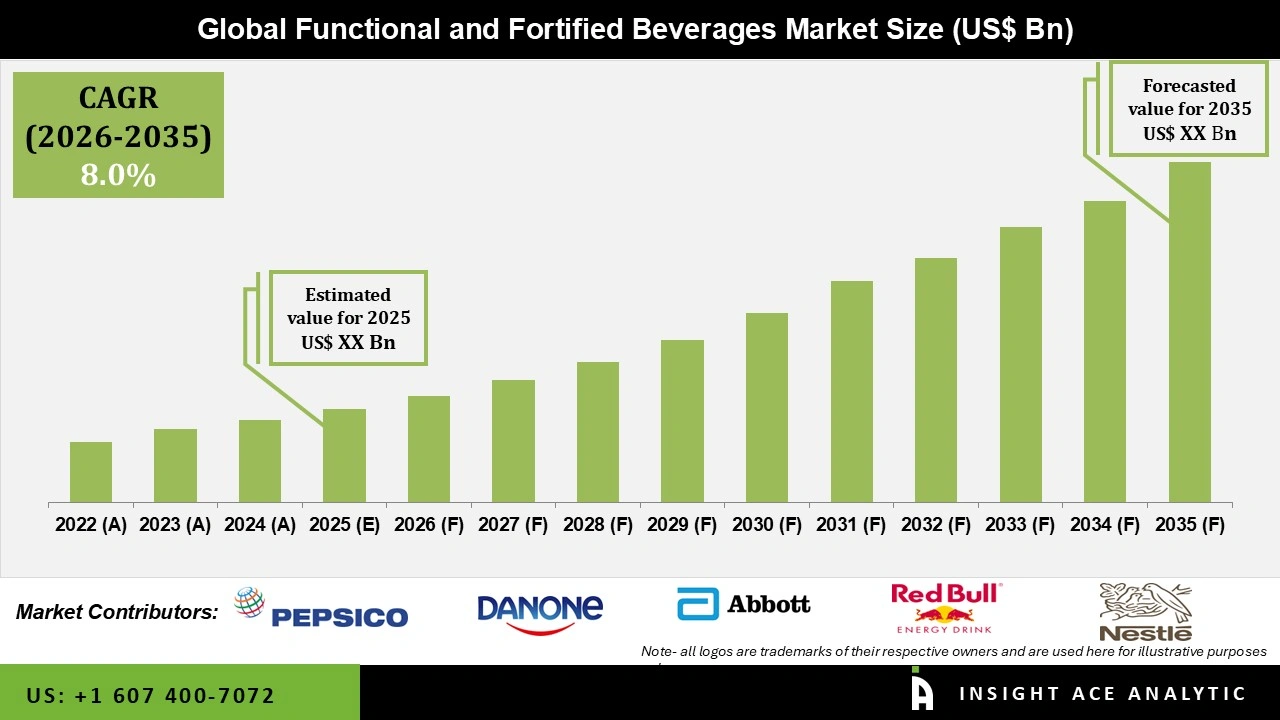
Functional and Fortified Beverages Market Key Takeaways:
|
Functional and fortified beverages containing bioactive substances, vitamins, minerals, and other functional components aim to boost performance, address specific health concerns, improve general well-being, and provide essential nutrition and hydration. The demand for these beverages has increased as customers emphasize health and wellness more, appealing to those concerned about their health and wanting more than essential nourishment. Generally speaking, functional drinks are made by lowering unhealthy ingredients like sugar and fat while adding healthy ones.
The choice of ingredients in these drinks is directly influenced by their composition, affecting their stability and texture. Global market trends in these beverage sectors are still changing, with non-alcoholic functional beverage production rising along with consumer interest in food supplements. These drinks frequently contain natural components such as fruits, vegetables, plant extracts, vitamins, minerals, and amino acids to meet the growing demand from consumers for healthier and more nutrient-dense options
In October 2024, Nestlé's Nespresso launched its first ready-to-drink coffee product, the Master Origins Colombia, combining high-quality coffee beans with Colombian honey to meet the growing consumer demand for convenient, functional beverages. Consumers are increasingly seeking beverages that offer health benefits beyond basic hydration, such as immune support, digestive health, and cognitive function. Rising concerns about obesity, diabetes, and heart diseases are driving demand for drinks with functional ingredients like probiotics, adaptogens, and plant-based proteins.
The surge in on-the-go consumption has increased interest in ready-to-drink (RTD) functional beverages, including protein shakes, energy drinks, and meal-replacement options. Functional waters and enhanced juices provide an easy way for consumers to meet their daily nutritional needs. In contrast, older consumers specifically seek beverages fortified with collagen, calcium, vitamin D, and antioxidants to support joint health, bone strength, and cognitive function. As longevity and disease prevention become mainstream concerns, the functional beverage market is evolving to cater to these needs. Additionally, the fitness and wellness industry continues to fuel demand for hydration solutions, electrolyte-rich drinks, and energy-boosting beverages, with functional options tailored for athletes, gym-goers, and endurance sports enthusiasts expanding rapidly.
Competitive Landscape
Some of the Major Key Players in the Functional and Fortified Beverages Market are
• PepsiCo, Inc.
• Nestlé S.A
• Danone S.A
• Abbott Laboratories
• Amway Corp.
• Campbell Soup Company
• Clif Bar & Company
• GNC Holdings LLC
• Monster Beverage Corporation
• National Beverage Corp.
• Red Bull GmbH
• The Coca-Cola Company
• LaCroix Beverages, Inc.
• Gerolsteiner Brunnen Gmbh & Co. K.G.
Market Segmentation:
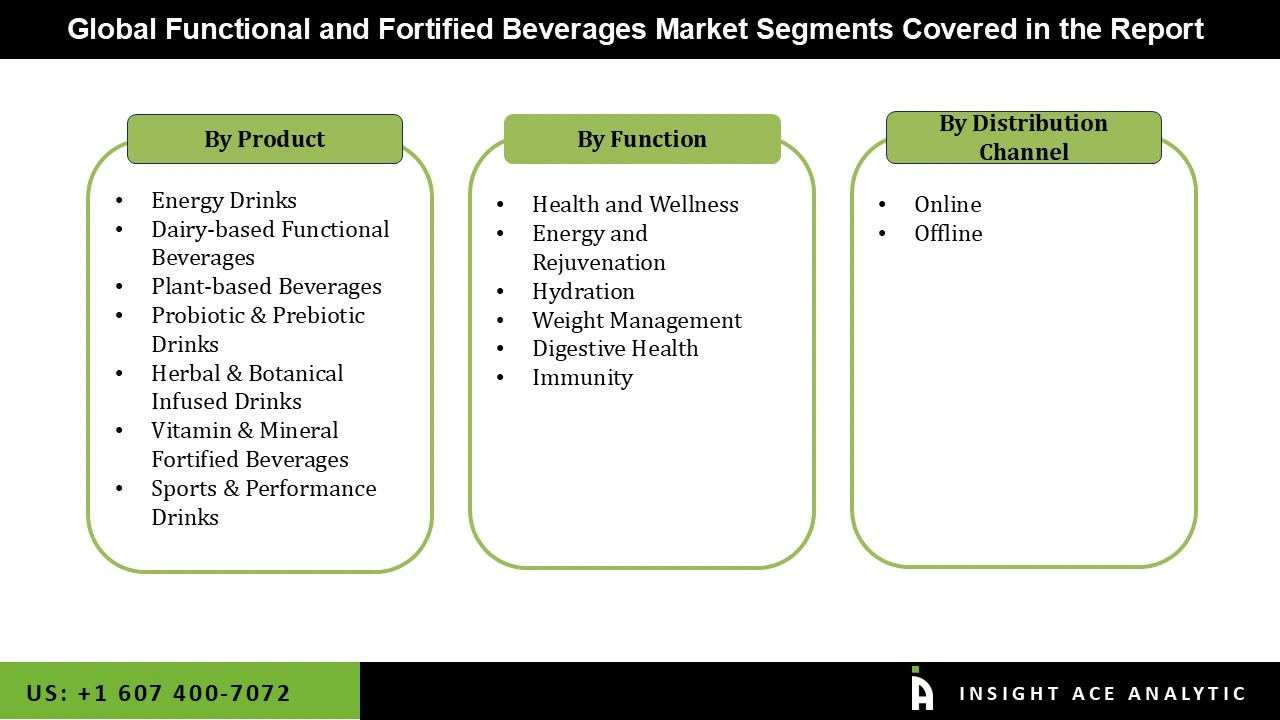
The functional and fortified beverages market is segmented based on the product type, distribution channel, and function. Based on the product type, the market is divided into energy drinks, dairy-based functional beverages, plant-based beverages, probiotic & prebiotic drinks, herbal & botanical infused drinks, vitamin & mineral fortified beverages, and sports & performance drinks. Based on distribution channel, the market is divided into supermarkets & hypermarkets, convenience stores, pharmacies & health stores e-commerce & DTC. Based on function, the market is divided into health and wellness, energy and rejuvenation, hydration, weight management, digestive health, and immunity.
The Probiotic & Prebiotic Drinks Segment is Expected to Have the Highest Growth Rate During the Forecast Period
Based on the product type, the market is divided into energy drinks, dairy-based functional beverages, plant-based beverages, probiotic & prebiotic drinks, herbal & botanical infused drinks, vitamin & mineral fortified beverages, and sports & performance drinks. Among these, The Probiotic & Prebiotic Drinks Segment is Expected to Have the Highest Growth Rate During the Forecast Period. Consumers increasingly prioritise gut health due to its strong connection with immunity, mental health, and metabolic functions.
Growing awareness of probiotics and prebiotics in preventing gastrointestinal issues, along with scientific studies linking gut microbiota to immune function, obesity prevention, and mental well-being, is driving trust in these beverages. Additionally, government regulations in various countries support probiotics as functional food ingredients. As a result, probiotic and prebiotic drinks are projected to experience the most rapid growth in the functional beverage market, driven by their broad health benefits and rising consumer interest in gut health.
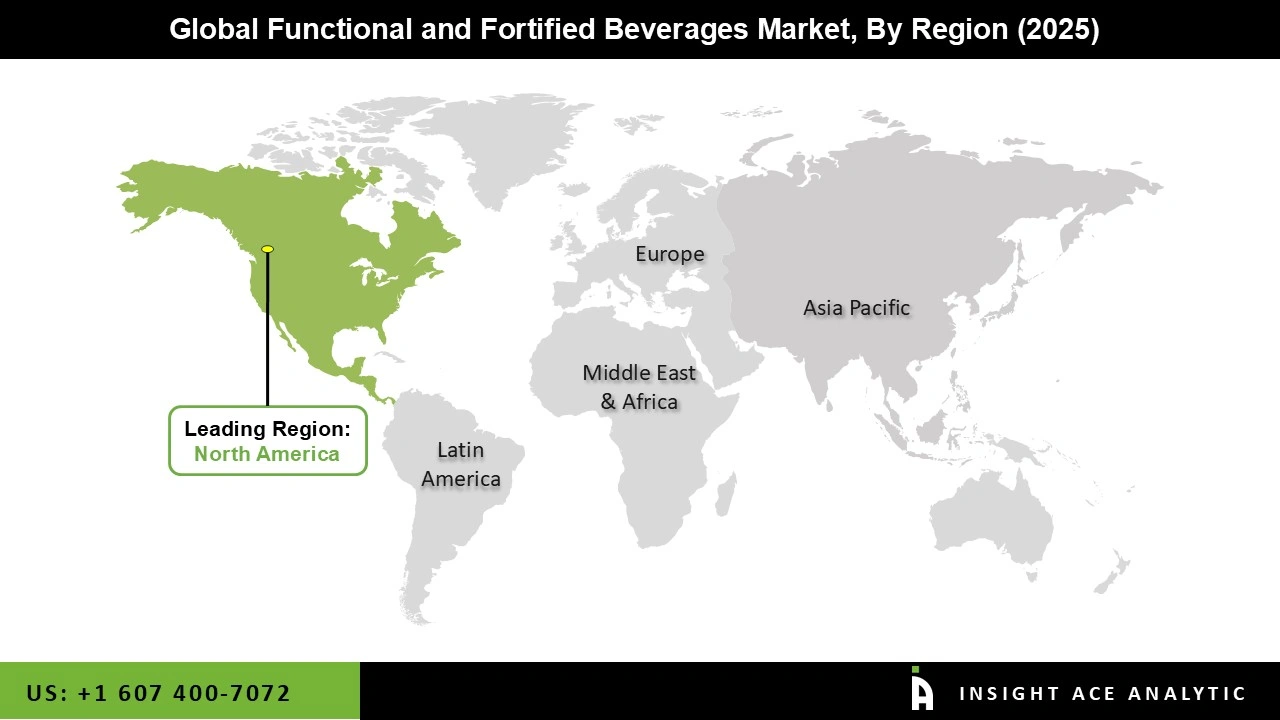
North America Has the Largest Market Share During the Forecast Period.
North America dominates the Functional and Fortified Beverages Market due to strong demand for health-focused drinks, including probiotics, electrolytes, and plant-based ingredients.
Consumers prioritize clean-label, organic, and natural beverages, while major players like PepsiCo, Coca-Cola, Nestlé, and Keurig Dr Pepper drive innovation and product expansion. The region also sees rapid growth in startups and niche brands specializing in plant-based and gut-health-focused drinks.
Additionally, the rising number of fitness-conscious consumers fuels demand for sports drinks, protein shakes, and electrolyte-rich beverages, expanding the market for hydration and energy-boosting solutions tailored for athletes and gym-goers.
Recent Developments:
• In March 2025, PepsiCo acquired Poppi, a prebiotic soda brand known for its low-sugar, gut-health-focused beverages, for $1.95 billion. This acquisition boosted PepsiCo's portfolio in the functional beverage sector and catered to the growing consumer demand for healthier drink options.
• In January 2024, Abbott developed PRotalityTM, a brand designed to help adults lose weight. The first product is a high-protein nutrition smoothie that supplies the necessary elements to preserve muscle mass and performance throughout weight loss.
Functional and Fortified Beverages Market Report Scope:
| Report Attribute | Specifications |
| Growth Rate CAGR | CAGR of 8.0% from 2026 to 2035 |
| Quantitative Units | Representation of revenue in US$ Bn and CAGR from 2026 to 2035 |
| Historic Year | 2022 to 2025 |
| Forecast Year | 2026-2035 |
| Report Coverage | The forecast of revenue, the position of the company, the competitive market structure, growth prospects, and trends |
| Segments Covered | Product Type, Distribution Channel, and Function |
| Regional Scope | North America; Europe; Asia Pacific; Latin America; Middle East & Africa |
| Country Scope | U.S.; Canada; U.K.; Germany; China; India; Japan; Brazil; Mexico; The UK; France; Italy; Spain; Japan; South Korea; Southeast Asia |
| Competitive Landscape | PepsiCo, Inc, Nestlé S.A, Danone S.A, Abbott Laboratories, Amway Corp, Campbell Soup Company, Clif Bar & Company, GNC Holdings LLC, Monster Beverage Corporation, National Beverage Corp, Red Bull GmbH, The Coca-Cola Company, LaCroix Beverages, Inc., Gerolsteiner Brunnen Gmbh & Co. K.G. |
| Customization Scope | Free customization report with the procurement of the report, Modifications to the regional and segment scope. Particular Geographic competitive landscape. |
| Pricing And Available Payment Methods | Explore pricing alternatives that are customized to your particular study requirements. |
Segmentation of Functional and Fortified Beverages Market:
Functional and Fortified Beverages Market, By Product-
• Energy Drinks
• Dairy-based Functional Beverages
• Plant-based Beverages
• Probiotic & Prebiotic Drinks
• Herbal & Botanical Infused Drinks
• Vitamin & Mineral Fortified Beverages
• Sports & Performance Drinks
Functional and Fortified Beverages Market, By Distribution Channel-
• Online
• Offline
Functional and Fortified Beverages Market, By Function-
• Health and Wellness
• Energy and Rejuvenation
• Hydration
• Weight Management
• Digestive Health
• Immunity
Functional and Fortified Beverages Market, By Region-
- North America-
- The US
- Canada
- Europe-
- Germany
- The UK
- France
- Italy
- Spain
- Rest of Europe
- Asia-Pacific-
- China
- Japan
- India
- South Korea
- South East Asia
- Rest of Asia Pacific
- Latin America-
- Brazil
- Argentina
- Mexico
- Rest of Latin America
- Middle East and Africa-
- GCC Countries
- South Africa
- Rest of Middle East and Africa
Research Design and Approach
This study employed a multi-step, mixed-method research approach that integrates:
- Secondary research
- Primary research
- Data triangulation
- Hybrid top-down and bottom-up modelling
- Forecasting and scenario analysis
This approach ensures a balanced and validated understanding of both macro- and micro-level market factors influencing the market.
Secondary Research
Secondary research for this study involved the collection, review, and analysis of publicly available and paid data sources to build the initial fact base, understand historical market behaviour, identify data gaps, and refine the hypotheses for primary research.
Sources Consulted
Secondary data for the market study was gathered from multiple credible sources, including:
- Government databases, regulatory bodies, and public institutions
- International organizations (WHO, OECD, IMF, World Bank, etc.)
- Commercial and paid databases
- Industry associations, trade publications, and technical journals
- Company annual reports, investor presentations, press releases, and SEC filings
- Academic research papers, patents, and scientific literature
- Previous market research publications and syndicated reports
These sources were used to compile historical data, market volumes/prices, industry trends, technological developments, and competitive insights.

Primary Research
Primary research was conducted to validate secondary data, understand real-time market dynamics, capture price points and adoption trends, and verify the assumptions used in the market modelling.
Stakeholders Interviewed
Primary interviews for this study involved:
- Manufacturers and suppliers in the market value chain
- Distributors, channel partners, and integrators
- End-users / customers (e.g., hospitals, labs, enterprises, consumers, etc., depending on the market)
- Industry experts, technology specialists, consultants, and regulatory professionals
- Senior executives (CEOs, CTOs, VPs, Directors) and product managers
Interview Process
Interviews were conducted via:
- Structured and semi-structured questionnaires
- Telephonic and video interactions
- Email correspondences
- Expert consultation sessions
Primary insights were incorporated into demand modelling, pricing analysis, technology evaluation, and market share estimation.
Data Processing, Normalization, and Validation
All collected data were processed and normalized to ensure consistency and comparability across regions and time frames.
The data validation process included:
- Standardization of units (currency conversions, volume units, inflation adjustments)
- Cross-verification of data points across multiple secondary sources
- Normalization of inconsistent datasets
- Identification and resolution of data gaps
- Outlier detection and removal through algorithmic and manual checks
- Plausibility and coherence checks across segments and geographies
This ensured that the dataset used for modelling was clean, robust, and reliable.
Market Size Estimation and Data Triangulation
Bottom-Up Approach
The bottom-up approach involved aggregating segment-level data, such as:
- Company revenues
- Product-level sales
- Installed base/usage volumes
- Adoption and penetration rates
- Pricing analysis
This method was primarily used when detailed micro-level market data were available.

Top-Down Approach
The top-down approach used macro-level indicators:
- Parent market benchmarks
- Global/regional industry trends
- Economic indicators (GDP, demographics, spending patterns)
- Penetration and usage ratios
This approach was used for segments where granular data were limited or inconsistent.
Hybrid Triangulation Approach
To ensure accuracy, a triangulated hybrid model was used. This included:
- Reconciling top-down and bottom-up estimates
- Cross-checking revenues, volumes, and pricing assumptions
- Incorporating expert insights to validate segment splits and adoption rates
This multi-angle validation yielded the final market size.
Forecasting Framework and Scenario Modelling
Market forecasts were developed using a combination of time-series modelling, adoption curve analysis, and driver-based forecasting tools.
Forecasting Methods
- Time-series modelling
- S-curve and diffusion models (for emerging technologies)
- Driver-based forecasting (GDP, disposable income, adoption rates, regulatory changes)
- Price elasticity models
- Market maturity and lifecycle-based projections
Scenario Analysis
Given inherent uncertainties, three scenarios were constructed:
- Base-Case Scenario: Expected trajectory under current conditions
- Optimistic Scenario: High adoption, favourable regulation, strong economic tailwinds
- Conservative Scenario: Slow adoption, regulatory delays, economic constraints
Sensitivity testing was conducted on key variables, including pricing, demand elasticity, and regional adoption.
Request Customization
Add countries, segments, company profiles, or extend forecast — free 10% customization with purchase.
Customize This Report →Enquire Before Buying
Speak with our analyst team about scope, methodology, pricing, or deliverable formats.
Enquire Now →Frequently Asked Questions
Functional and Fortified Beverages Market Size is predicted to grow with a 8.0% CAGR during the forecast period for 2026 to 2035.
PepsiCo, Inc, Nestlé S.A, Danone S.A, Abbott Laboratories, Amway Corp, Campbell Soup Company, Clif Bar & Company, GNC Holdings LLC, Monster Beverage Corporation, National Beverage Corp, Red Bull GmbH, The Coca-Cola Company, LaCroix Beverages, Inc., Gerolsteiner Brunnen Gmbh & Co. K.G.
functional and fortified beverages market is segmented based on the product type, distribution channel, and function.
North American region is leading the functional and fortified beverages market.